Oncology Nursing Care Plan Guide
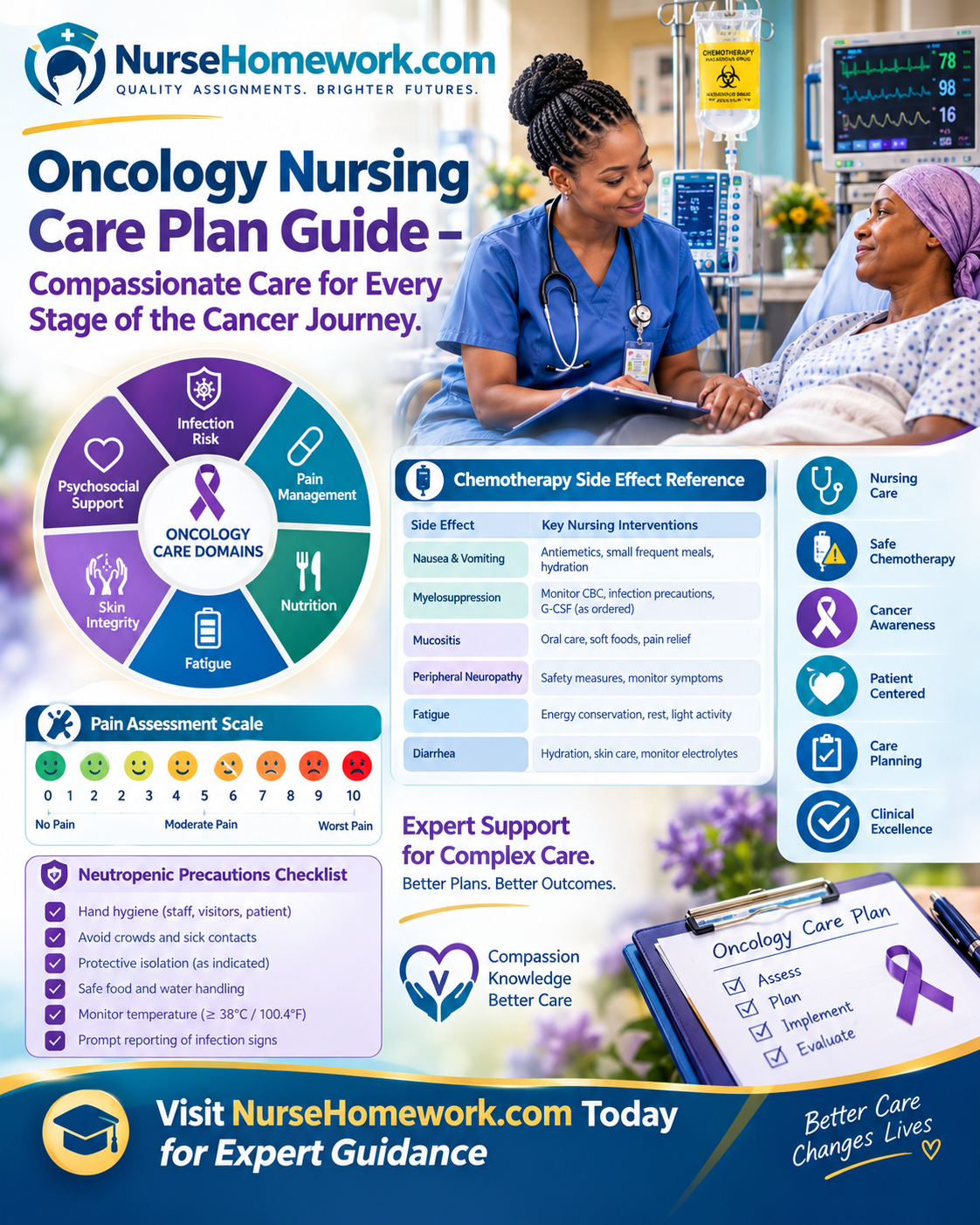
An oncology nursing care plan guide is one of the most valuable resources a nursing student or practicing clinician can study, because cancer care demands a unique combination of clinical precision, symptom management expertise, and compassionate communication that general medical-surgical training does not fully develop. At NurseHomework.com, we understand that a well-structured oncology nursing care plan guide addresses the physical, psychological, and social dimensions of cancer simultaneously, since oncology patients rarely present with a single isolated problem. This comprehensive oncology nursing care plan guide covers common nursing diagnoses, chemotherapy considerations, symptom management, and documentation standards.
Why Oncology Care Planning Demands a Specialized Approach
Before going further into this oncology nursing care plan guide, it is essential to understand what distinguishes oncology care planning from other specialties. Cancer is not a single disease but a category of diseases affecting nearly every body system, and treatment modalities including chemotherapy, radiation, immunotherapy, and surgery each produce distinct side effect profiles that require dedicated nursing interventions.
The second distinction is the emotional dimension. Oncology patients face mortality, body image disruption, role changes, and existential distress in ways that other patient populations may not. A care plan that addresses only physiological problems while ignoring psychosocial and spiritual needs is incomplete by oncology standards.
The third distinction is temporal. Cancer care spans diagnosis, treatment, survivorship, recurrence, and end-of-life phases, and each phase requires different nursing priorities. An effective oncology nursing care plan guide accounts for the phase of illness rather than applying a single static approach.
Core Nursing Diagnoses in Oncology Care Planning
A comprehensive oncology nursing care plan guide organizes care around recurring nursing diagnoses that appear across cancer types and treatment phases.
Risk for Infection
Chemotherapy-induced myelosuppression produces neutropenia, which places patients at significant risk for life-threatening infection. Nursing interventions include monitoring absolute neutrophil count, implementing neutropenic precautions, assessing for signs of infection, and teaching patients to report fever immediately.
The temperature threshold matters. A single oral temperature of 38.3 degrees Celsius or higher, or 38.0 degrees Celsius sustained over one hour, constitutes a fever requiring urgent evaluation. This specific threshold belongs in any rigorous oncology nursing care plan guide.
Acute and Chronic Pain
Pain affects a substantial proportion of oncology patients and may arise from the tumor itself, treatment side effects, or procedures. Nursing interventions include systematic pain assessment using validated tools, administering analgesics around the clock rather than only as needed, managing opioid side effects, and providing non-pharmacological comfort measures.
Imbalanced Nutrition: Less Than Body Requirements
Cancer cachexia, mucositis, nausea, dysphagia, and anorexia all contribute to nutritional compromise. Interventions include antiemetic administration before meals, oral care, small frequent meals, high-calorie supplements, and in severe cases enteral or parenteral nutrition support.
Fatigue
Cancer-related fatigue differs from ordinary tiredness in that it is not relieved by rest. Interventions include energy conservation education, activity pacing, sleep hygiene, and treating reversible contributors such as anemia, pain, and depression.
Impaired Skin Integrity
Radiation dermatitis, chemotherapy extravasation, surgical wounds, and pressure injuries all threaten skin integrity. Interventions include assessment documentation, appropriate wound care, and patient education on skincare during treatment.
Nausea and Vomiting
Chemotherapy-induced nausea and vomiting is classified as acute within 24 hours, delayed from 24 to 120 hours, or anticipatory before treatment. Interventions include scheduled antiemetic regimens, complementary therapies, and environmental modification.
Risk for Bleeding
Thrombocytopenia from chemotherapy or disease progression increases bleeding risk. Interventions include monitoring platelet counts, avoiding intramuscular injections and rectal routes, using soft toothbrushes, and teaching patients to recognize bleeding signs.
Anxiety and Distress
Cancer diagnosis and treatment produce significant psychological distress. Interventions include therapeutic communication, referral to social work or psychology, mindfulness-based approaches, and involvement of support networks.
Impaired Coping
Patients and families may struggle to adapt to diagnosis, treatment demands, and prognosis. Interventions include assessing coping mechanisms, providing information at appropriate pace, and connecting patients with support resources.
Anticipatory Grieving and Hopelessness
Advanced cancer frequently produces grief and existential distress. Interventions include honest communication, presence, spiritual support, and referral to palliative care.
Chemotherapy-Specific Nursing Considerations
Chemotherapy content appears extensively in any oncology nursing care plan guide because the majority of oncology patients receive it.
Safe Handling and Administration
Chemotherapy agents are hazardous drugs requiring personal protective equipment including double gloves, gown, eye protection, and respiratory protection when indicated. Nurses must understand safe handling procedures, spill management, and disposal protocols.
Pre-Treatment Assessment
Before each cycle, assessment includes complete blood count, liver and renal function, weight, and performance status. Any abnormal value may require dose adjustment or treatment delay.
Common Chemotherapy Side Effects
Myelosuppression produces neutropenia, anemia, and thrombocytopenia. Mucositis affects the oral mucosa and gastrointestinal tract. Alopecia affects body image. Peripheral neuropathy affects sensation and function. Cardiotoxicity affects specific agents such as doxorubicin. Nephrotoxicity requires hydration monitoring.
Each of these requires dedicated nursing interventions, and an effective oncology nursing care plan guide addresses each one explicitly rather than grouping them generically.
Extravasation Management
Extravasation is the leakage of vesicant chemotherapy into surrounding tissue and constitutes a medical emergency. Recognition includes pain, swelling, redness, and absence of blood return. Management includes stopping the infusion immediately, leaving the needle in place, aspirating residual drug, applying the appropriate antidote, and documenting thoroughly.
Radiation Therapy Nursing Considerations
External Beam Radiation
External beam radiation causes local effects in treated areas. Skin reactions range from mild erythema to moist desquamation. Interventions include gentle skincare, avoiding harsh soaps and deodorants, protecting treated areas from sun exposure, and documenting skin changes.
Brachytherapy
Brachytherapy involves placing radioactive sources within or near the tumor. Nursing responsibilities include radiation safety precautions, limiting visitor time, and maintaining appropriate distance according to the isotope used.
Systemic Radiation
Systemic radiation therapy requires additional precautions including body fluid handling guidelines and patient education about limiting close contact with others for defined periods.
Immunotherapy and Targeted Therapy Considerations
Immunotherapy has introduced a distinct set of side effects known as immune-related adverse events. These can affect skin, colon, liver, lungs, thyroid, pituitary, and other organs. Nursing assessment must screen for symptoms across systems, since immune-related adverse events can occur at any time during or after treatment.
Targeted therapies produce their own side effect profiles, including rash, diarrhea, hypertension, and bleeding risk. A thorough oncology nursing care plan guide addresses these newer modalities alongside traditional treatments.
Pain Management in Oncology
Pain management is a core competency in oncology nursing.
Systematic Assessment
Use a validated pain scale and assess pain at rest, with movement, and at its worst. Document location, quality, radiation, timing, and factors that relieve or aggravate it.
The Analgesic Ladder
The World Health Organization analgesic ladder progresses from non-opioid analgesics for mild pain, to weak opioids for moderate pain, to strong opioids for severe pain. Adjuvant medications including anticonvulsants and antidepressants address neuropathic pain.
Opioid Administration Principles
Administer around the clock rather than only as needed for chronic cancer pain. Anticipate and manage side effects including constipation, which requires prophylactic bowel regimens. Monitor for respiratory depression and sedation.
Opioid Safety and Equianalgesic Dosing
Understanding equianalgesic conversion is essential when rotating opioids. Calculation accuracy is critical, and safe formatting conventions include always using leading zeros and never using trailing zeros. Any oncology nursing care plan guide must emphasize this safety standard.
Addressing Opioid Concerns
Patients and families may express concerns about addiction, tolerance, and dependence. Nursing interventions include education distinguishing physical dependence from addiction, addressing fears directly, and advocating for adequate pain relief.
Symptom Management Priorities
Mucositis
Assess oral cavity daily. Interventions include saline or bicarbonate rinses, topical anesthetics before meals, avoiding alcohol-based mouthwashes, and nutritional support.
Diarrhea
Assess frequency, volume, and characteristics. Interventions include antidiarrheal medications as ordered, fluid and electrolyte replacement, perianal skin protection, and monitoring for dehydration.
Constipation
Assess bowel patterns and medication regimens. Interventions include prophylactic bowel regimens when initiating opioids, adequate hydration, fiber when appropriate, and mobility encouragement.
Dyspnea
Assess respiratory status and identify reversible causes. Interventions include oxygen therapy, positioning, opioid administration for refractory dyspnea, and anxiety management.
Malignant Ascites
Assess abdominal distension and respiratory effect. Interventions include paracentesis support, positioning for comfort, and fluid and electrolyte monitoring.
Psychosocial and Spiritual Care
Communication About Prognosis
Patients and families need honest, compassionate information delivered at their pace. Nursing responsibilities include assessing what the patient wants to know, facilitating conversations with the healthcare team, and providing presence during difficult discussions.
Body Image Disruption
Alopecia, surgical changes, and weight changes affect identity. Interventions include referral to appearance-related resources, acknowledging grief about changes, and supporting patient choices about disclosure.
Family and Caregiver Support
Caregivers experience significant burden. Interventions include assessing caregiver strain, providing information and resources, and connecting families with respite services.
Spiritual and Existential Distress
Patients may question meaning, faith, and legacy. Interventions include spiritual assessment, referral to chaplaincy, and honoring cultural and religious practices.
End-of-Life Considerations
Goals of Care Conversations
Establishing goals of care clarifies whether treatment aims to cure, prolong life, or provide comfort. Nursing responsibilities include facilitating discussion, documenting decisions, and honoring expressed wishes.
Palliative Care Integration
Palliative care improves quality of life at any stage of illness and can be provided alongside curative treatment. Understanding this distinction from hospice care is essential.
Comfort-Focused Care
Interventions include aggressive symptom management, discontinuation of burdensome interventions, family support, and creating a peaceful environment.
Post-Death Care
Nursing responsibilities include family support, organ donation considerations where applicable, documentation, and respectful care of the body.
Documentation Standards for Oncology Care Plans
NANDA-I Diagnoses
Use standardized nursing diagnoses with the PES format: problem, etiology, and signs and symptoms.
SMART Goals
Goals should be specific, measurable, achievable, realistic, and time-bound. A goal such as “patient will report pain below 3 out of 10 within one hour of analgesic administration” satisfies these criteria.
Evidence-Based Interventions
Interventions should cite the rationale and reflect current evidence. Referencing clinical practice guidelines from organizations such as the Oncology Nursing Society strengthens the plan considerably.
Evaluation
Evaluation determines whether goals were met, partially met, or not met, and documents revisions when goals are not achieved.
Common Mistakes in Oncology Care Planning
Focusing only on physical symptoms. Psychosocial and spiritual care are integral to oncology nursing.
Using generic goals. SMART goals require specificity to the individual patient.
Neglecting caregiver assessment. Family burden affects patient outcomes.
Ignoring treatment phase. Diagnosis, active treatment, survivorship, and end-of-life each require different priorities.
Omission of chemotherapy-specific side effects. Myelosuppression, mucositis, neuropathy, and extravasation risk require explicit attention.
Inadequate pain assessment documentation. Location, quality, timing, and aggravating factors all require documentation.
Failure to address opioid side effects prophylactically. Constipation requires prevention rather than treatment after onset.
Missing safe medication formatting. Leading zeros, trailing zeros, and dangerous abbreviations must be handled correctly.
Breaching confidentiality. Clinical examples must be de-identified.
Weak evaluation sections. Evaluation must specify whether goals were met and what revisions followed.
How NurseHomework.com Supports Oncology Care Planning
At NurseHomework.com, we provide comprehensive support for nursing students and clinicians working through an oncology nursing care plan guide. Our services include:
NANDA-I diagnosis selection with PES statement formatting
SMART goal development specific to oncology patient populations
Evidence-based intervention suggestions across cancer types and treatment modalities
Chemotherapy side effect management including myelosuppression and mucositis
Radiation therapy skin care and safety considerations
Immunotherapy immune-related adverse event recognition
Pain management strategies including equianalgesic conversion and opioid safety
Symptom management across gastrointestinal, respiratory, and dermatologic domains
Psychosocial and spiritual care integration
End-of-life and palliative care planning
APA 7th edition citation and reference verification
Confidentiality and documentation standards review
Whether you are preparing a care plan for a chemotherapy patient, developing an end-of-life care plan, or studying for an oncology certification examination, NurseHomework.com is here to support your development.
Frequently Asked Questions About Oncology Nursing Care Plan Guides
What is an oncology nursing care plan guide?
It is a structured framework for developing individualized care plans for cancer patients, covering nursing diagnoses, goals, interventions, and evaluation across physical, psychological, and spiritual domains.
What are the most common nursing diagnoses in oncology?
Risk for infection, acute and chronic pain, imbalanced nutrition, fatigue, impaired skin integrity, nausea and vomiting, risk for bleeding, anxiety, impaired coping, and anticipatory grieving.
What temperature constitutes a fever in a neutropenic patient?
A single oral temperature of 38.3 degrees Celsius or higher, or 38.0 degrees Celsius sustained over one hour, constitutes a fever requiring urgent evaluation.
How do I manage chemotherapy-induced nausea and vomiting?
Administer scheduled antiemetics before treatment and before meals, use complementary therapies where appropriate, and modify environmental triggers such as strong odors.
What is extravasation and how is it managed?
Extravasation is the leakage of vesicant chemotherapy into surrounding tissue. Management includes stopping the infusion immediately, leaving the needle in place, aspirating residual drug, applying the appropriate antidote, and documenting thoroughly.
Can NurseHomework.com help with an oncology nursing care plan guide?
Yes. NurseHomework.com offers diagnosis selection, goal development, and evidence-based intervention support for an oncology nursing care plan guide.
What are safe medication formatting conventions?
Always use a leading zero such as 0.5 mg, never use a trailing zero such as 5.0 mg, use standard unit abbreviations such as mg and mL, and never use the letter U for units.
How do I address psychosocial needs in an oncology care plan?
Include anxiety, impaired coping, and anticipatory grieving as nursing diagnoses, and develop interventions addressing communication, support resources, and spiritual care.
What is the difference between palliative care and hospice?
Palliative care improves quality of life at any stage of illness and can be provided alongside curative treatment. Hospice care is provided when curative treatment is no longer pursued and prognosis is limited.
How often should an oncology care plan be updated?
Care plans are dynamic documents updated whenever the patient’s condition changes, at minimum every shift in acute settings and at each treatment cycle in outpatient settings.
Building and applying an oncology nursing care plan guide is ultimately about caring for the whole person rather than the disease alone. By addressing risk for infection, pain, nutrition, fatigue, skin integrity, nausea, bleeding, anxiety, coping, and grief, integrating chemotherapy and radiation considerations into interventions, managing symptoms systematically, honoring psychosocial and spiritual needs, and documenting with precision, you develop the comprehensive care planning that oncology patients deserve.
At NurseHomework.com, we are committed to helping nursing students and clinicians master cancer care. Our diagnosis selection, goal development, and intervention support make any oncology nursing care plan guide structured, evidence-based, and genuinely patient-centered. Don’t reduce oncology care to symptom checklists. Visit NurseHomework.com today and discover how we can help you master your oncology nursing care plan guide and provide the compassionate, competent care that cancer patients and their families need.
- oncology nursing care plan guide
- oncology nursing care plan guide
- oncology nursing care plan guide
- oncology nursing care plan guide
- oncology nursing care plan guide
- oncology nursing care plan guide
- oncology nursing care plan guide
- oncology nursing care plan guide
- oncology nursing care plan guide
- oncology nursing care plan guide
- oncology nursing care plan guide
- oncology nursing care plan guide
Needs help with Nursing Assignment?
We are available 24x7 to deliver the best services and assignment ready within 3-4 hours? Order a custom-written, plagiarism-free paper
 Get Answer Over WhatsApp
 Order Paper Now
