Best Blood Pressure Monitor Guide | Accurate Home Blood Pressure Tracking
Blood pressure monitor
Blood Pressure Monitor: The Ultimate Guide to Accurate Home Monitoring
Maintaining healthy blood pressure is one of the most important steps for long-term cardiovascular health. A blood pressure monitor is a vital tool that allows you to track your blood pressure conveniently at home. Whether you are managing hypertension, monitoring heart health, or simply being proactive, understanding your blood pressure is essential.
This comprehensive guide explores everything you need to know about blood pressure monitors, including types, usage, features, maintenance, and tips for selecting the best device for your needs.
What is a Blood Pressure Monitor?
A blood pressure monitor, also known as a sphygmomanometer, is a medical device used to measure the force of blood against the walls of your arteries. Blood pressure readings are expressed in millimeters of mercury (mmHg) and consist of two key numbers:
Systolic Pressure – The pressure in your arteries when your heart beats.
Diastolic Pressure – The pressure in your arteries when your heart is at rest between beats.
Monitoring these values regularly can help detect early signs of hypertension, hypotension, or other cardiovascular issues. Modern monitors are user-friendly and often feature digital displays, memory storage, and smartphone connectivity.
Why Monitoring Blood Pressure at Home is Important
Regular home monitoring provides several significant benefits:
Early Detection of Hypertension – Many people with high blood pressure are unaware of their condition. Regular home monitoring can detect issues before complications arise.
Track Blood Pressure Trends – Home monitoring helps identify daily fluctuations caused by stress, diet, or activity levels.
Medication Management – Tracking your readings allows your doctor to adjust medications based on real data.
Reduce White Coat Syndrome – Some people experience elevated readings at clinics due to stress. Home monitoring provides more accurate baseline data.
Empowerment and Awareness – Knowing your blood pressure gives you control over lifestyle changes and health decisions.
Types of Blood Pressure Monitors
There are several types of blood pressure monitors, each with unique advantages and considerations.
1. Digital Blood Pressure Monitors
Digital monitors are the most popular for home use. They are easy to operate, providing quick and accurate readings. Features may include:
One-touch operation
Irregular heartbeat detection
Memory storage for multiple users
App connectivity for tracking trends
Pros: Easy to use, accurate, suitable for beginners.
Cons: Requires batteries or electricity, slightly more expensive than manual monitors.
2. Manual Blood Pressure Monitors
Manual monitors consist of an inflatable cuff, a bulb, and a stethoscope. They are traditionally used in clinics and require proper technique to read accurately.
Pros: Highly reliable when used correctly, no batteries required.
Cons: Requires training and skill, less convenient for home use.
3. Wrist Blood Pressure Monitors
Wrist monitors are compact and portable, making them ideal for travel. However, their accuracy depends on proper positioning at heart level.
Pros: Portable, easy to store.
Cons: Slightly less accurate than upper-arm monitors.
Key Features to Look for in a Blood Pressure Monitor
Choosing the right monitor ensures accurate readings and convenience. Key features include:
Accuracy – Look for devices validated by medical organizations.
Cuff Size – Ensure proper fit for your arm or wrist.
Memory Storage – Some monitors store readings for multiple users over time.
Ease of Use – Large displays and simple controls are ideal for home users.
Connectivity – Bluetooth or app-enabled devices allow long-term tracking and sharing with healthcare providers.
Additional Features – Irregular heartbeat detection, multiple user profiles, averaging function for multiple readings.
Step-by-Step Guide: How to Use a Blood Pressure Monitor
To get accurate readings, follow these steps:
Sit comfortably with your back supported.
Rest for at least 5 minutes before measurement.
Place the cuff on your upper arm (or wrist if using a wrist monitor).
Keep your arm at heart level.
Avoid talking or moving during measurement.
Take multiple readings at the same time each day and record them.
Tip: Track your readings consistently, preferably in the morning and evening, for the most accurate trend analysis.
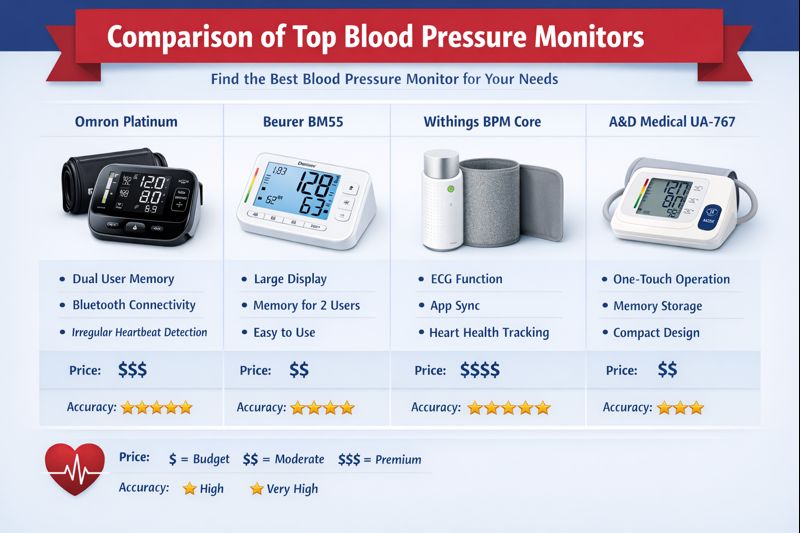
Comparing Top Blood Pressure Monitors
| Brand/Model | Type | Features | Price Range | Accuracy Rating |
|---|---|---|---|---|
| Omron Platinum | Digital | Dual-user, Bluetooth, irregular heartbeat detection | $$$ | High |
| Beurer BM55 | Digital | Large display, memory for 2 users | $$ | High |
| Withings BPM Core | Digital | App sync, ECG, heart health tracking | $$$$ | Very High |
| A&D Medical UA-767 | Digital | One-touch operation, memory storage | $$ | High |
| Microlife BP A6 | Digital | Arrhythmia detection, averaging function | $$ | High |
Maintaining Your Blood Pressure Monitor
Proper maintenance ensures reliable readings over time:
Clean the cuff regularly with a damp cloth.
Replace batteries when low.
Store the device in a dry, cool place.
Calibrate periodically as per manufacturer instructions.
Avoid dropping or exposing the device to extreme temperatures.
Blood Pressure Monitor for Special Needs
Certain monitors cater to specific needs:
For Seniors: Large displays, easy-to-use buttons, and voice guidance.
For Travelers: Compact wrist monitors with portable storage.
For Athletes: Monitors with connectivity to apps that track physical activity and heart rate trends.
Lifestyle Tips to Complement Blood Pressure Monitoring
Monitoring is only part of the process. Maintaining healthy blood pressure also requires lifestyle adjustments:
Exercise Regularly – Aim for at least 30 minutes a day of moderate activity.
Eat a Balanced Diet – Focus on fruits, vegetables, whole grains, and low-sodium foods.
Limit Alcohol and Caffeine – Both can temporarily raise blood pressure.
Manage Stress – Meditation, deep breathing, and yoga can help.
Avoid Smoking – Nicotine can increase blood pressure and heart risk.
Common Blood Pressure Monitor Questions (FAQs)
Q1: How often should I measure my blood pressure at home?
A: Ideally, twice daily—once in the morning and once in the evening—for consistent tracking.
Q2: Which is more accurate, wrist or arm monitors?
A: Upper-arm monitors tend to be more accurate, but wrist monitors can be convenient if used correctly at heart level.
Q3: Can a blood pressure monitor detect heart issues?
A: Some advanced monitors detect irregular heartbeats, but they are not a substitute for medical diagnosis.
Q4: What is considered normal blood pressure?
A: A typical reading is around 120/80 mmHg. Systolic readings above 130 mmHg or diastolic above 80 mmHg may indicate hypertension.
Q5: Can I share my monitor with family members?
A: Yes, especially if it has memory storage for multiple users. Ensure proper cuff size for each user.
Choosing the Right Blood Pressure Monitor for You
When selecting a monitor, consider:
Accuracy Certification – Look for devices validated by health organizations.
Ease of Use – Especially important for seniors or people with limited mobility.
Budget – Monitors range from affordable to premium, depending on features.
Connectivity Needs – If you want to sync with an app, ensure Bluetooth functionality.
Conclusion
A blood pressure monitor is more than a device; it’s a tool for proactive health management. Consistent use at home allows early detection of health issues, better medication management, and overall peace of mind. Whether you choose a digital, manual, or wrist monitor, proper technique and routine tracking are key to reliable results.
Investing in a high-quality blood pressure monitor today is an investment in your long-term health. Make monitoring a part of your daily routine, and take charge of your cardiovascular wellness.
Needs help with Nursing Assignment?
We are available 24x7 to deliver the best services and assignment ready within 3-4 hours? Order a custom-written, plagiarism-free paper
 Get Answer Over WhatsApp
 Order Paper Now