Grand Canyon University Nursing Help: 9 Practical Ways to Manage Nursing Coursework
Grand Canyon University Nursing Help: 9 Practical Ways to Manage Nursing Coursework
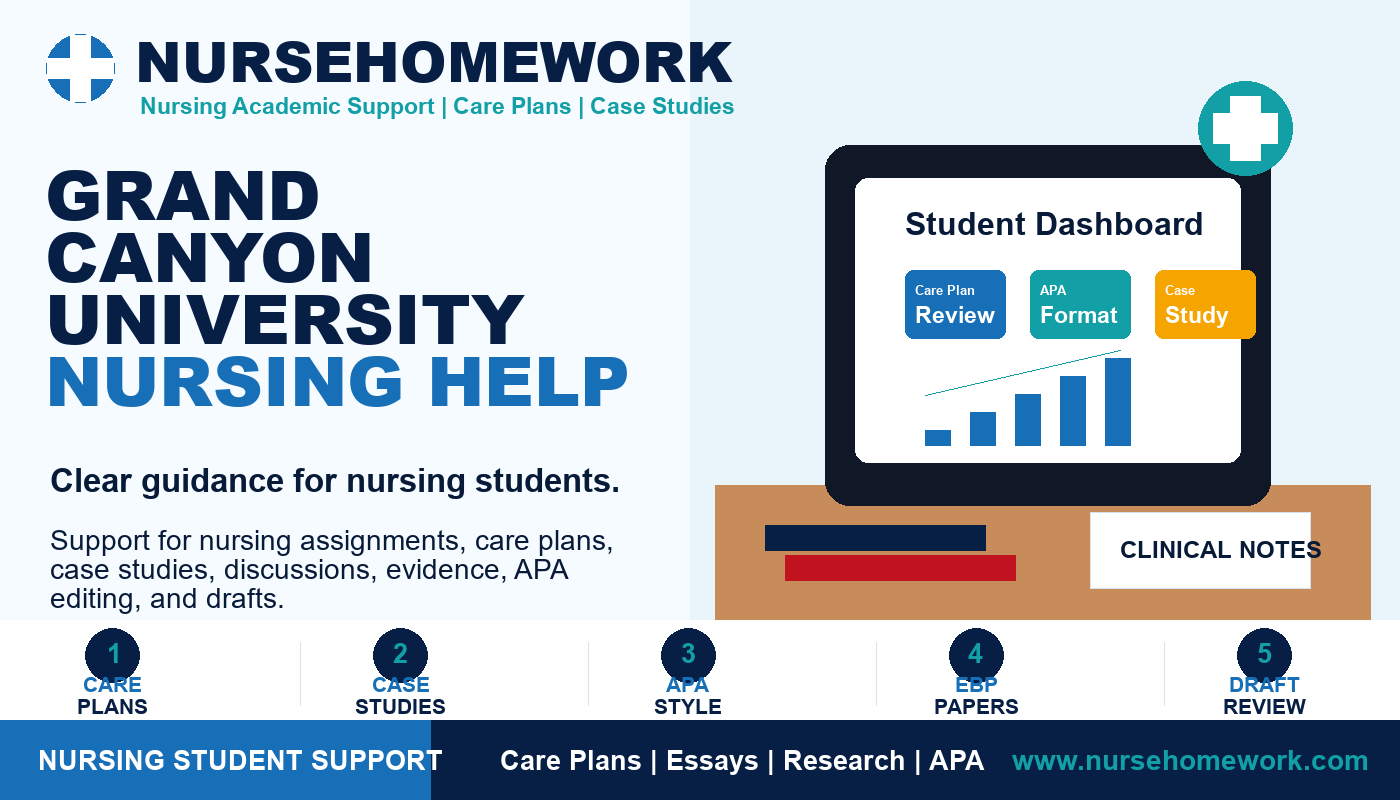
Grand Canyon University Nursing Help supports nursing students who need clearer structure for assignments, care plans, case studies, online discussions, evidence-based practice papers, APA formatting, and draft revision. Nursing coursework can be demanding because it expects students to combine clinical reasoning, patient safety, scholarly evidence, and professional writing.
Grand Canyon University offers several nursing program options, including online nursing pathways and degree programs through its College of Nursing and Health Care Professions. Many learners balance classes, clinical preparation, work, family responsibilities, and weekly academic tasks. A student may understand the nursing topic but still need help presenting ideas clearly in an academic format.
NurseHomework is independent and is not affiliated with Grand Canyon University. This article explains academic support for students who want help understanding assignment prompts, organizing nursing ideas, reviewing APA style, improving drafts, and managing coursework responsibly.
Table of Contents
- What this nursing support means
- Why GCU nursing students need structure
- Common nursing assignment types
- Care plan and case study support
- APA, evidence, and discussions
- Responsible use of academic help
- Frequently asked questions
What Is Grand Canyon University Nursing Help?
Grand Canyon University Nursing Help is independent academic guidance for nursing students who need support with assignment planning, rubric review, care plan structure, case study analysis, scholarly research, APA formatting, online discussion posts, reflective assignments, and draft editing.
This support can help students interpret instructions, create a working outline, identify relevant nursing concepts, locate credible evidence, improve paragraph flow, and check citations before submission. It should be used as a learning tool, not as a replacement for the student’s own study and understanding.
Students often request Grand Canyon University Nursing Help when multiple tasks overlap in the same week. One course may include readings, discussion posts, replies, quizzes, case studies, care planning, research, and final written assignments.
Good support should respect academic integrity. The student should understand the final work, follow university policy, and use academic guidance to improve learning and clarity.
Why Students Search for Grand Canyon University Nursing Help
Students search for Grand Canyon University Nursing Help because nursing assignments require more than general writing. A strong paper should answer the prompt, use evidence, show clinical reasoning, follow APA rules, and stay aligned with the rubric.
1. Nursing Assignments Require Clinical Judgment
Instructors expect students to explain patient needs, nursing priorities, safety concerns, interventions, rationales, and outcomes. A paper that only summarizes facts may not show enough clinical thinking.
2. Rubrics Can Be Detailed
Nursing rubrics often include many requirements. Students may need to include introduction, patient issue, scholarly evidence, nursing analysis, ethical concerns, conclusion, citations, and references.
3. APA Formatting Takes Time
APA formatting includes title pages, headings, citations, references, source dates, DOI formatting, capitalization, and consistency. These details can distract from content when students are already under deadline pressure.
4. Online and Working Students Need Planning
Students who work while studying need organized schedules. Without a plan, readings, assignments, and discussion replies can pile up quickly.
Common Assignments Covered by Grand Canyon University Nursing Help
Grand Canyon University Nursing Help may apply to several nursing coursework tasks. The best support depends on the assignment type, course level, word count, required sources, rubric, and deadline.
Care Plans
Care plans require assessment data, nursing diagnoses, goals, interventions, rationales, and evaluation. Students must connect every section to the patient scenario.
Case Studies
Case studies ask students to interpret patient information, recognize priority problems, review findings, and explain safe nursing actions.
Evidence-Based Practice Papers
Evidence-based practice assignments require students to find scholarly sources, summarize findings, evaluate evidence, and apply research to nursing care.
Discussion Posts
Discussion posts should answer the prompt directly, use course concepts, include scholarly support when required, and invite meaningful class interaction.
Reflective Essays
Reflective writing may connect clinical experience, communication, leadership, ethics, patient safety, and professional growth.
Capstone and Project Assignments
Capstone tasks may require topic selection, literature review, implementation planning, outcome discussion, and professional writing.
Care Plan and Case Study Support
Grand Canyon University Nursing Help is useful for care plans and case studies because these assignments test whether students can connect patient information to nursing priorities.
Start With Assessment Data
Assessment data should guide the paper. Students should identify subjective findings, objective findings, abnormal values, patient statements, medications, and safety risks before choosing a nursing priority.
Identify the Priority Problem
Not every patient issue has the same urgency. Airway, breathing, circulation, safety, infection risk, acute pain, and sudden deterioration often require immediate attention.
Explain Rationales
Interventions should include rationales. A rationale explains why the nursing action matters and how it connects to evidence, physiology, safety, or expected outcomes.
Evaluate Outcomes
Evaluation explains whether the goal was met, partially met, or not met. It closes the loop between problem, goal, intervention, and outcome.
APA, Evidence, and Discussion Support
Grand Canyon University Nursing Help can support students who need help with scholarly sources, APA formatting, and discussion post development. These details matter because they show academic discipline and professional communication.
For program context, students can review the official GCU nursing degrees and programs page and the GCU online nursing programs page. For accreditation context, GCU also provides information about its College of Nursing and Health Care Professions accreditation.
Choosing Scholarly Sources
Nursing assignments should use credible sources. Peer-reviewed articles, clinical guidelines, textbooks, and course-approved materials are stronger than unsupported webpages.
Using APA Correctly
APA formatting should be checked before submission. Students should review in-text citations, reference entries, headings, capitalization, dates, and punctuation.
Writing Better Discussion Posts
A strong discussion post answers the prompt, applies nursing judgment, includes evidence when required, and adds a focused idea classmates can engage with.
Improving Peer Replies
Replies should add value. A useful reply may include a clinical example, respectful question, source connection, patient safety point, or practical implication.
Study Planning for Nursing Coursework
Grand Canyon University Nursing Help works best when students also build a realistic study plan. Nursing homework becomes easier when reading, outlining, source search, drafting, citation review, and editing are separated into manageable steps.
Read the Instructions First
Before writing, identify the required topic, deliverable, word count, source count, APA rules, grading criteria, and due date.
Create an Outline
An outline keeps the paper organized. It also helps students see whether every rubric requirement has a place.
Separate Drafting From Editing
First create a complete draft. Then revise for clarity, grammar, citations, references, headings, and assignment alignment.
Use Feedback
Feedback from earlier assignments can improve future work. Students should track repeated comments about APA, evidence, analysis, structure, or clarity.
Responsible Use of Grand Canyon University Nursing Help
Grand Canyon University Nursing Help should be used for planning, explanation, editing, organization, and learning support. It should not be used to impersonate a student, fabricate clinical information, misuse sources, or violate academic integrity rules.
Responsible academic support helps students understand instructions, organize evidence, improve drafts, and learn how to communicate nursing reasoning. The student should remain actively involved and understand the final work.
Share the Rubric
Support is more useful when the student provides the prompt, rubric, required sources, grading criteria, course topic, and deadline.
Ask for Explanations
Students should ask why a paragraph needs evidence, why a care plan needs evaluation, or why a citation should be revised. Explanation improves learning.
Review Before Submission
The final draft should be reviewed carefully. Students should confirm that it answers the prompt and follows course expectations.
Grand Canyon University Nursing Help can also support students who need to compare assignment instructions with a draft that already needs revision.
Grand Canyon University Nursing Help is useful when learners need a clearer plan for citations, source use, and final proofreading.
Common Mistakes Students Should Avoid
Grand Canyon University Nursing Help can help students avoid common mistakes that weaken nursing papers and assignment scores.
Writing Generally Instead of Answering the Prompt
A paper may sound polished but still miss the assignment. Always return to the exact question and rubric.
Using Sources Without Analysis
Evidence should be explained. A citation alone does not show how the research applies to nursing practice.
Ignoring APA Details
APA errors can distract from good nursing content. Check citations, references, headings, and formatting before submission.
Waiting Until the Deadline
Rushed work usually has weaker evidence, more citation errors, and less revision. Start early when possible.
Forgetting Patient Safety
Nursing assignments should connect back to patient outcomes, safety, communication, ethics, or professional practice whenever relevant.
Why Choose NurseHomework?
NurseHomework supports nursing students with academic writing guidance, assignment planning, APA editing, care plan support, case study analysis, evidence-based practice writing, and draft revision.
Grand Canyon University Nursing Help from NurseHomework focuses on clarity, structure, and responsible academic support. Students can get help turning instructions into outlines, improving draft quality, organizing sources, and strengthening nursing analysis.
Students who need related support can also review nursing care plan help, nursing case study help, and nursing capstone project help for other academic nursing needs.
- Support for online nursing assignments
- Help with care plans, case studies, and discussions
- APA editing and source guidance
- Rubric review and draft feedback
- Responsible, learning-focused academic assistance
Frequently Asked Questions
What is Grand Canyon University Nursing Help?
Grand Canyon University Nursing Help is independent academic support for students who need guidance with nursing assignments, care plans, case studies, discussions, APA formatting, evidence-based writing, and draft editing.
Is NurseHomework affiliated with Grand Canyon University?
No. NurseHomework is independent and is not affiliated with Grand Canyon University. Students should follow their school policies and use academic support responsibly.
Can this help with GCU nursing care plans?
Yes. Support can help students organize assessment data, nursing diagnoses, goals, interventions, rationales, and evaluation.
Can this help with online nursing discussions?
Yes. Students can get help planning focused posts, adding scholarly evidence, improving replies, and writing in a professional nursing tone.
Can NurseHomework edit nursing papers?
Yes. Editing support can improve grammar, APA formatting, citations, references, structure, clarity, and rubric alignment.
Get Started
If you need GCU nursing assignment support, visit NurseHomework to request help with care plans, case studies, discussion posts, research, APA editing, and nursing homework planning.
Additional Nursing Homework Planning Tips
Start every assignment by separating the work into reading, source search, outlining, drafting, citation checking, and final editing. This process makes large assignments easier to manage.
Use the grading rubric as a checklist. If the rubric asks for evidence, patient-centered analysis, APA references, or reflection, make sure each requirement appears clearly in the paper.
Keep paragraphs short and focused. A strong nursing paragraph usually explains one clinical idea, supports it with evidence, and connects it to the assignment question.
Review previous faculty feedback before starting the next paper. Repeated comments about APA, source quality, organization, or clinical reasoning should guide revision habits.
Build a small source library for common nursing themes such as patient safety, communication, leadership, care coordination, ethics, pharmacology, and evidence-based practice.
Additional Nursing Homework Planning Tips
Start every assignment by separating the work into reading, source search, outlining, drafting, citation checking, and final editing. This process makes large assignments easier to manage.
Use the grading rubric as a checklist. If the rubric asks for evidence, patient-centered analysis, APA references, or reflection, make sure each requirement appears clearly in the paper.
Keep paragraphs short and focused. A strong nursing paragraph usually explains one clinical idea, supports it with evidence, and connects it to the assignment question.
Review previous faculty feedback before starting the next paper. Repeated comments about APA, source quality, organization, or clinical reasoning should guide revision habits.
Build a small source library for common nursing themes such as patient safety, communication, leadership, care coordination, ethics, pharmacology, and evidence-based practice.
Additional Nursing Homework Planning Tips
Start every assignment by separating the work into reading, source search, outlining, drafting, citation checking, and final editing. This process makes large assignments easier to manage.
Use the grading rubric as a checklist. If the rubric asks for evidence, patient-centered analysis, APA references, or reflection, make sure each requirement appears clearly in the paper.
Keep paragraphs short and focused. A strong nursing paragraph usually explains one clinical idea, supports it with evidence, and connects it to the assignment question.
Review previous faculty feedback before starting the next paper. Repeated comments about APA, source quality, organization, or clinical reasoning should guide revision habits.
Build a small source library for common nursing themes such as patient safety, communication, leadership, care coordination, ethics, pharmacology, and evidence-based practice.
Additional Nursing Homework Planning Tips
Start every assignment by separating the work into reading, source search, outlining, drafting, citation checking, and final editing. This process makes large assignments easier to manage.
Use the grading rubric as a checklist. If the rubric asks for evidence, patient-centered analysis, APA references, or reflection, make sure each requirement appears clearly in the paper.
Keep paragraphs short and focused. A strong nursing paragraph usually explains one clinical idea, supports it with evidence, and connects it to the assignment question.
Review previous faculty feedback before starting the next paper. Repeated comments about APA, source quality, organization, or clinical reasoning should guide revision habits.
Build a small source library for common nursing themes such as patient safety, communication, leadership, care coordination, ethics, pharmacology, and evidence-based practice.
Additional Nursing Homework Planning Tips
Start every assignment by separating the work into reading, source search, outlining, drafting, citation checking, and final editing. This process makes large assignments easier to manage.
Use the grading rubric as a checklist. If the rubric asks for evidence, patient-centered analysis, APA references, or reflection, make sure each requirement appears clearly in the paper.
Keep paragraphs short and focused. A strong nursing paragraph usually explains one clinical idea, supports it with evidence, and connects it to the assignment question.
Review previous faculty feedback before starting the next paper. Repeated comments about APA, source quality, organization, or clinical reasoning should guide revision habits.
Build a small source library for common nursing themes such as patient safety, communication, leadership, care coordination, ethics, pharmacology, and evidence-based practice.
Additional Nursing Homework Planning Tips
Start every assignment by separating the work into reading, source search, outlining, drafting, citation checking, and final editing. This process makes large assignments easier to manage.
Use the grading rubric as a checklist. If the rubric asks for evidence, patient-centered analysis, APA references, or reflection, make sure each requirement appears clearly in the paper.
Keep paragraphs short and focused. A strong nursing paragraph usually explains one clinical idea, supports it with evidence, and connects it to the assignment question.
Review previous faculty feedback before starting the next paper. Repeated comments about APA, source quality, organization, or clinical reasoning should guide revision habits.
Build a small source library for common nursing themes such as patient safety, communication, leadership, care coordination, ethics, pharmacology, and evidence-based practice.
Additional Nursing Homework Planning Tips
Start every assignment by separating the work into reading, source search, outlining, drafting, citation checking, and final editing. This process makes large assignments easier to manage.
Use the grading rubric as a checklist. If the rubric asks for evidence, patient-centered analysis, APA references, or reflection, make sure each requirement appears clearly in the paper.
Keep paragraphs short and focused. A strong nursing paragraph usually explains one clinical idea, supports it with evidence, and connects it to the assignment question.
Review previous faculty feedback before starting the next paper. Repeated comments about APA, source quality, organization, or clinical reasoning should guide revision habits.
Build a small source library for common nursing themes such as patient safety, communication, leadership, care coordination, ethics, pharmacology, and evidence-based practice.
Additional Nursing Homework Planning Tips
Start every assignment by separating the work into reading, source search, outlining, drafting, citation checking, and final editing. This process makes large assignments easier to manage.
Use the grading rubric as a checklist. If the rubric asks for evidence, patient-centered analysis, APA references, or reflection, make sure each requirement appears clearly in the paper.
Keep paragraphs short and focused. A strong nursing paragraph usually explains one clinical idea, supports it with evidence, and connects it to the assignment question.
Review previous faculty feedback before starting the next paper. Repeated comments about APA, source quality, organization, or clinical reasoning should guide revision habits.
Build a small source library for common nursing themes such as patient safety, communication, leadership, care coordination, ethics, pharmacology, and evidence-based practice.
Additional Nursing Homework Planning Tips
Start every assignment by separating the work into reading, source search, outlining, drafting, citation checking, and final editing. This process makes large assignments easier to manage.
Use the grading rubric as a checklist. If the rubric asks for evidence, patient-centered analysis, APA references, or reflection, make sure each requirement appears clearly in the paper.
Keep paragraphs short and focused. A strong nursing paragraph usually explains one clinical idea, supports it with evidence, and connects it to the assignment question.
Review previous faculty feedback before starting the next paper. Repeated comments about APA, source quality, organization, or clinical reasoning should guide revision habits.
Build a small source library for common nursing themes such as patient safety, communication, leadership, care coordination, ethics, pharmacology, and evidence-based practice.
Additional Nursing Homework Planning Tips
Start every assignment by separating the work into reading, source search, outlining, drafting, citation checking, and final editing. This process makes large assignments easier to manage.
Use the grading rubric as a checklist. If the rubric asks for evidence, patient-centered analysis, APA references, or reflection, make sure each requirement appears clearly in the paper.
Keep paragraphs short and focused. A strong nursing paragraph usually explains one clinical idea, supports it with evidence, and connects it to the assignment question.
Review previous faculty feedback before starting the next paper. Repeated comments about APA, source quality, organization, or clinical reasoning should guide revision habits.
Build a small source library for common nursing themes such as patient safety, communication, leadership, care coordination, ethics, pharmacology, and evidence-based practice.
Additional Nursing Homework Planning Tips
Start every assignment by separating the work into reading, source search, outlining, drafting, citation checking, and final editing. This process makes large assignments easier to manage.
Use the grading rubric as a checklist. If the rubric asks for evidence, patient-centered analysis, APA references, or reflection, make sure each requirement appears clearly in the paper.
Keep paragraphs short and focused. A strong nursing paragraph usually explains one clinical idea, supports it with evidence, and connects it to the assignment question.
Review previous faculty feedback before starting the next paper. Repeated comments about APA, source quality, organization, or clinical reasoning should guide revision habits.
Build a small source library for common nursing themes such as patient safety, communication, leadership, care coordination, ethics, pharmacology, and evidence-based practice.
Additional Nursing Homework Planning Tips
Start every assignment by separating the work into reading, source search, outlining, drafting, citation checking, and final editing. This process makes large assignments easier to manage.
Use the grading rubric as a checklist. If the rubric asks for evidence, patient-centered analysis, APA references, or reflection, make sure each requirement appears clearly in the paper.
Keep paragraphs short and focused. A strong nursing paragraph usually explains one clinical idea, supports it with evidence, and connects it to the assignment question.
Review previous faculty feedback before starting the next paper. Repeated comments about APA, source quality, organization, or clinical reasoning should guide revision habits.
Build a small source library for common nursing themes such as patient safety, communication, leadership, care coordination, ethics, pharmacology, and evidence-based practice.
Additional Nursing Homework Planning Tips
Start every assignment by separating the work into reading, source search, outlining, drafting, citation checking, and final editing. This process makes large assignments easier to manage.
Use the grading rubric as a checklist. If the rubric asks for evidence, patient-centered analysis, APA references, or reflection, make sure each requirement appears clearly in the paper.
Keep paragraphs short and focused. A strong nursing paragraph usually explains one clinical idea, supports it with evidence, and connects it to the assignment question.
Review previous faculty feedback before starting the next paper. Repeated comments about APA, source quality, organization, or clinical reasoning should guide revision habits.
Build a small source library for common nursing themes such as patient safety, communication, leadership, care coordination, ethics, pharmacology, and evidence-based practice.
Additional Nursing Homework Planning Tips
Start every assignment by separating the work into reading, source search, outlining, drafting, citation checking, and final editing. This process makes large assignments easier to manage.
Use the grading rubric as a checklist. If the rubric asks for evidence, patient-centered analysis, APA references, or reflection, make sure each requirement appears clearly in the paper.
Keep paragraphs short and focused. A strong nursing paragraph usually explains one clinical idea, supports it with evidence, and connects it to the assignment question.
Review previous faculty feedback before starting the next paper. Repeated comments about APA, source quality, organization, or clinical reasoning should guide revision habits.
Build a small source library for common nursing themes such as patient safety, communication, leadership, care coordination, ethics, pharmacology, and evidence-based practice.
Additional Nursing Homework Planning Tips
Start every assignment by separating the work into reading, source search, outlining, drafting, citation checking, and final editing. This process makes large assignments easier to manage.
Use the grading rubric as a checklist. If the rubric asks for evidence, patient-centered analysis, APA references, or reflection, make sure each requirement appears clearly in the paper.
Keep paragraphs short and focused. A strong nursing paragraph usually explains one clinical idea, supports it with evidence, and connects it to the assignment question.
Review previous faculty feedback before starting the next paper. Repeated comments about APA, source quality, organization, or clinical reasoning should guide revision habits.
Build a small source library for common nursing themes such as patient safety, communication, leadership, care coordination, ethics, pharmacology, and evidence-based practice.
Additional Nursing Homework Planning Tips
Start every assignment by separating the work into reading, source search, outlining, drafting, citation checking, and final editing. This process makes large assignments easier to manage.
Use the grading rubric as a checklist. If the rubric asks for evidence, patient-centered analysis, APA references, or reflection, make sure each requirement appears clearly in the paper.
Keep paragraphs short and focused. A strong nursing paragraph usually explains one clinical idea, supports it with evidence, and connects it to the assignment question.
Review previous faculty feedback before starting the next paper. Repeated comments about APA, source quality, organization, or clinical reasoning should guide revision habits.
Build a small source library for common nursing themes such as patient safety, communication, leadership, care coordination, ethics, pharmacology, and evidence-based practice.
Additional Nursing Homework Planning Tips
Start every assignment by separating the work into reading, source search, outlining, drafting, citation checking, and final editing. This process makes large assignments easier to manage.
Use the grading rubric as a checklist. If the rubric asks for evidence, patient-centered analysis, APA references, or reflection, make sure each requirement appears clearly in the paper.
Keep paragraphs short and focused. A strong nursing paragraph usually explains one clinical idea, supports it with evidence, and connects it to the assignment question.
Review previous faculty feedback before starting the next paper. Repeated comments about APA, source quality, organization, or clinical reasoning should guide revision habits.
Build a small source library for common nursing themes such as patient safety, communication, leadership, care coordination, ethics, pharmacology, and evidence-based practice.
Additional Nursing Homework Planning Tips
Start every assignment by separating the work into reading, source search, outlining, drafting, citation checking, and final editing. This process makes large assignments easier to manage.
Use the grading rubric as a checklist. If the rubric asks for evidence, patient-centered analysis, APA references, or reflection, make sure each requirement appears clearly in the paper.
Keep paragraphs short and focused. A strong nursing paragraph usually explains one clinical idea, supports it with evidence, and connects it to the assignment question.
Review previous faculty feedback before starting the next paper. Repeated comments about APA, source quality, organization, or clinical reasoning should guide revision habits.
Build a small source library for common nursing themes such as patient safety, communication, leadership, care coordination, ethics, pharmacology, and evidence-based practice.
Additional Nursing Homework Planning Tips
Start every assignment by separating the work into reading, source search, outlining, drafting, citation checking, and final editing. This process makes large assignments easier to manage.
Use the grading rubric as a checklist. If the rubric asks for evidence, patient-centered analysis, APA references, or reflection, make sure each requirement appears clearly in the paper.
Keep paragraphs short and focused. A strong nursing paragraph usually explains one clinical idea, supports it with evidence, and connects it to the assignment question.
Review previous faculty feedback before starting the next paper. Repeated comments about APA, source quality, organization, or clinical reasoning should guide revision habits.
Build a small source library for common nursing themes such as patient safety, communication, leadership, care coordination, ethics, pharmacology, and evidence-based practice.
Needs help with Nursing Assignment?
We are available 24x7 to deliver the best services and assignment ready within 3-4 hours? Order a custom-written, plagiarism-free paper
 Get Answer Over WhatsApp
 Order Paper Now