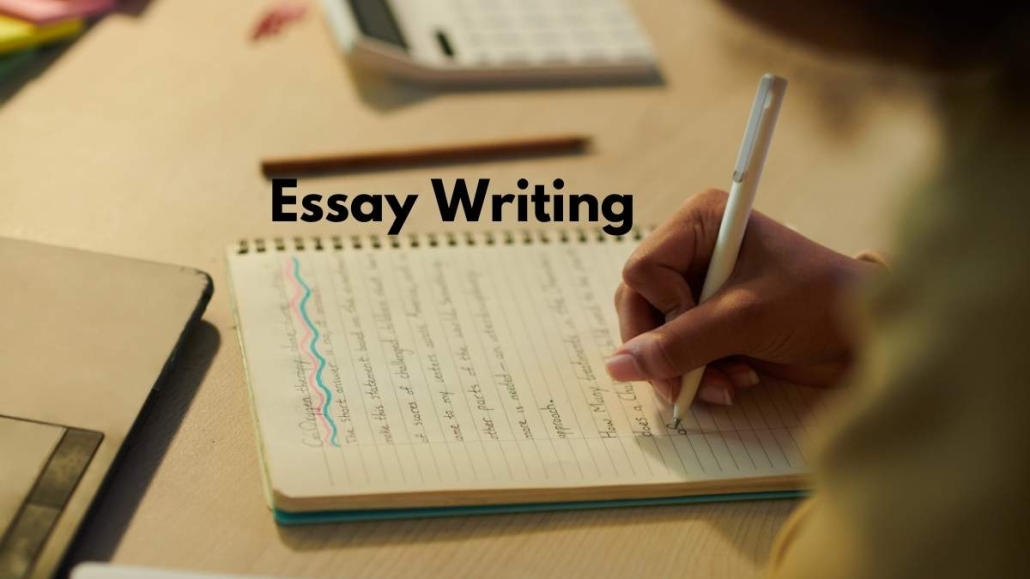
The Definitive Guide on How to Write a Good Essay: Tips, Techniques & Examples
How to Write a Good Essay
Writing great essays is one of the most important academic skills you’ll ever develop. Whether you’re in school, college, or university, knowing how to write a good essay can boost your grades, enhance your communication skills, and make complex ideas easier to express. This guide covers everything from the basics of effective writing to advanced strategies used by expert writers — including real examples, step‑by‑step instructions, and common mistakes to avoid.
By the end of this comprehensive article, you’ll not only understand the core principles of great essay writing, but also have the confidence to apply them immediately.
What Does NurseHomework.com Do?
Before diving in, let’s understand how a platform like NurseHomework.com supports students. NurseHomework.com provides professional academic support — helping students with assignments, essays, case studies, research papers, and more. With experts in nursing and academia, the site assists learners who struggle with time constraints or complex writing tasks.
This article will bridge general writing skills with actionable guidance that NurseHomework.com users (and all students) can use to master essay writing.
Why Essay Writing Matters
At its core, essay writing helps you:
- Think critically
- Organize thoughts clearly
- Express your opinions with evidence
- Communicate complex ideas concisely
- Achieve academic success
Learning how to write a good essay equips you with a skill that extends beyond school — to professional life, presentations, reports, and more.
What Makes a Great Essay?
A well‑written essay should have:
✔ A Clear Purpose
Understand why you are writing the essay and what question you need to answer.
✔ A Strong Thesis Statement
This is the central idea of your essay — what you want to prove or explain.
✔ Logical Structure
Well‑organized paragraphs that connect smoothly — Introduction, Body, and Conclusion.
✔ Evidence and Examples
Facts, quotations, and examples that support your claims make your arguments convincing.
✔ Clear Language
Good sentence structure, correct grammar, and precise vocabulary enhance readability.
Step‑by‑Step: How to Write a Good Essay
Below are actionable steps you can apply to any essay task:
1. Read the Prompt Carefully
Start by fully understanding the essay question or topic.
Ask yourself:
- What am I being asked to discuss?
- Are there keywords like “compare,” “describe,” “evaluate,” or “argue”?
Clarifying this early saves you time and keeps your writing focused.
2. Research & Brainstorm Ideas
Gather relevant information from reliable sources such as books, academic articles, and credible websites.
Use brainstorming techniques like:
- Mind mapping
- Lists of pros/cons
- Free writing
This helps generate rich content for your essay.
3. Create an Outline
A solid outline makes writing much easier. Here’s a simple structure:
Introduction
- Hook sentence
- Context or background
- Thesis statement
Body Paragraphs
- Topic sentence
- Supporting details
- Evidence or examples
- Transition to next idea
Conclusion
- Restate thesis
- Summarize key points
- Final insight or implication
This skeleton ensures your thoughts stay organized.
4. Write the Introduction
Your introduction should:
- Grab the reader’s attention
- Provide context
- End with a clear thesis statement
For example, a strong introduction might start with a surprising fact, a quote, or a relevant anecdote.
5. Develop the Body Paragraphs
Each body paragraph should revolve around a single point.
A proven structure for each body paragraph:
- Topic Sentence — Main idea of the paragraph
- Explanation — Why this idea matters
- Evidence — Support from research or examples
- Analysis — How the evidence connects to your thesis
This flow shows depth and clarity in understanding.
6. Write an Effective Conclusion
The conclusion brings closure.
Good conclusions:
- Restate the thesis in fresh words
- Summarize key points
- Leave the reader with something to think about
Avoid introducing new ideas at this stage.
Common Mistakes to Avoid
Even experienced writers can slip up. Here are mistakes to watch out for:
❌ Lack of Clear Thesis
An unclear thesis leads to a weak essay structure.
❌ Poor Organization
Ideas that jump around without logical flow confuse the reader.
❌ Not Supporting Claims
Statements without evidence appear opinion‑based instead of analytical.
❌ Grammar & Spelling Errors
Mistakes distract from your message and weaken credibility.
❌ Ignoring Formatting Instructions
Follow MLA, APA, Harvard, or other academic styles carefully.
Writing with Confidence: Advanced Tips
✨ Use Active Voice
Sentences like “Students learn better…” are stronger than “Better learning is achieved…”.
✨ Vary Sentence Structure
Mix short and long sentences to maintain rhythm and engagement.
✨ Integrate Quotations Smoothly
Lead into quotes with your own words and explain their relevance.
✨ Cite Sources Correctly
Proper citations show academic integrity and prevent plagiarism.
Essay Writing Practice Examples
Here’s how the tips above apply in practice:
Example Prompt:
Discuss the impact of technology on student learning.
Thesis Example:
“Technology has transformed student learning by enhancing access to information, promoting collaboration, and personalizing educational experiences.”
Body Paragraph Sample:
- Topic sentence: “First, technology enhances access to information.”
- Evidence: “Online databases and educational platforms provide unlimited resources…”
- Analysis: “This access broadens students’ research skills and improves outcomes.”
How to Write a Good Essay: Real‑World Applications
The skills above don’t just apply to school. Knowing how to write a good essay helps in:
- Job applications
- Reports and proposals
- Opinion pieces and blogs
- Professional communication
Strong writing is a universally valuable skill.
Using Tools & Support to Improve Your Essays
If you’re aiming for faster improvement or professional assistance, many learners seek expert help — especially when juggling academic or job workloads.
For instance:
- NurseHomework.com offers tailored writing support for students who struggle with essays, assignments, or complex research tasks.
Why Quality Writing Matters More Than Ever
In a competitive academic world, the ability to write clearly and persuasively is a differentiator. Whether you’re submitting essays for grades, applying to programs, or building a portfolio, quality writing stands out.
Tools That Help You Improve Essay Writing
There are many online resources that help sharpen your writing:
- Grammar checkers
- Academic style guides
- Citation managers
- Digital libraries
Using these alongside the principles above improves speed and accuracy.
Bonus: Writing Checklist Before Submission
Before hitting submit, run through this checklist:
✅ Is your thesis clear and strong?
✅ Does each paragraph support that thesis?
✅ Have you provided evidence and analysis?
✅ Are your citations formatted correctly?
✅ Is the essay grammatically clean?
✅ Does the conclusion add meaning?
This review often catches small errors that can impact your grade.
Why Practice Makes You Better
Just like any other skill, essay writing improves with practice.
Set a goal to:
- Write regularly
- Seek feedback from peers or instructors
- Revise with care
The more you practice how to write a good essay, the more natural it becomes.
Affordable Tools & Platforms for Students
Students also benefit from affordable educational tech products that make research and writing easier. If you’re looking to upgrade your study setup — from efficient laptops to large monitors for writing — check out great value tech deals at mubaraktech.co.ke, one of Kenya’s best destinations for affordable computing gear.
Looking for even more tech options? Visit mubaraktechstore.com for budget‑friendly gadgets that enhance your academic productivity.
And for those seeking excellent deals on accessories and affordable tech items that support students, jaat.co.ke consistently offers competitive prices.
Your Writing Journey Starts Today
Mastering how to write a good essay is a journey, not a one‑off task. With the steps, examples, and tips above, you are equipped to write essays that are clear, compelling, and academically sound.
Remember:
✔ Plan
✔ Research
✔ Structure
✔ Support with evidence
✔ Revise and proofread
As you grow your skills, your confidence and academic performance will follow.
Start applying these strategies now — and experience how much stronger your writing can become!
Needs help with Nursing Assignment?
We are available 24x7 to deliver the best services and assignment ready within 3-4 hours? Order a custom-written, plagiarism-free paper
 Get Answer Over WhatsApp
 Order Paper Now
