Nurse Study Resources | Comprehensive Guide for Nursing Students
Nurse Study Resources
Nurse Study Resources: Your Ultimate Guide to Success in Nursing School
Studying nursing can be challenging, but having the right nurse study resources can make a significant difference. Whether you’re a first-year nursing student or preparing for your NCLEX exam, using targeted tools and materials helps you retain knowledge effectively and excel in your studies.
Top Nurse Study Resources Every Nursing Student Needs
1. Textbooks and Reference Guides
High-quality textbooks are the foundation of your nursing education. Key titles include:
Medical-Surgical Nursing by Lewis et al.
Fundamentals of Nursing by Taylor et al.
Pharmacology for Nursing Practice by Hill et al.
These resources provide in-depth coverage of nursing concepts and patient care techniques.
2. Online Learning Platforms
Digital platforms offer flexible learning opportunities for busy nursing students. Popular platforms include:
Khan Academy for anatomy and physiology tutorials
RegisteredNurseRN for NCLEX prep and clinical skills videos
Nursing.com for quizzes, study plans, and cheat sheets
3. Flashcards and Memory Aids
Flashcards are a proven tool for memorizing medical terms, drug names, and procedures. Options include:
Quizlet – pre-made flashcard sets for nursing topics
Anki – spaced repetition software for long-term memory retention
4. Practice Tests and Exam Prep
Simulating real exam conditions improves confidence and performance. Resources include:
NCLEX-RN Practice Questions on UWorld and Kaplan
ATI Nursing Exams for comprehensive topic coverage
5. Study Groups and Peer Support
Collaborating with peers enhances understanding and problem-solving. Online forums, WhatsApp groups, and university study circles provide valuable support and discussion opportunities.
6. Mobile Apps for Nursing Students
Apps help you study on the go and stay organized:
NurseGrid – scheduling and time management
Medscape – drug reference and clinical updates
Epocrates – medical calculators and drug information
How to Use Nurse Study Resources Effectively
Create a Study Schedule: Allocate dedicated time for each topic and resource type.
Combine Learning Methods: Mix reading, videos, flashcards, and practice questions for better retention.
Focus on Weak Areas: Identify topics where you struggle and concentrate your efforts there.
Review Regularly: Spaced repetition ensures knowledge stays in your long-term memory.
Nurse Study Resources: Comprehensive Tools to Excel in Nursing School
Nursing is a challenging and rewarding field that demands both theoretical knowledge and practical skills. The right nurse study resources can make your learning journey more effective, organized, and less stressful. This guide highlights the best tools, platforms, and strategies to help you succeed in nursing school and beyond.
Why Nurse Study Resources Are Essential
Nursing students juggle anatomy, pharmacology, patient care, and clinical practice. Using structured resources can:
Simplify complex concepts
Improve retention and recall
Prepare students for exams like NCLEX-RN
Enhance clinical decision-making skills
Investing time in quality study materials pays off by boosting confidence and academic performance.
Top Nurse Study Resources for Every Nursing Student
1. Textbooks and Reference Guides
Textbooks provide foundational knowledge and detailed explanations of nursing concepts:
Fundamentals of Nursing – Covers essential principles and patient care basics.
Medical-Surgical Nursing – Comprehensive coverage of disease processes and interventions.
Pharmacology for Nursing Practice – Detailed drug references and administration guidelines.
Tip: Highlight key points, take notes in your own words, and revisit chapters regularly.
2. Online Learning Platforms
Digital platforms allow flexible and interactive learning, perfect for busy schedules:
Khan Academy – Free tutorials on anatomy, physiology, and biochemistry.
RegisteredNurseRN – NCLEX prep, clinical skills videos, and study tips.
Nursing.com – Practice quizzes, cheat sheets, and structured study plans.
Pro Tip: Combine video lessons with textbooks to reinforce understanding.
3. Flashcards and Memory Tools
Flashcards help memorize medical terminology, drugs, and procedures efficiently:
Quizlet – Pre-made nursing flashcards for quick review.
Anki – Uses spaced repetition for long-term memory retention.
Pro Tip: Create your own flashcards for challenging topics—they stick better than pre-made sets.
4. Practice Tests and Exam Prep
Simulating exam conditions is crucial for confidence and success:
NCLEX-RN Practice Questions – Available on UWorld, Kaplan, and Saunders platforms.
ATI Nursing Exams – Covers all major nursing topics with detailed rationales.
Pro Tip: Review incorrect answers to understand your weak areas and avoid repeating mistakes.
5. Study Groups and Peer Support
Collaborative learning improves retention and critical thinking:
University study circles
WhatsApp or Discord groups
Online forums like allnurses.com
Pro Tip: Teach each other topics—explaining concepts aloud is one of the best ways to learn.
6. Mobile Apps for Nursing Students
Apps help you study on the go and organize your time efficiently:
NurseGrid – Scheduling, shift tracking, and reminders.
Medscape – Clinical updates, drug reference, and medical news.
Epocrates – Drug information, interactions, and calculators.
Pro Tip: Use apps for quick daily review sessions during short breaks.
How to Maximize the Effectiveness of Nurse Study Resources
Create a Structured Study Schedule: Divide topics by day and stick to consistent study hours.
Combine Different Learning Methods: Reading, videos, quizzes, and practical exercises improve comprehension.
Focus on Weak Areas: Identify challenging topics and allocate more time to them.
Regular Revision: Repetition strengthens memory and prepares you for exams.
Self-Assessment: Take practice tests frequently to gauge progress and build confidence.
FAQs About Nurse Study Resources
Q1: What are the best online resources for nursing students?
A1: Websites like Nursing.com, RegisteredNurseRN, Khan Academy, and UWorld offer comprehensive study tools for nursing students.Q2: Are mobile apps useful for nursing studies?
A2: Yes, apps like Medscape, Epocrates, and NurseGrid allow flexible learning, clinical reference, and schedule management.Q3: How often should nursing students review flashcards?
A3: Ideally, review flashcards daily, and use spaced repetition to strengthen long-term retention.Q4: Can study groups improve exam performance?
A4: Absolutely. Explaining topics to peers and discussing case studies enhances understanding and critical thinking skillsNurse Study Resources: The Complete Guide for Nursing Students
Studying nursing requires dedication, organization, and the right nurse study resources. From textbooks to apps, study groups, and practice exams, having the right tools can make your nursing journey smoother, more effective, and even enjoyable.
This guide covers all essential resources, strategies, and tips to help you succeed academically and clinically.
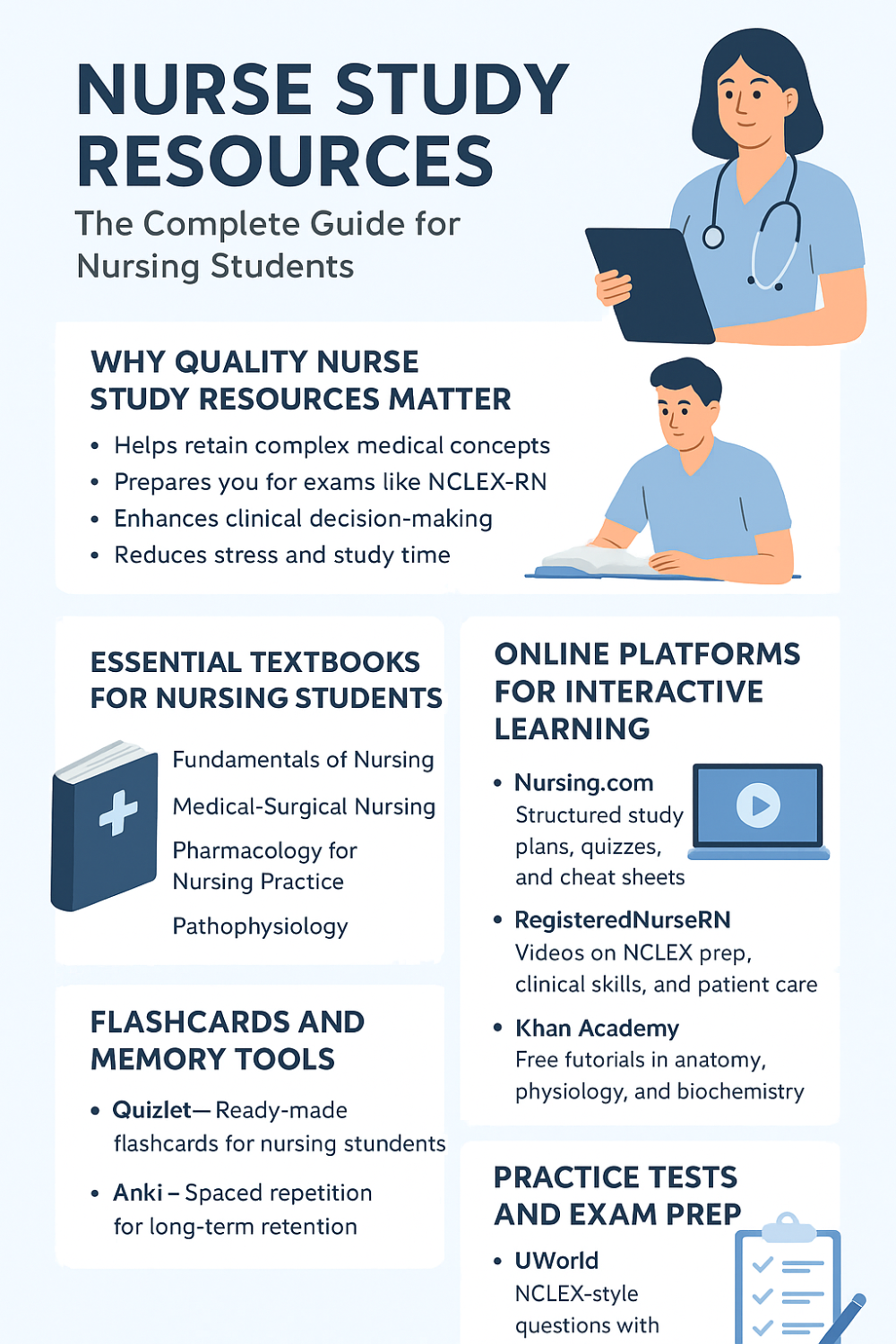
1. Why Quality Nurse Study Resources Matter
Nursing is a demanding field, blending theory, practical skills, and critical thinking. Using high-quality resources:
Helps retain complex medical concepts
Prepares you for exams like NCLEX-RN
Enhances clinical decision-making
Reduces stress and study time
A structured approach with the right materials sets the foundation for a successful nursing career.
2. Essential Textbooks for Nursing Students
Textbooks remain the backbone of nursing education. Key titles include:
Fundamentals of Nursing by Taylor – Covers core nursing concepts.
Medical-Surgical Nursing by Lewis – Essential for clinical practice.
Pharmacology for Nursing Practice – Comprehensive drug references.
Pathophysiology by McCance & Huether – Deep dive into disease processes.
Tip: Highlight, summarize, and review key points to reinforce learning.
3. Online Platforms for Interactive Learning
Digital resources make learning flexible and interactive. Top platforms:
Nursing.com – Structured study plans, quizzes, and cheat sheets.
RegisteredNurseRN – Videos on NCLEX prep, clinical skills, and patient care.
Khan Academy – Free tutorials in anatomy, physiology, and biochemistry.
Combine these with textbooks for a multi-dimensional learning approach.
4. Flashcards and Memory Tools
Flashcards help memorize medical terms, drugs, and procedures:
Quizlet – Ready-made flashcards for nursing students.
Anki – Spaced repetition for long-term retention.
Pro Tip: Create your own flashcards for challenging topics—they stick better than pre-made sets.
5. Practice Tests and Exam Prep
Testing yourself is essential for exam readiness:
UWorld – NCLEX-style questions with rationales.
ATI Nursing Exams – Comprehensive topic coverage.
Kaplan NCLEX Prep – Simulated exams and performance tracking.
Regular practice helps identify weak areas and builds confidence.
6. Study Groups and Peer Learning
Collaboration enhances understanding:
Join university study circles.
Use WhatsApp or Discord groups for discussion.
Engage in forums like AllNurses.com.
Tip: Teach others what you’ve learned—explaining concepts improves retention.
7. Mobile Apps for nurse Students
Apps provide flexibility and quick references:
Medscape – Drug guides, clinical news, and calculators.
Epocrates – Clinical reference and drug interactions.
NurseGrid – Scheduling and time management.
Tip: Use apps during short breaks for quick daily review sessions.
8. Clinical Skills Videos and Tutorials
Practical skills are vital for nursing students:
YouTube Channels: RegisteredNurseRN, Osmosis, and Ninja Nerd.
Hospital Simulation Labs: Practice hands-on skills in a controlled environment.
Tip: Watch videos before clinical rotations to boost confidence.
9. Time Management and Study Planning
Efficient study strategies maximize productivity:
Create a weekly study schedule.
Use the Pomodoro technique (25-min study + 5-min break).
Prioritize weak areas and high-yield topics.
10. Combining Resources for Maximum Effect
The most successful nursing students integrate multiple resources:
Textbooks for foundational knowledge
Online platforms for interactive learning
Flashcards for memorization
Practice tests for exam readiness
Study groups and apps for continuous support
FAQs About Nurse Study Resources
Q1: What’s the best online resource for nursing students?
A1: Nursing.com and RegisteredNurseRN are top choices for NCLEX prep and clinical skills videos.Q2: Are mobile apps helpful for nursing studies?
A2: Yes, apps like Medscape and Epocrates provide quick references and study tools.Q3: How can I retain medical terminology effectively?
A3: Use flashcards, spaced repetition, and teach-back methods in study groups..
Needs help with Nursing Assignment?
We are available 24x7 to deliver the best services and assignment ready within 3-4 hours? Order a custom-written, plagiarism-free paper
 Get Answer Over WhatsApp
 Order Paper Now