Nursing Ethics: Principles, Importance, Examples & Ethical Issues in Nursing
nursing ethics
Nursing Ethics: Principles, Importance, Examples, and Ethical Issues in Nursing
Nursing ethics is a foundational aspect of professional nursing practice that guides nurses in delivering safe, compassionate, and morally sound care. As patient needs become more complex and healthcare systems evolve, ethical decision-making has become more important than ever in nursing.
This comprehensive guide explores nursing ethics in depth, including its definition, core principles, real-world examples, ethical dilemmas, and its role in modern healthcare.
What Is Nursing Ethics?
Nursing ethics refers to the moral principles and values that guide nurses in their professional practice. It helps nurses determine the right course of action when caring for patients, especially in situations involving moral conflict, patient rights, or end-of-life decisions.
Nursing ethics is closely aligned with:
Professional standards
Legal requirements
Human rights
Patient-centered care
Ethical nursing practice ensures dignity, respect, fairness, and accountability in all aspects of patient care.
Importance of Nursing Ethics in Healthcare
Nursing ethics plays a critical role in healthcare for several reasons:
1. Protects Patient Rights
Ethical nursing practice safeguards patients’ rights to privacy, autonomy, informed consent, and respectful treatment.
2. Promotes Quality Patient Care
Ethical decision-making helps nurses provide safe, compassionate, and evidence-based care that aligns with patients’ values and preferences.
3. Builds Trust
Patients and families are more likely to trust nurses who demonstrate ethical behavior, honesty, and professionalism.
4. Guides Professional Conduct
Nursing ethics provides a framework for nurses to handle difficult situations, workplace conflicts, and moral dilemmas confidently.
5. Reduces Legal and Professional Risks
Following ethical guidelines helps nurses avoid malpractice, negligence, and professional misconduct.
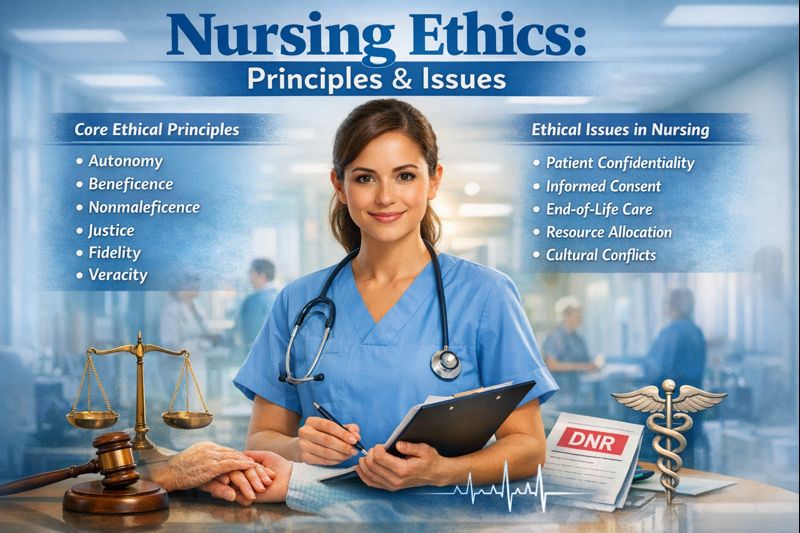
Core Principles of Nursing Ethics
Nursing ethics is built upon several universally recognized ethical principles:
1. Autonomy
Autonomy respects a patient’s right to make informed decisions about their own healthcare. Nurses must:
Provide accurate information
Respect patient choices
Support informed consent
2. Beneficence
Beneficence means acting in the best interest of the patient. Nurses should:
Promote patient well-being
Provide compassionate care
Advocate for patients
3. Nonmaleficence
This principle emphasizes “do no harm.” Nurses must:
Avoid actions that cause harm
Minimize risks
Practice safely and competently
4. Justice
Justice focuses on fairness and equality in healthcare. Nurses should:
Treat patients without discrimination
Ensure fair allocation of resources
Advocate for vulnerable populations
5. Fidelity
Fidelity involves being faithful to professional responsibilities, including:
Keeping promises
Maintaining trust
Following professional standards
6. Veracity
Veracity refers to truthfulness. Nurses must:
Provide honest information
Avoid deception
Communicate transparently with patients and families
Nursing Code of Ethics
The Nursing Code of Ethics is a formal document that outlines ethical standards and professional responsibilities for nurses. It provides guidance on:
Patient advocacy
Confidentiality
Professional boundaries
Accountability
Collaboration with healthcare teams
Many countries have their own nursing codes of ethics, often issued by national nursing councils or associations.
Common Ethical Issues in Nursing
Nurses frequently encounter ethical challenges in their daily practice. Some of the most common ethical issues in nursing include:
1. Patient Confidentiality
Protecting patient information while balancing legal and professional obligations is a frequent ethical concern.
2. Informed Consent
Ensuring patients fully understand their treatment options and risks before consenting can be challenging, especially in emergencies.
3. End-of-Life Care
Ethical dilemmas often arise around:
Do-not-resuscitate (DNR) orders
Palliative care
Life-support withdrawal
4. Resource Allocation
Limited resources such as ICU beds, medications, or staffing can create ethical conflicts regarding fairness and prioritization.
5. Cultural and Religious Beliefs
Nurses must respect diverse cultural and religious values while ensuring safe and effective care.
Examples of Nursing Ethics in Practice
Example 1: Respecting Patient Autonomy
A patient refuses a recommended medical procedure due to personal beliefs. The nurse respects the decision while ensuring the patient is fully informed.
Example 2: Maintaining Confidentiality
A nurse avoids discussing patient details in public areas, even when pressured by family members.
Example 3: Ethical Advocacy
A nurse advocates for a patient who cannot speak for themselves, ensuring their rights and preferences are respected.
Ethical Decision-Making in Nursing
Ethical decision-making in nursing involves a structured approach:
Identify the ethical issue
Gather relevant information
Consider ethical principles involved
Explore possible solutions
Make and evaluate the decision
Using ethical frameworks helps nurses remain objective and professional in emotionally charged situations.
Challenges in Applying Nursing Ethics
Despite clear ethical guidelines, nurses may face challenges such as:
Workplace pressure
Staff shortages
Conflicting policies
Moral distress
Limited institutional support
Continuous education and ethical training are essential for overcoming these challenges.
Teaching and Learning Nursing Ethics
Nursing ethics is a core component of nursing education. Students learn ethics through:
Classroom instruction
Case studies
Clinical practice
Reflective learning
Ethics education prepares nurses to navigate real-world moral dilemmas confidently and competently.
The Role of Ethics Committees in Nursing
Many healthcare institutions have ethics committees that:
Provide guidance on ethical cases
Support nurses and healthcare teams
Develop ethical policies and protocols
These committees play a vital role in resolving complex ethical issues in nursing practice.
Future of Nursing Ethics
As healthcare advances with technology, artificial intelligence, and telemedicine, nursing ethics will continue to evolve. Future ethical concerns may include:
Data privacy
Digital health records
AI-assisted decision-making
Equity in healthcare access
Nurses must stay informed and adaptable to maintain ethical excellence.
Conclusion
Nursing ethics is the backbone of professional nursing practice. It ensures patient safety, dignity, fairness, and compassionate care in an increasingly complex healthcare environment. By understanding ethical principles, recognizing common ethical issues, and applying ethical decision-making frameworks, nurses can uphold the highest standards of care.
Ethical nursing practice not only benefits patients but also strengthens the nursing profession and healthcare systems as a whole.
Nursing Ethics: Principles, Importance, Ethical Issues, Examples, and Decision-Making in Nursing Practice
Nursing ethics is a cornerstone of professional nursing practice and plays a vital role in ensuring high-quality, compassionate, and patient-centered healthcare. Nurses work in complex environments where they must balance patient needs, professional responsibilities, legal requirements, and moral values. Ethical principles help nurses navigate these challenges with integrity, accountability, and respect for human dignity.
This comprehensive guide provides an in-depth exploration of nursing ethics, including its definition, importance, ethical principles, common ethical issues, real-life examples, ethical decision-making models, and future ethical challenges in nursing.
What Is Nursing Ethics?
Nursing ethics refers to the moral principles, values, and standards that guide nurses in their professional roles. It provides a framework for making ethical decisions and resolving moral dilemmas encountered in nursing practice.
Nursing ethics emphasizes:
Respect for human dignity
Patient autonomy and rights
Compassionate and safe care
Professional accountability
Ethical nursing practice ensures that patient care decisions are made in a manner that aligns with professional standards, societal expectations, and moral obligations.
Historical Development of Nursing Ethics
The concept of nursing ethics has evolved alongside the nursing profession itself. Early nursing ethics were influenced by:
Religious values
Cultural traditions
The Hippocratic Oath
Florence Nightingale, the founder of modern nursing, emphasized moral character, compassion, and service. Over time, formal nursing codes of ethics were developed to standardize ethical conduct and guide professional behavior globally.
Today, nursing ethics is shaped by:
Advances in medical technology
Human rights frameworks
Legal and regulatory standards
Global health challenges
Importance of Nursing Ethics in Healthcare
Nursing ethics is essential for maintaining trust, quality, and safety in healthcare systems.
1. Safeguards Patient Rights
Ethical nursing practice protects fundamental patient rights, including:
Informed consent
Confidentiality
Privacy
Respect for cultural and personal values
2. Enhances Quality of Care
Ethical decision-making ensures that patient care is:
Evidence-based
Compassionate
Individualized
3. Promotes Professional Integrity
Ethical guidelines help nurses maintain honesty, accountability, and professionalism in all interactions.
4. Supports Ethical Decision-Making
Nursing ethics provides a structured approach to resolving moral conflicts and ethical dilemmas in clinical practice.
5. Prevents Legal and Ethical Violations
Following ethical principles reduces the risk of malpractice, negligence, and professional misconduct.
Core Principles of Nursing Ethics
Nursing ethics is built on universally accepted ethical principles that guide professional practice.
1. Autonomy
Autonomy respects a patient’s right to make informed decisions about their healthcare. Nurses support autonomy by:
Providing clear and accurate information
Respecting patient choices
Advocating for informed consent
2. Beneficence
Beneficence requires nurses to act in the best interest of patients. This includes:
Promoting well-being
Preventing harm
Providing compassionate care
3. Nonmaleficence
Nonmaleficence means “do no harm.” Nurses must:
Avoid unsafe practices
Minimize risks
Maintain professional competence
4. Justice
Justice focuses on fairness and equality in healthcare delivery. Nurses must:
Treat patients without discrimination
Ensure equitable access to care
Advocate for vulnerable populations
5. Fidelity
Fidelity involves loyalty, faithfulness, and keeping professional commitments, including:
Honoring patient trust
Following institutional policies
Maintaining professional boundaries
6. Veracity
Veracity emphasizes honesty and truthfulness in communication. Nurses must:
Provide accurate information
Avoid misleading patients
Communicate openly and transparently
Nursing Code of Ethics
The Nursing Code of Ethics is a formal document that outlines ethical responsibilities and standards for nurses. It serves as a guide for ethical practice and professional behavior.
Key Elements of the Nursing Code of Ethics
Respect for patient dignity
Commitment to patient welfare
Accountability and responsibility
Confidentiality and privacy
Professional competence
The code of ethics applies to all areas of nursing practice, including clinical care, research, education, and administration.
Common Ethical Issues in Nursing
Nurses frequently encounter ethical challenges in their daily practice.
1. Patient Confidentiality and Privacy
Protecting patient information is a core ethical obligation. Ethical issues arise when:
Family members request confidential information
Digital records are accessed improperly
Social media boundaries are violated
2. Informed Consent
Nurses play a key role in ensuring patients understand:
Treatment options
Risks and benefits
Alternatives
Ethical dilemmas may occur when patients lack capacity or refuse treatment.
3. End-of-Life Care
End-of-life care presents some of the most complex ethical challenges, including:
Do-not-resuscitate (DNR) orders
Withdrawal of life support
Palliative and hospice care decisions
4. Resource Allocation
Limited healthcare resources can create ethical conflicts regarding:
ICU bed availability
Medication shortages
Staffing constraints
5. Cultural and Religious Conflicts
Nurses must respect cultural and religious beliefs while ensuring patient safety and ethical standards of care.
Ethical Dilemmas in Nursing Practice
An ethical dilemma occurs when nurses face two or more conflicting ethical principles and must choose the best course of action.
Examples of Ethical Dilemmas in Nursing
Respecting patient autonomy versus preventing harm
Truth-telling versus protecting emotional well-being
Family wishes versus patient preferences
Ethical dilemmas require careful consideration, consultation, and ethical reasoning.
Examples of Nursing Ethics in Practice
Example 1: Respecting Autonomy
A patient refuses a blood transfusion due to religious beliefs. The nurse respects the decision while ensuring the patient understands the risks.
Example 2: Advocacy and Beneficence
A nurse advocates for pain management when a patient’s discomfort is overlooked by the healthcare team.
Example 3: Confidentiality
A nurse protects patient information by refusing to share details without proper consent.
Example 4: Justice
A nurse ensures fair treatment for all patients regardless of socioeconomic background.
Ethical Decision-Making Models in Nursing
Ethical decision-making models help nurses approach ethical issues systematically.
Common Steps in Ethical Decision-Making
Identify the ethical issue
Gather relevant information
Identify ethical principles involved
Explore available options
Make the decision
Evaluate the outcome
Using structured models promotes consistency, fairness, and accountability in nursing practice.
Moral Distress in Nursing
Moral distress occurs when nurses know the ethically appropriate action but are unable to act due to institutional constraints.
Causes of Moral Distress
Staffing shortages
Conflicting policies
Lack of support
Power imbalances
Effects of Moral Distress
Emotional exhaustion
Burnout
Job dissatisfaction
Addressing moral distress requires organizational support, open communication, and ethical leadership.
Teaching and Learning Nursing Ethics
Nursing ethics education is essential for preparing competent and ethical nurses.
Methods of Teaching Nursing Ethics
Classroom lectures
Case studies
Simulation exercises
Reflective journaling
Ethics education fosters critical thinking, moral sensitivity, and ethical competence.
Legal and Ethical Considerations in Nursing
Ethical nursing practice is closely linked to legal responsibilities.
Key Legal-Ethical Areas
Patient consent
Professional negligence
Scope of practice
Documentation
Nurses must understand both ethical principles and legal standards to practice safely and responsibly.
Role of Ethics Committees in Nursing
Healthcare ethics committees provide guidance on complex ethical cases.
Functions of Ethics Committees
Case consultation
Policy development
Ethical education
Support for healthcare professionals
Ethics committees help nurses navigate difficult decisions with professional support.
Technology and Nursing Ethics
Advances in healthcare technology have introduced new ethical challenges in nursing.
Ethical Concerns in Modern Nursing
Electronic health records and data privacy
Telemedicine and remote care
Artificial intelligence in healthcare decision-making
Nurses must remain vigilant in protecting patient rights in digital healthcare environments.
Global Perspectives on Nursing Ethics
Nursing ethics varies across cultures and healthcare systems.
Global Ethical Considerations
Resource limitations in low-income settings
Cultural values and beliefs
Global health equity
Despite differences, core ethical principles remain universal.
Future Challenges in Nursing Ethics
The future of nursing ethics will be shaped by:
Aging populations
Emerging diseases
Technological innovation
Global health crises
Ongoing ethics education and policy development are essential to address these challenges.
Conclusion
Nursing ethics is fundamental to professional nursing practice and high-quality patient care. It provides a moral framework that guides nurses in complex clinical situations, ethical dilemmas, and evolving healthcare environments.
By understanding ethical principles, applying ethical decision-making models, and committing to professional integrity, nurses can uphold the highest ethical standards. Ethical nursing practice benefits patients, strengthens healthcare systems, and preserves the trust placed in the nursing profession.
Needs help with Nursing Assignment?
We are available 24x7 to deliver the best services and assignment ready within 3-4 hours? Order a custom-written, plagiarism-free paper
 Get Answer Over WhatsApp
 Order Paper Now