Nursing Interventions – Essential Guide for Healthcare Professionals
nursing interventions
What Are Nursing Interventions?
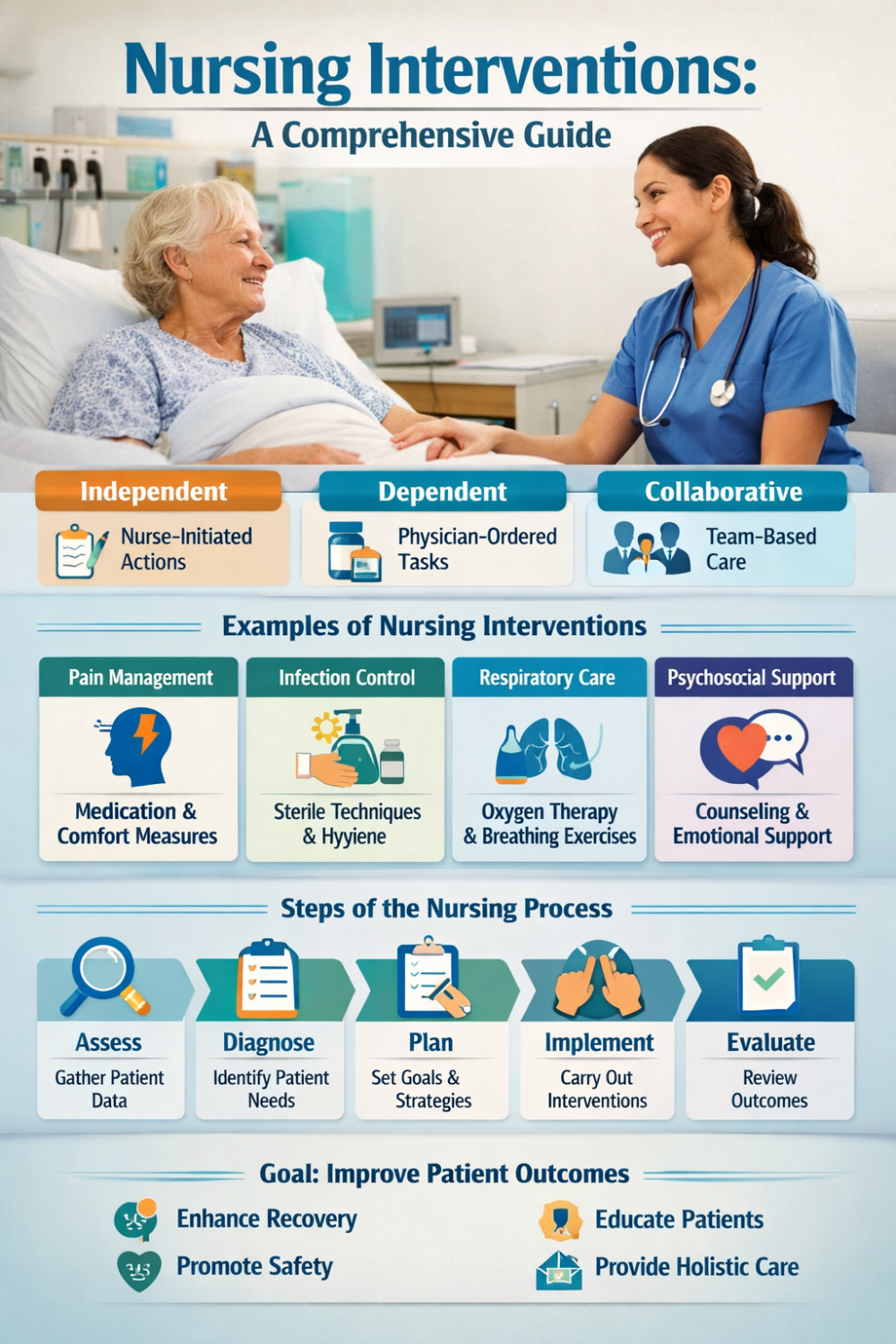
Nursing interventions are actions taken by nurses to improve patient health, manage illnesses, and promote wellness. These interventions are evidence-based and are designed to meet specific patient needs. They can be independent (initiated by the nurse), dependent (prescribed by a physician), or collaborative (involving a healthcare team).
In modern healthcare, nursing interventions play a crucial role in patient recovery, safety, and overall quality of care. They address both physical and psychological aspects of patient health.
Types of Nursing Interventions
Independent Nursing Interventions
These are actions initiated by nurses without a physician’s order. Examples include:Providing patient education about lifestyle changes
Assisting with mobility exercises
Monitoring vital signs and symptoms
Dependent Nursing Interventions
These require a physician’s order or a medical protocol. Examples include:Administering prescribed medications
Implementing wound care treatment
Managing intravenous therapy
Collaborative Nursing Interventions
These involve working with other healthcare professionals to provide holistic care. Examples include:Coordinating care with physical therapists
Participating in multidisciplinary team rounds
Managing chronic disease plans
Examples of Common Nursing Interventions
Respiratory Support: Encouraging deep breathing exercises, administering oxygen, and monitoring lung function.
Pain Management: Assessing pain levels, administering prescribed analgesics, and employing non-pharmacological interventions like massage or relaxation techniques.
Infection Control: Maintaining hygiene, using proper sterilization techniques, and educating patients on infection prevention.
Psychosocial Support: Providing emotional support, counseling, and facilitating family involvement in patient care.
Nutrition Management: Assisting with meal planning, monitoring dietary intake, and supporting patients with feeding challenges.
The Importance of Nursing Interventions
Effective nursing interventions are vital for:
Promoting patient safety and reducing complications
Enhancing recovery and treatment outcomes
Supporting patient autonomy and education
Improving overall patient satisfaction
By implementing targeted interventions, nurses can positively impact both acute and chronic care settings.
How to Plan Nursing Interventions
Assessment: Evaluate patient needs, health history, and current condition.
Diagnosis: Identify nursing diagnoses based on assessment findings.
Planning: Develop a care plan with measurable goals.
Implementation: Execute interventions based on priority and patient needs.
Evaluation: Monitor patient responses and adjust interventions as needed.
Conclusion
Nursing interventions are essential components of patient-centered care. By understanding the types, examples, and importance of these interventions, healthcare professionals can provide high-quality care that improves patient outcomes.
For nurses and healthcare providers, staying updated on evidence-based interventions ensures efficient, safe, and effective patient management.
Introduction to Nursing Interventions
Nursing interventions are fundamental actions and strategies implemented by nurses to enhance patient health, manage illnesses, and promote overall well-being. They are critical in both acute and chronic healthcare settings and form the backbone of patient-centered care.
These interventions can range from administering medications to providing emotional support, ensuring hygiene, and educating patients on healnursehomework.comth maintenance. Effective nursing interventions are evidence-based and designed to meet the unique needs of each patient.
In this guide, we will explore the types, examples, planning, implementation, and evaluation of nursing interventions, providing a comprehensive resource for healthcare professionals and nursing students.
Understanding Nursing Interventions
What Are Nursing Interventions?
A nursing intervention is any action undertaken by a nurse to improve or maintain a patient’s health. Interventions are targeted, structured, and planned to address specific nursing diagnoses, which are determined through patient assessment.
Key characteristics of nursing interventions include:
Purposeful: Each intervention has a clear goal aimed at improving patient outcomes.
Evidence-based: Interventions are grounded in research and clinical guidelines.
Patient-centered: They are tailored to the individual patient’s needs, preferences, and conditions.
Types of Nursing Interventions
Nursing interventions are broadly categorized into three types:
1. Independent Nursing Interventions
These are actions that nurses can initiate on their own without a physician’s order. They focus on preventive, supportive, and therapeutic care.
Examples include:
Providing patient education on nutrition, hygiene, and lifestyle changes
Assisting with mobility exercises for bedridden patients
Monitoring vital signs and recognizing early warning signs of deterioration
Promoting sleep hygiene and relaxation techniques
Independent interventions empower nurses to take initiative in improving patient outcomes, especially in preventive care and patient education.
2. Dependent Nursing Interventions
Dependent interventions require a healthcare provider’s order and often involve medical treatments or procedures. Nurses implement these interventions as part of a prescribed care plan.
Examples include:
Administering medications as per a physician’s instructions
Wound care management, including dressing changes and monitoring healing
Managing intravenous therapy, fluid replacement, or blood transfusions
Performing diagnostic tests as ordered
These interventions ensure that medical protocols are followed while allowing nurses to monitor patient responses and report any complications.
3. Collaborative Nursing Interventions
Collaborative interventions involve coordination with other healthcare professionals such as doctors, physiotherapists, nutritionists, and social workers.
Examples include:
Participating in multidisciplinary care planning meetings
Coordinating with physiotherapists for rehabilitation programs
Assisting in chronic disease management plans
Implementing mental health support with psychologists or counselors
Collaboration enhances holistic patient care and ensures that all aspects of the patient’s health are addressed effectively.
Key Examples of Nursing Interventions
Here are practical examples of nursing interventions in various clinical settings:
1. Respiratory Care Interventions
Encouraging deep breathing exercises and coughing to prevent atelectasis
Administering oxygen therapy and monitoring saturation levels
Educating patients on proper inhaler techniques for respiratory conditions
2. Pain Management Interventions
Assessing pain using standardized scales
Administering prescribed analgesics
Utilizing non-pharmacological methods such as relaxation techniques, guided imagery, or massage
3. Infection Prevention and Control
Maintaining proper hand hygiene and aseptic techniques
Educating patients and families on infection prevention
Monitoring for signs of infection and reporting promptly
4. Nutritional Support Interventions
Assessing dietary intake and nutritional needs
Assisting patients with feeding if necessary
Coordinating with dietitians for specialized dietary plans
5. Psychosocial and Emotional Support
Providing counseling and emotional support to patients and families
Encouraging patient participation in care decisions
Facilitating support groups or therapy sessions for chronic conditions
Planning and Implementing Nursing Interventions
Effective nursing interventions require a structured approach to planning and implementation.
Step 1: Assessment
Collect comprehensive patient data including medical history, current conditions, and psychosocial status
Identify patient needs and risk factors
Step 2: Nursing Diagnosis
Analyze assessment data to formulate nursing diagnoses
Prioritize issues based on urgency and patient safety
Step 3: Care Planning
Develop measurable goals and outcomes
Select appropriate interventions based on evidence and patient preferences
Step 4: Implementation
Carry out planned interventions while monitoring patient responses
Document all actions accurately for continuity of care
Step 5: Evaluation
Assess the effectiveness of interventions
Modify the care plan as necessary to achieve desired outcomes
Importance of Nursing Interventions
Nursing interventions are essential for:
Improving patient outcomes: Targeted interventions help reduce complications and enhance recovery
Promoting patient safety: Early interventions prevent adverse events and hospital-acquired conditions
Enhancing patient education: Patients gain knowledge and skills to manage their health
Supporting holistic care: Physical, emotional, and psychosocial needs are addressed
By implementing structured interventions, nurses ensure patients receive comprehensive care that is safe, effective, and patient-centered.
Evidence-Based Nursing Interventions
Modern nursing practice emphasizes evidence-based interventions, which integrate clinical expertise, research findings, and patient preferences. Examples include:
Using early mobilization protocols in post-surgical patients to prevent complications
Implementing fall-prevention strategies for elderly patients
Employing structured pain assessment tools for chronic disease management
Evidence-based interventions improve care quality and are essential for professional nursing practice.
Challenges in Nursing Interventions
Despite their importance, nurses may face challenges when implementing interventions:
Resource limitations: Lack of equipment, staff, or time can affect intervention quality
Patient non-compliance: Some patients may resist prescribed interventions
Complex care needs: Multimorbid patients may require more coordination and planning
Rapidly changing health conditions: Acute changes may necessitate frequent care plan adjustments
Addressing these challenges requires flexibility, ongoing education, and strong communication skills.
Best Practices for Effective Nursing Interventions
Individualize care: Tailor interventions to each patient’s needs
Prioritize patient safety: Follow protocols and monitor responses closely
Communicate effectively: Collaborate with patients, families, and healthcare teams
Document accurately: Maintain detailed records for continuity and legal purposes
Stay updated: Engage in continuous professional development and evidence-based practice
Frequently Asked Questions (FAQs) About Nursing Interventions
Q1: What is the main purpose of nursing interventions?
A: The main purpose is to improve patient health, prevent complications, and support overall well-being.
Q2: How are nursing interventions different from medical treatments?
A: Nursing interventions focus on holistic care, prevention, and patient support, while medical treatments are prescribed and primarily target disease management.
Q3: Can nursing interventions be independent?
A: Yes, independent nursing interventions are initiated by nurses without a physician’s order, often focusing on patient education and preventive care.
Q4: Why is documentation important in nursing interventions?
A: Accurate documentation ensures continuity of care, legal protection, and evaluation of intervention effectiveness.
Conclusion
Nursing interventions are vital components of modern healthcare, addressing physical, emotional, and social aspects of patient care. From independent actions to collaborative strategies, these interventions improve patient outcomes, enhance safety, and promote holistic care.
Healthcare professionals must prioritize evidence-based, patient-centered interventions while staying flexible and adaptable to patient needs. With proper planning, implementation, and evaluation, nursing interventions can significantly elevate the standard of care and contribute to successful patient recovery.
Needs help with Nursing Assignment?
We are available 24x7 to deliver the best services and assignment ready within 3-4 hours? Order a custom-written, plagiarism-free paper
 Get Answer Over WhatsApp
 Order Paper Now
