Nursing Lab Equipment | Essential Tools for Nursing Training
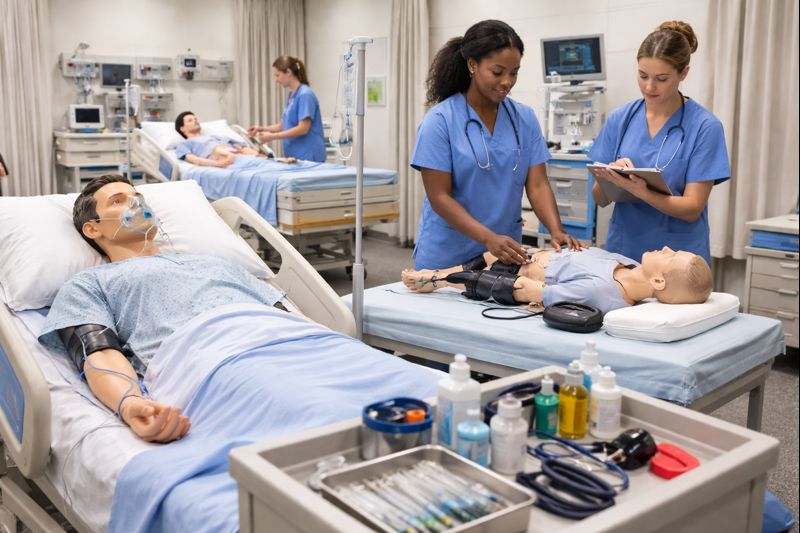
Nursing Lab Equipment
Nursing Lab Equipment: Essential Tools for Practical Nursing Training
Nursing lab equipment plays a critical role in shaping competent, confident, and job-ready nurses. As healthcare education becomes more hands-on and technology-driven, modern nursing laboratories are designed to replicate real clinical environments. This allows nursing students to practice essential skills safely before interacting with real patients.
This guide explores what nursing lab equipment is, why it is important, and the essential tools every nursing lab should have, making it ideal for nursing schools, colleges, universities, and healthcare training institutions.
What Is Nursing Lab Equipment?
Nursing lab equipment refers to the medical tools, devices, mannequins, and simulation systems used in nursing laboratories for teaching and practicing clinical skills. These labs, often called skills labs or simulation labs, help students gain hands-on experience in procedures such as patient assessment, medication administration, wound care, and emergency response.
Unlike traditional classroom learning, nursing labs provide a controlled environment where students can learn by doing, make mistakes safely, and build confidence.
Importance of Nursing Lab Equipment in Nursing Education
High-quality nursing lab equipment is essential for effective training. Here’s why it matters:
1. Enhances Practical Skills
Nursing is a hands-on profession. Lab equipment allows students to practice real-life procedures repeatedly until they master them.
2. Improves Patient Safety
Students learn correct techniques before working with actual patients, reducing medical errors in real healthcare settings.
3. Builds Confidence
Simulation and practice help students feel prepared and confident during clinical placements and exams.
4. Meets Accreditation Standards
Most nursing regulatory bodies require institutions to have properly equipped nursing labs for program accreditation.
5. Prepares Students for Real Clinical Environments
Modern nursing lab equipment closely mirrors hospital and clinic settings, ensuring a smooth transition from school to practice.
Essential Nursing Lab Equipment List
Below is a comprehensive list of essential nursing lab equipment commonly found in well-equipped nursing schools.
1. Nursing Mannequins and Simulators
Mannequins are the foundation of any nursing lab. They range from basic models to advanced high-fidelity simulators.
Types include:
Adult nursing mannequins
Pediatric mannequins
Infant and neonatal mannequins
Birthing and maternity simulators
CPR training mannequins
Advanced simulators can simulate breathing, heartbeats, pulses, and even verbal responses, making training more realistic.
2. Hospital Beds and Patient Care Furniture
To replicate a hospital environment, nursing labs require:
Adjustable hospital beds
Bedside lockers and overbed tables
Wheelchairs and stretchers
Patient privacy screens
These help students learn patient positioning, transfers, and mobility assistance.
3. Vital Signs Monitoring Equipment
Vital signs assessment is a core nursing skill. Common equipment includes:
Digital and manual blood pressure machines
Stethoscopes
Thermometers (digital and infrared)
Pulse oximeters
Weighing scales
Students use these tools to practice accurate patient assessment and documentation.
4. Injection and IV Training Equipment
Medication administration is a key nursing responsibility. Nursing lab equipment for injections and IV therapy includes:
Injection arms and practice pads
IV cannulation arms
Syringes and needles (training versions)
IV fluid stands and tubing
Medication trays
These tools help students perfect techniques for intramuscular, subcutaneous, and intravenous injections.
5. Wound Care and Dressing Equipment
Wound management is an essential nursing skill. Nursing labs should have:
Wound care mannequins or models
Dressing packs and sterile gloves
Bandages, gauze, and tapes
Suturing practice kits
Students learn proper wound cleaning, dressing, and infection control techniques.
6. Diagnostic and Examination Equipment
To train students in patient examinations, nursing labs often include:
Otoscopes and ophthalmoscopes
Examination couches
Reflex hammers
Pen lights
These tools help students practice physical assessments accurately and professionally.
7. Emergency and CPR Training Equipment
Emergency response training is crucial in nursing education.
Essential equipment includes:
CPR mannequins
Automated External Defibrillator (AED) trainers
Oxygen cylinders and masks
Bag valve masks (Ambu bags)
Emergency crash carts (training versions)
These prepare students to respond quickly and effectively in life-threatening situations.
8. Personal Protective Equipment (PPE)
Infection control is a major focus in nursing practice. Nursing lab PPE includes:
Gloves
Face masks
Face shields
Gowns and aprons
Hand hygiene stations
Students learn proper PPE use and infection prevention protocols.
Factors to Consider When Choosing Nursing Lab Equipment
When setting up or upgrading a nursing lab, consider the following:
Quality and durability – Equipment should withstand frequent use
Realism – High-fidelity simulators improve learning outcomes
Compliance – Meet nursing council and accreditation requirements
Ease of maintenance – Equipment should be easy to clean and service
Budget – Balance cost with long-term value
Who Uses Nursing Lab Equipment?
Nursing lab equipment is used by:
Nursing schools and colleges
Universities offering nursing degrees
Medical training institutes
Hospitals offering in-house nurse training
Health sciences training centers
Future Trends in Nursing Lab Equipment
Modern nursing education is adopting advanced technologies such as:
Virtual simulation systems
AI-powered mannequins
Augmented and virtual reality (AR/VR) training
Digital patient monitoring systems
These innovations enhance realism and improve clinical decision-making skills.
Conclusion
Nursing lab equipment is the backbone of effective nursing education. From mannequins and hospital beds to IV training arms and emergency simulators, each piece of equipment helps students develop essential clinical skills in a safe and supportive environment.
Investing in high-quality nursing lab equipment not only improves learning outcomes but also ensures that future nurses are confident, competent, and ready to deliver excellent patient care.
Needs help with Nursing Assignment?
We are available 24x7 to deliver the best services and assignment ready within 3-4 hours? Order a custom-written, plagiarism-free paper
 Get Answer Over WhatsApp
 Order Paper Now