Posts

SOAP Note Nursing Help for nursing students

SOAP Note Nursing Help: 7 Simple Ways to Improve Clinical Documentation

SOAP Note Nursing Help: 7 Simple Ways to Improve Clinical Documentation
SOAP Note Nursing Help for nursing students
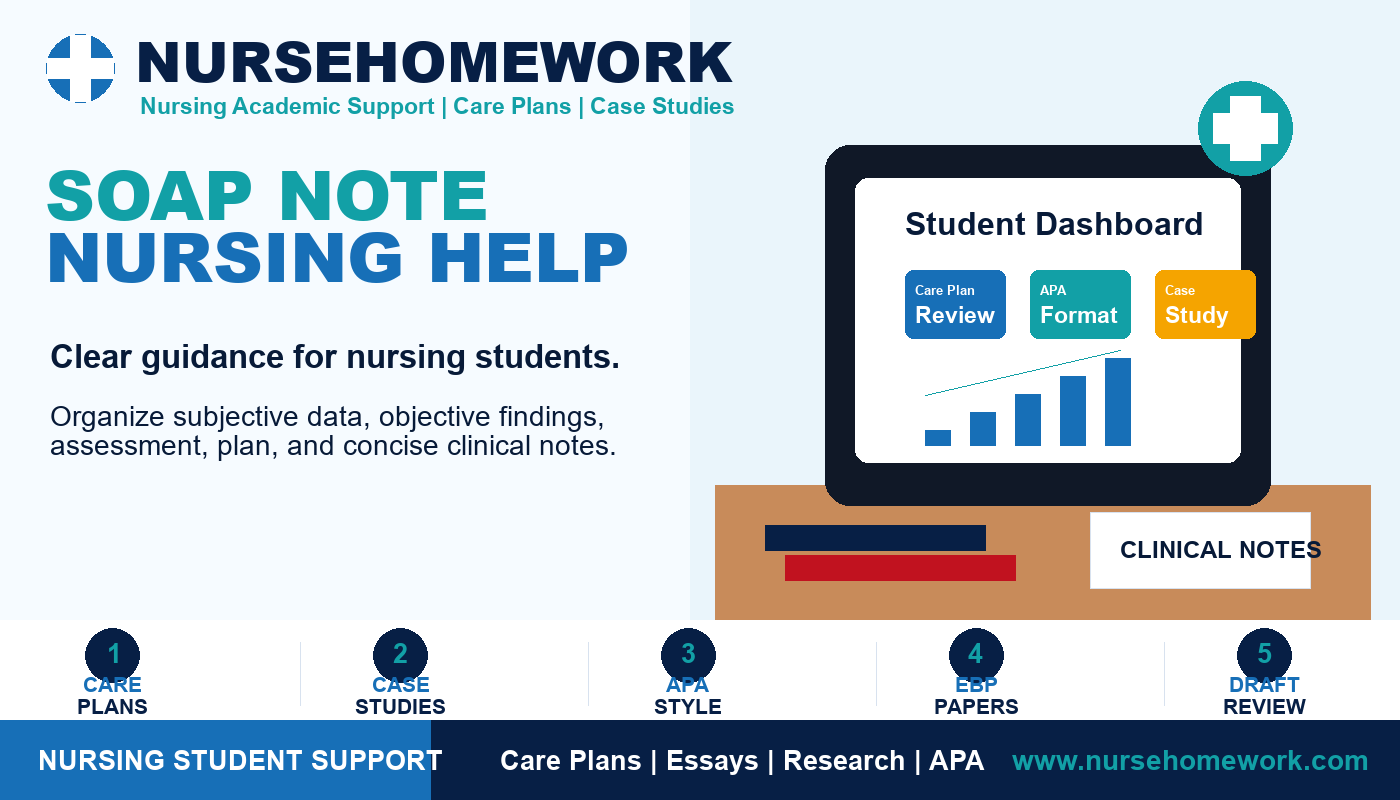
SOAP Note Nursing Help for nursing students who need structured academic guidance, research support, editing, and clearer clinical reasoning.

SOAP Note Nursing Help is one of the most common online searches from nursing students who are trying to balance demanding coursework, clinical rotations, exams, jobs, and personal responsibilities while still submitting clear academic work.

Nursing school is challenging because assignments are rarely about memorizing facts only. Students must connect theory, patient assessment, research evidence, clinical judgment, safety, ethics, and professional writing. That is why many learners look for guided support when they feel stuck, behind schedule, or unsure how to organize their ideas.

At NurseHomework, the goal is to support learning through topic guidance, research direction, editing feedback, structure planning, APA formatting help, and academic coaching. Students should always follow their school policies and use support responsibly as a study and writing aid.

For support, contact NurseHomework through the website or request help with your nursing topic.

Table of Contents

What is SOAP Note Nursing Help?

SOAP Note Nursing Help is academic support for nursing students who need help understanding instructions, planning assignments, organizing ideas, finding scholarly sources, improving drafts, and applying nursing concepts more clearly.

This support can include tutoring-style explanations, outline development, care plan guidance, case study review, APA formatting help, literature search direction, editing feedback, and examples that help students understand how to approach a nursing topic.

It is especially useful for nursing students completing clinical documentation, simulation notes, health assessment work, and practitioner-style assignments because nursing programs expect students to think like future clinicians while also writing like academic professionals. That combination can feel stressful when multiple deadlines arrive at the same time.

Common areas included in SOAP Note Nursing Help:

  • subjective data
  • objective data
  • assessment
  • plan
  • clinical documentation
  • patient history
  • focused notes
  • review support

Why Nursing Students Look for SOAP Note Nursing Help Online

The main reason students search for help is separating subjective and objective data, writing accurate assessments, planning care, and keeping documentation concise. These pressures can make even capable students feel overwhelmed, especially when assignments require both clinical accuracy and scholarly writing.

1. Nursing Assignments Require Clinical Reasoning

Nursing work is not just general academic writing. A strong paper must show patient safety, prioritization, assessment, intervention planning, evidence, and professional judgment. Students often understand parts of the topic but struggle to connect everything into one clear response.

Good academic support helps students break down the assignment. Instead of staring at a blank page, the learner can identify the patient problem, expected outcome, evidence, nursing actions, and final explanation.

2. Rubrics Can Be Detailed and Confusing

Nursing rubrics often include many requirements: introduction, clinical background, evidence, pathophysiology, interventions, patient education, citations, reflection, and conclusion. Missing one section can reduce the final grade.

Support can help students read the rubric carefully and turn it into an outline. This makes the work easier to manage and reduces the risk of leaving out key parts.

3. APA Formatting Takes Time

Many nursing programs require APA style. Students must format title pages, headings, citations, references, tables, and scholarly sources correctly. APA mistakes can distract from strong content.

Students who need professional writing support can also review broader academic writing help resources for structure, editing, and formatting ideas.

4. Clinical Rotations Reduce Study Time

Nursing students often attend clinicals, complete paperwork, prepare for exams, and manage personal responsibilities at the same time. This makes assignment planning difficult, especially for students who work or study online.

Academic support can help with time management, research direction, outlining, and revision so the student can use limited study time more effectively.

5. Research Sources Can Be Hard to Choose

Many assignments require peer-reviewed journal articles, clinical guidelines, textbooks, or evidence-based sources. Students may find many articles but struggle to choose the most relevant ones.

For larger research-heavy projects, students may also explore dissertation and research support to understand how scholarly projects are organized from topic selection to final review.

Common Assignments Students Struggle With

Nursing coursework includes many different assignment types. Each one requires a slightly different approach, so students benefit from learning how to structure the work before they begin writing.

Nursing Care Plans

Care plans are challenging because they require assessment data, nursing diagnoses, goals, interventions, rationales, and evaluation. A student must show why each nursing action is appropriate for the patient.

Students who need extra essay writing support can use writing guidance to improve clarity, paragraph flow, and explanation of clinical reasoning.

Nursing Case Studies

Case studies require students to analyze patient history, symptoms, medications, labs, risks, and priorities. A strong case study answer explains what matters most and why.

Pathophysiology Assignments

Pathophysiology assignments ask students to explain how disease affects the body. Students must connect causes, symptoms, complications, nursing concerns, and patient education.

Pharmacology Homework

Pharmacology can be difficult because students must understand drug classes, mechanisms of action, adverse effects, contraindications, interactions, and safety teaching. Medication-related assignments require careful attention to accuracy.

Evidence-Based Practice Papers

Evidence-based practice assignments require students to find research, summarize evidence, appraise quality, and explain how findings apply to nursing care. These papers can be difficult when students have not worked with scholarly databases before.

SOAP Notes

SOAP notes require concise documentation. Students must separate subjective data, objective findings, assessment, and plan. The challenge is writing enough detail without becoming disorganized.

Nursing Capstone Projects

Capstone projects require planning, research, implementation ideas, evaluation, and professional writing. They are often longer than ordinary assignments and need careful organization.

How SOAP Note Nursing Help Can Help Students Improve

Academic support works best when it helps students understand the assignment rather than simply rushing to finish a task. The right support should make the student more confident about the topic and the writing process.

1. Understanding the Prompt

Many students lose time because they do not fully understand what the prompt is asking. Support can help identify the topic, required sections, formatting rules, source requirements, and grading priorities.

2. Creating an Outline

An outline gives the assignment direction. For example, a care plan outline may include assessment data, diagnosis, goals, interventions, rationales, and evaluation. An essay outline may include introduction, thesis, evidence, analysis, and conclusion.

3. Finding Better Evidence

Nursing papers should use credible sources. Support can help students understand what counts as scholarly evidence and how to connect research to nursing practice.

4. Improving Draft Quality

Draft feedback can improve clarity, flow, grammar, APA style, citations, headings, and professional tone. Students often learn more when they can see how their writing can be improved.

5. Strengthening Clinical Reasoning

Clinical reasoning is the heart of nursing assignments. Support can help students explain why a problem matters, why an intervention is appropriate, and how outcomes should be evaluated.

Students who need wider online academic support can also use digital learning resources to organize study tasks and deadlines.

How to Use SOAP Note Nursing Help Responsibly

Students should use academic help as a learning support, not as a way to avoid learning. Nursing is a professional field where knowledge affects patient safety, so students must understand the concepts behind their assignments.

Use Help to Understand the Topic

Ask questions about what you do not understand. If the assignment is about heart failure, for example, make sure you can explain symptoms, pathophysiology, nursing priorities, medications, and patient education.

Follow Your School Policy

Every school has rules about academic integrity. Students should follow those policies and use tutoring, editing, examples, and research support appropriately.

Review the Final Work Carefully

Whether you receive feedback, an outline, or editing help, review everything carefully. Make sure the work matches your course instructions and that you understand the reasoning behind it.

Use Support Early

Waiting until the last minute creates stress. Early support gives students time to clarify instructions, gather evidence, write, revise, and ask follow-up questions.

What Makes Good

Good nursing academic support should be clear, ethical, student-centered, and focused on learning. It should help the student understand the assignment, not create confusion or unrealistic promises.

  • Clear explanation of nursing concepts
  • Support with assignment structure
  • Respect for academic integrity
  • Use of scholarly and credible sources
  • APA formatting guidance
  • Editing and revision feedback
  • Understanding of nursing rubrics
  • Timely communication

Why Choose NurseHomework?

NurseHomework focuses on practical academic support for nursing students. The site helps learners approach difficult coursework with more structure, better organization, and clearer understanding.

Students may need help with planning, writing, editing, research, or understanding nursing concepts. The best support depends on the assignment instructions and the student's current challenge.

If you are struggling with separating subjective and objective data, writing accurate assessments, planning care, and keeping documentation concise, NurseHomework can help you plan your next step and approach the work with more confidence.

Visit NurseHomework to request academic support for your nursing coursework.

Frequently Asked Questions

What is

SOAP Note Nursing Help is guided academic support for nursing students who need help understanding coursework, organizing assignments, improving drafts, formatting references, and applying nursing concepts.

Can nursing students get help with care plans?

Yes. Students can get guidance on nursing diagnoses, SMART goals, interventions, rationales, assessment data, and evaluation. The goal should be to understand how the care plan works.

Can I get help with APA formatting?

Yes. APA support can include title pages, headings, in-text citations, references, formatting, and general editing for clarity.

Is online nursing homework help useful for busy students?

Yes. Busy students often need help understanding instructions, creating outlines, finding evidence, or revising drafts while balancing clinicals and exams.

How should students use this support?

Students should use support responsibly as tutoring, guidance, editing, research direction, and learning assistance while following their school's academic integrity policy.

More Study Tips for SOAP Note Nursing Help

Start by reading the assignment instructions twice. Highlight the required sections, required sources, due date, formatting rules, and any special instructions from the professor. Many students lose marks because they skip a small requirement hidden in the prompt.

Build a simple outline before writing. A nursing paper becomes easier when each section has a clear purpose. The introduction should explain the topic, the body should analyze the main nursing issues, and the conclusion should connect the discussion back to patient care or professional practice.

Use credible evidence. Nursing assignments should rely on textbooks, peer-reviewed journals, clinical guidelines, and professional sources. Avoid weak internet sources unless the instructor allows them.

Revise for clarity. After drafting, read each paragraph and ask whether it explains one main idea. Strong nursing writing is direct, evidence-based, and organized around patient safety, clinical reasoning, and professional standards.

Keep learning from feedback. Instructor comments, editing notes, and tutor suggestions can help you improve future assignments. Nursing school becomes easier when students build repeatable writing and study habits.

More Study Tips for SOAP Note Nursing Help

Start by reading the assignment instructions twice. Highlight the required sections, required sources, due date, formatting rules, and any special instructions from the professor. Many students lose marks because they skip a small requirement hidden in the prompt.

Build a simple outline before writing. A nursing paper becomes easier when each section has a clear purpose. The introduction should explain the topic, the body should analyze the main nursing issues, and the conclusion should connect the discussion back to patient care or professional practice.

Use credible evidence. Nursing assignments should rely on textbooks, peer-reviewed journals, clinical guidelines, and professional sources. Avoid weak internet sources unless the instructor allows them.

Revise for clarity. After drafting, read each paragraph and ask whether it explains one main idea. Strong nursing writing is direct, evidence-based, and organized around patient safety, clinical reasoning, and professional standards.

Keep learning from feedback. Instructor comments, editing notes, and tutor suggestions can help you improve future assignments. Nursing school becomes easier when students build repeatable writing and study habits.

More Study Tips for SOAP Note Nursing Help

Start by reading the assignment instructions twice. Highlight the required sections, required sources, due date, formatting rules, and any special instructions from the professor. Many students lose marks because they skip a small requirement hidden in the prompt.

Build a simple outline before writing. A nursing paper becomes easier when each section has a clear purpose. The introduction should explain the topic, the body should analyze the main nursing issues, and the conclusion should connect the discussion back to patient care or professional practice.

Use credible evidence. Nursing assignments should rely on textbooks, peer-reviewed journals, clinical guidelines, and professional sources. Avoid weak internet sources unless the instructor allows them.

Revise for clarity. After drafting, read each paragraph and ask whether it explains one main idea. Strong nursing writing is direct, evidence-based, and organized around patient safety, clinical reasoning, and professional standards.

Keep learning from feedback. Instructor comments, editing notes, and tutor suggestions can help you improve future assignments. Nursing school becomes easier when students build repeatable writing and study habits.

More Study Tips for SOAP Note Nursing Help

Start by reading the assignment instructions twice. Highlight the required sections, required sources, due date, formatting rules, and any special instructions from the professor. Many students lose marks because they skip a small requirement hidden in the prompt.

Build a simple outline before writing. A nursing paper becomes easier when each section has a clear purpose. The introduction should explain the topic, the body should analyze the main nursing issues, and the conclusion should connect the discussion back to patient care or professional practice.

Use credible evidence. Nursing assignments should rely on textbooks, peer-reviewed journals, clinical guidelines, and professional sources. Avoid weak internet sources unless the instructor allows them.

Revise for clarity. After drafting, read each paragraph and ask whether it explains one main idea. Strong nursing writing is direct, evidence-based, and organized around patient safety, clinical reasoning, and professional standards.

Keep learning from feedback. Instructor comments, editing notes, and tutor suggestions can help you improve future assignments. Nursing school becomes easier when students build repeatable writing and study habits.

More Study Tips for SOAP Note Nursing Help

Start by reading the assignment instructions twice. Highlight the required sections, required sources, due date, formatting rules, and any special instructions from the professor. Many students lose marks because they skip a small requirement hidden in the prompt.

Build a simple outline before writing. A nursing paper becomes easier when each section has a clear purpose. The introduction should explain the topic, the body should analyze the main nursing issues, and the conclusion should connect the discussion back to patient care or professional practice.

Use credible evidence. Nursing assignments should rely on textbooks, peer-reviewed journals, clinical guidelines, and professional sources. Avoid weak internet sources unless the instructor allows them.

Revise for clarity. After drafting, read each paragraph and ask whether it explains one main idea. Strong nursing writing is direct, evidence-based, and organized around patient safety, clinical reasoning, and professional standards.

Keep learning from feedback. Instructor comments, editing notes, and tutor suggestions can help you improve future assignments. Nursing school becomes easier when students build repeatable writing and study habits.

More Study Tips for SOAP Note Nursing Help

Start by reading the assignment instructions twice. Highlight the required sections, required sources, due date, formatting rules, and any special instructions from the professor. Many students lose marks because they skip a small requirement hidden in the prompt.

Build a simple outline before writing. A nursing paper becomes easier when each section has a clear purpose. The introduction should explain the topic, the body should analyze the main nursing issues, and the conclusion should connect the discussion back to patient care or professional practice.

Use credible evidence. Nursing assignments should rely on textbooks, peer-reviewed journals, clinical guidelines, and professional sources. Avoid weak internet sources unless the instructor allows them.

Revise for clarity. After drafting, read each paragraph and ask whether it explains one main idea. Strong nursing writing is direct, evidence-based, and organized around patient safety, clinical reasoning, and professional standards.

Keep learning from feedback. Instructor comments, editing notes, and tutor suggestions can help you improve future assignments. Nursing school becomes easier when students build repeatable writing and study habits.

More Study Tips for SOAP Note Nursing Help

Start by reading the assignment instructions twice. Highlight the required sections, required sources, due date, formatting rules, and any special instructions from the professor. Many students lose marks because they skip a small requirement hidden in the prompt.

Build a simple outline before writing. A nursing paper becomes easier when each section has a clear purpose. The introduction should explain the topic, the body should analyze the main nursing issues, and the conclusion should connect the discussion back to patient care or professional practice.

Use credible evidence. Nursing assignments should rely on textbooks, peer-reviewed journals, clinical guidelines, and professional sources. Avoid weak internet sources unless the instructor allows them.

Revise for clarity. After drafting, read each paragraph and ask whether it explains one main idea. Strong nursing writing is direct, evidence-based, and organized around patient safety, clinical reasoning, and professional standards.

Keep learning from feedback. Instructor comments, editing notes, and tutor suggestions can help you improve future assignments. Nursing school becomes easier when students build repeatable writing and study habits.

More Study Tips for SOAP Note Nursing Help

Start by reading the assignment instructions twice. Highlight the required sections, required sources, due date, formatting rules, and any special instructions from the professor. Many students lose marks because they skip a small requirement hidden in the prompt.

Build a simple outline before writing. A nursing paper becomes easier when each section has a clear purpose. The introduction should explain the topic, the body should analyze the main nursing issues, and the conclusion should connect the discussion back to patient care or professional practice.

Use credible evidence. Nursing assignments should rely on textbooks, peer-reviewed journals, clinical guidelines, and professional sources. Avoid weak internet sources unless the instructor allows them.

Revise for clarity. After drafting, read each paragraph and ask whether it explains one main idea. Strong nursing writing is direct, evidence-based, and organized around patient safety, clinical reasoning, and professional standards.

Keep learning from feedback. Instructor comments, editing notes, and tutor suggestions can help you improve future assignments. Nursing school becomes easier when students build repeatable writing and study habits.

More Study Tips for SOAP Note Nursing Help

Start by reading the assignment instructions twice. Highlight the required sections, required sources, due date, formatting rules, and any special instructions from the professor. Many students lose marks because they skip a small requirement hidden in the prompt.

Build a simple outline before writing. A nursing paper becomes easier when each section has a clear purpose. The introduction should explain the topic, the body should analyze the main nursing issues, and the conclusion should connect the discussion back to patient care or professional practice.

Use credible evidence. Nursing assignments should rely on textbooks, peer-reviewed journals, clinical guidelines, and professional sources. Avoid weak internet sources unless the instructor allows them.

Revise for clarity. After drafting, read each paragraph and ask whether it explains one main idea. Strong nursing writing is direct, evidence-based, and organized around patient safety, clinical reasoning, and professional standards.

Keep learning from feedback. Instructor comments, editing notes, and tutor suggestions can help you improve future assignments. Nursing school becomes easier when students build repeatable writing and study habits.

More Study Tips for SOAP Note Nursing Help

Start by reading the assignment instructions twice. Highlight the required sections, required sources, due date, formatting rules, and any special instructions from the professor. Many students lose marks because they skip a small requirement hidden in the prompt.

Build a simple outline before writing. A nursing paper becomes easier when each section has a clear purpose. The introduction should explain the topic, the body should analyze the main nursing issues, and the conclusion should connect the discussion back to patient care or professional practice.

Use credible evidence. Nursing assignments should rely on textbooks, peer-reviewed journals, clinical guidelines, and professional sources. Avoid weak internet sources unless the instructor allows them.

Revise for clarity. After drafting, read each paragraph and ask whether it explains one main idea. Strong nursing writing is direct, evidence-based, and organized around patient safety, clinical reasoning, and professional standards.

Keep learning from feedback. Instructor comments, editing notes, and tutor suggestions can help you improve future assignments. Nursing school becomes easier when students build repeatable writing and study habits.

More Study Tips for SOAP Note Nursing Help

Start by reading the assignment instructions twice. Highlight the required sections, required sources, due date, formatting rules, and any special instructions from the professor. Many students lose marks because they skip a small requirement hidden in the prompt.

Build a simple outline before writing. A nursing paper becomes easier when each section has a clear purpose. The introduction should explain the topic, the body should analyze the main nursing issues, and the conclusion should connect the discussion back to patient care or professional practice.

Use credible evidence. Nursing assignments should rely on textbooks, peer-reviewed journals, clinical guidelines, and professional sources. Avoid weak internet sources unless the instructor allows them.

Revise for clarity. After drafting, read each paragraph and ask whether it explains one main idea. Strong nursing writing is direct, evidence-based, and organized around patient safety, clinical reasoning, and professional standards.

Keep learning from feedback. Instructor comments, editing notes, and tutor suggestions can help you improve future assignments. Nursing school becomes easier when students build repeatable writing and study habits.

Needs help with Nursing Assignment?

We are available 24x7 to deliver the best services and assignment ready within 3-4 hours? Order a custom-written, plagiarism-free paper

Get Answer Over WhatsApp Order Paper Now
Pathophysiology Assignment Help for nursing students

Pathophysiology Assignment Help: 8 Useful Ways to Explain Disease Processes

Pathophysiology Assignment Help: 8 Useful Ways to Explain Disease Processes

Pathophysiology Assignment Help for nursing students
Pathophysiology Assignment Help for nursing students who need structured academic guidance, research support, editing, and clearer clinical reasoning.

Pathophysiology Assignment Help is one of the most common online searches from nursing students who are trying to balance demanding coursework, clinical rotations, exams, jobs, and personal responsibilities while still submitting clear academic work.

Nursing school is challenging because assignments are rarely about memorizing facts only. Students must connect theory, patient assessment, research evidence, clinical judgment, safety, ethics, and professional writing. That is why many learners look for guided support when they feel stuck, behind schedule, or unsure how to organize their ideas.

At NurseHomework, the goal is to support learning through topic guidance, research direction, editing feedback, structure planning, APA formatting help, and academic coaching. Students should always follow their school policies and use support responsibly as a study and writing aid.

For support, contact NurseHomework through the website or request help with your nursing topic.

Table of Contents

What is Pathophysiology Assignment Help?

Pathophysiology Assignment Help is academic support for nursing students who need help understanding instructions, planning assignments, organizing ideas, finding scholarly sources, improving drafts, and applying nursing concepts more clearly.

This support can include tutoring-style explanations, outline development, care plan guidance, case study review, APA formatting help, literature search direction, editing feedback, and examples that help students understand how to approach a nursing topic.

It is especially useful for students studying adult health, pharmacology, med-surg, advanced pathophysiology, and clinical reasoning courses because nursing programs expect students to think like future clinicians while also writing like academic professionals. That combination can feel stressful when multiple deadlines arrive at the same time.

Common areas included in Pathophysiology Assignment Help:

  • disease process explanation
  • symptom links
  • risk factors
  • complications
  • nursing implications
  • concept maps
  • study support
  • paper review

Why Nursing Students Look for Pathophysiology Assignment Help Online

The main reason students search for help is understanding disease mechanisms, linking symptoms to body systems, explaining complications, and applying concepts to nursing care. These pressures can make even capable students feel overwhelmed, especially when assignments require both clinical accuracy and scholarly writing.

1. Nursing Assignments Require Clinical Reasoning

Nursing work is not just general academic writing. A strong paper must show patient safety, prioritization, assessment, intervention planning, evidence, and professional judgment. Students often understand parts of the topic but struggle to connect everything into one clear response.

Good academic support helps students break down the assignment. Instead of staring at a blank page, the learner can identify the patient problem, expected outcome, evidence, nursing actions, and final explanation.

2. Rubrics Can Be Detailed and Confusing

Nursing rubrics often include many requirements: introduction, clinical background, evidence, pathophysiology, interventions, patient education, citations, reflection, and conclusion. Missing one section can reduce the final grade.

Support can help students read the rubric carefully and turn it into an outline. This makes the work easier to manage and reduces the risk of leaving out key parts.

3. APA Formatting Takes Time

Many nursing programs require APA style. Students must format title pages, headings, citations, references, tables, and scholarly sources correctly. APA mistakes can distract from strong content.

Students who need professional writing support can also review broader academic writing help resources for structure, editing, and formatting ideas.

4. Clinical Rotations Reduce Study Time

Nursing students often attend clinicals, complete paperwork, prepare for exams, and manage personal responsibilities at the same time. This makes assignment planning difficult, especially for students who work or study online.

Academic support can help with time management, research direction, outlining, and revision so the student can use limited study time more effectively.

5. Research Sources Can Be Hard to Choose

Many assignments require peer-reviewed journal articles, clinical guidelines, textbooks, or evidence-based sources. Students may find many articles but struggle to choose the most relevant ones.

For larger research-heavy projects, students may also explore dissertation and research support to understand how scholarly projects are organized from topic selection to final review.

Common Assignments Students Struggle With

Nursing coursework includes many different assignment types. Each one requires a slightly different approach, so students benefit from learning how to structure the work before they begin writing.

Nursing Care Plans

Care plans are challenging because they require assessment data, nursing diagnoses, goals, interventions, rationales, and evaluation. A student must show why each nursing action is appropriate for the patient.

Students who need extra essay writing support can use writing guidance to improve clarity, paragraph flow, and explanation of clinical reasoning.

Nursing Case Studies

Case studies require students to analyze patient history, symptoms, medications, labs, risks, and priorities. A strong case study answer explains what matters most and why.

Pathophysiology Assignments

Pathophysiology assignments ask students to explain how disease affects the body. Students must connect causes, symptoms, complications, nursing concerns, and patient education.

Pharmacology Homework

Pharmacology can be difficult because students must understand drug classes, mechanisms of action, adverse effects, contraindications, interactions, and safety teaching. Medication-related assignments require careful attention to accuracy.

Evidence-Based Practice Papers

Evidence-based practice assignments require students to find research, summarize evidence, appraise quality, and explain how findings apply to nursing care. These papers can be difficult when students have not worked with scholarly databases before.

SOAP Notes

SOAP notes require concise documentation. Students must separate subjective data, objective findings, assessment, and plan. The challenge is writing enough detail without becoming disorganized.

Nursing Capstone Projects

Capstone projects require planning, research, implementation ideas, evaluation, and professional writing. They are often longer than ordinary assignments and need careful organization.

How Pathophysiology Assignment Help Can Help Students Improve

Academic support works best when it helps students understand the assignment rather than simply rushing to finish a task. The right support should make the student more confident about the topic and the writing process.

1. Understanding the Prompt

Many students lose time because they do not fully understand what the prompt is asking. Support can help identify the topic, required sections, formatting rules, source requirements, and grading priorities.

2. Creating an Outline

An outline gives the assignment direction. For example, a care plan outline may include assessment data, diagnosis, goals, interventions, rationales, and evaluation. An essay outline may include introduction, thesis, evidence, analysis, and conclusion.

3. Finding Better Evidence

Nursing papers should use credible sources. Support can help students understand what counts as scholarly evidence and how to connect research to nursing practice.

4. Improving Draft Quality

Draft feedback can improve clarity, flow, grammar, APA style, citations, headings, and professional tone. Students often learn more when they can see how their writing can be improved.

5. Strengthening Clinical Reasoning

Clinical reasoning is the heart of nursing assignments. Support can help students explain why a problem matters, why an intervention is appropriate, and how outcomes should be evaluated.

Students who need wider online academic support can also use digital learning resources to organize study tasks and deadlines.

How to Use Pathophysiology Assignment Help Responsibly

Students should use academic help as a learning support, not as a way to avoid learning. Nursing is a professional field where knowledge affects patient safety, so students must understand the concepts behind their assignments.

Use Help to Understand the Topic

Ask questions about what you do not understand. If the assignment is about heart failure, for example, make sure you can explain symptoms, pathophysiology, nursing priorities, medications, and patient education.

Follow Your School Policy

Every school has rules about academic integrity. Students should follow those policies and use tutoring, editing, examples, and research support appropriately.

Review the Final Work Carefully

Whether you receive feedback, an outline, or editing help, review everything carefully. Make sure the work matches your course instructions and that you understand the reasoning behind it.

Use Support Early

Waiting until the last minute creates stress. Early support gives students time to clarify instructions, gather evidence, write, revise, and ask follow-up questions.

What Makes Good

Good nursing academic support should be clear, ethical, student-centered, and focused on learning. It should help the student understand the assignment, not create confusion or unrealistic promises.

  • Clear explanation of nursing concepts
  • Support with assignment structure
  • Respect for academic integrity
  • Use of scholarly and credible sources
  • APA formatting guidance
  • Editing and revision feedback
  • Understanding of nursing rubrics
  • Timely communication

Why Choose NurseHomework?

NurseHomework focuses on practical academic support for nursing students. The site helps learners approach difficult coursework with more structure, better organization, and clearer understanding.

Students may need help with planning, writing, editing, research, or understanding nursing concepts. The best support depends on the assignment instructions and the student's current challenge.

If you are struggling with understanding disease mechanisms, linking symptoms to body systems, explaining complications, and applying concepts to nursing care, NurseHomework can help you plan your next step and approach the work with more confidence.

Visit NurseHomework to request academic support for your nursing coursework.

Frequently Asked Questions

What is

Pathophysiology Assignment Help is guided academic support for nursing students who need help understanding coursework, organizing assignments, improving drafts, formatting references, and applying nursing concepts.

Can nursing students get help with care plans?

Yes. Students can get guidance on nursing diagnoses, SMART goals, interventions, rationales, assessment data, and evaluation. The goal should be to understand how the care plan works.

Can I get help with APA formatting?

Yes. APA support can include title pages, headings, in-text citations, references, formatting, and general editing for clarity.

Is online nursing homework help useful for busy students?

Yes. Busy students often need help understanding instructions, creating outlines, finding evidence, or revising drafts while balancing clinicals and exams.

How should students use this support?

Students should use support responsibly as tutoring, guidance, editing, research direction, and learning assistance while following their school's academic integrity policy.

More Study Tips for Pathophysiology Assignment Help

Start by reading the assignment instructions twice. Highlight the required sections, required sources, due date, formatting rules, and any special instructions from the professor. Many students lose marks because they skip a small requirement hidden in the prompt.

Build a simple outline before writing. A nursing paper becomes easier when each section has a clear purpose. The introduction should explain the topic, the body should analyze the main nursing issues, and the conclusion should connect the discussion back to patient care or professional practice.

Use credible evidence. Nursing assignments should rely on textbooks, peer-reviewed journals, clinical guidelines, and professional sources. Avoid weak internet sources unless the instructor allows them.

Revise for clarity. After drafting, read each paragraph and ask whether it explains one main idea. Strong nursing writing is direct, evidence-based, and organized around patient safety, clinical reasoning, and professional standards.

Keep learning from feedback. Instructor comments, editing notes, and tutor suggestions can help you improve future assignments. Nursing school becomes easier when students build repeatable writing and study habits.

More Study Tips for Pathophysiology Assignment Help

Start by reading the assignment instructions twice. Highlight the required sections, required sources, due date, formatting rules, and any special instructions from the professor. Many students lose marks because they skip a small requirement hidden in the prompt.

Build a simple outline before writing. A nursing paper becomes easier when each section has a clear purpose. The introduction should explain the topic, the body should analyze the main nursing issues, and the conclusion should connect the discussion back to patient care or professional practice.

Use credible evidence. Nursing assignments should rely on textbooks, peer-reviewed journals, clinical guidelines, and professional sources. Avoid weak internet sources unless the instructor allows them.

Revise for clarity. After drafting, read each paragraph and ask whether it explains one main idea. Strong nursing writing is direct, evidence-based, and organized around patient safety, clinical reasoning, and professional standards.

Keep learning from feedback. Instructor comments, editing notes, and tutor suggestions can help you improve future assignments. Nursing school becomes easier when students build repeatable writing and study habits.

More Study Tips for Pathophysiology Assignment Help

Start by reading the assignment instructions twice. Highlight the required sections, required sources, due date, formatting rules, and any special instructions from the professor. Many students lose marks because they skip a small requirement hidden in the prompt.

Build a simple outline before writing. A nursing paper becomes easier when each section has a clear purpose. The introduction should explain the topic, the body should analyze the main nursing issues, and the conclusion should connect the discussion back to patient care or professional practice.

Use credible evidence. Nursing assignments should rely on textbooks, peer-reviewed journals, clinical guidelines, and professional sources. Avoid weak internet sources unless the instructor allows them.

Revise for clarity. After drafting, read each paragraph and ask whether it explains one main idea. Strong nursing writing is direct, evidence-based, and organized around patient safety, clinical reasoning, and professional standards.

Keep learning from feedback. Instructor comments, editing notes, and tutor suggestions can help you improve future assignments. Nursing school becomes easier when students build repeatable writing and study habits.

More Study Tips for Pathophysiology Assignment Help

Start by reading the assignment instructions twice. Highlight the required sections, required sources, due date, formatting rules, and any special instructions from the professor. Many students lose marks because they skip a small requirement hidden in the prompt.

Build a simple outline before writing. A nursing paper becomes easier when each section has a clear purpose. The introduction should explain the topic, the body should analyze the main nursing issues, and the conclusion should connect the discussion back to patient care or professional practice.

Use credible evidence. Nursing assignments should rely on textbooks, peer-reviewed journals, clinical guidelines, and professional sources. Avoid weak internet sources unless the instructor allows them.

Revise for clarity. After drafting, read each paragraph and ask whether it explains one main idea. Strong nursing writing is direct, evidence-based, and organized around patient safety, clinical reasoning, and professional standards.

Keep learning from feedback. Instructor comments, editing notes, and tutor suggestions can help you improve future assignments. Nursing school becomes easier when students build repeatable writing and study habits.

More Study Tips for Pathophysiology Assignment Help

Start by reading the assignment instructions twice. Highlight the required sections, required sources, due date, formatting rules, and any special instructions from the professor. Many students lose marks because they skip a small requirement hidden in the prompt.

Build a simple outline before writing. A nursing paper becomes easier when each section has a clear purpose. The introduction should explain the topic, the body should analyze the main nursing issues, and the conclusion should connect the discussion back to patient care or professional practice.

Use credible evidence. Nursing assignments should rely on textbooks, peer-reviewed journals, clinical guidelines, and professional sources. Avoid weak internet sources unless the instructor allows them.

Revise for clarity. After drafting, read each paragraph and ask whether it explains one main idea. Strong nursing writing is direct, evidence-based, and organized around patient safety, clinical reasoning, and professional standards.

Keep learning from feedback. Instructor comments, editing notes, and tutor suggestions can help you improve future assignments. Nursing school becomes easier when students build repeatable writing and study habits.

More Study Tips for Pathophysiology Assignment Help

Start by reading the assignment instructions twice. Highlight the required sections, required sources, due date, formatting rules, and any special instructions from the professor. Many students lose marks because they skip a small requirement hidden in the prompt.

Build a simple outline before writing. A nursing paper becomes easier when each section has a clear purpose. The introduction should explain the topic, the body should analyze the main nursing issues, and the conclusion should connect the discussion back to patient care or professional practice.

Use credible evidence. Nursing assignments should rely on textbooks, peer-reviewed journals, clinical guidelines, and professional sources. Avoid weak internet sources unless the instructor allows them.

Revise for clarity. After drafting, read each paragraph and ask whether it explains one main idea. Strong nursing writing is direct, evidence-based, and organized around patient safety, clinical reasoning, and professional standards.

Keep learning from feedback. Instructor comments, editing notes, and tutor suggestions can help you improve future assignments. Nursing school becomes easier when students build repeatable writing and study habits.

More Study Tips for Pathophysiology Assignment Help

Start by reading the assignment instructions twice. Highlight the required sections, required sources, due date, formatting rules, and any special instructions from the professor. Many students lose marks because they skip a small requirement hidden in the prompt.

Build a simple outline before writing. A nursing paper becomes easier when each section has a clear purpose. The introduction should explain the topic, the body should analyze the main nursing issues, and the conclusion should connect the discussion back to patient care or professional practice.

Use credible evidence. Nursing assignments should rely on textbooks, peer-reviewed journals, clinical guidelines, and professional sources. Avoid weak internet sources unless the instructor allows them.

Revise for clarity. After drafting, read each paragraph and ask whether it explains one main idea. Strong nursing writing is direct, evidence-based, and organized around patient safety, clinical reasoning, and professional standards.

Keep learning from feedback. Instructor comments, editing notes, and tutor suggestions can help you improve future assignments. Nursing school becomes easier when students build repeatable writing and study habits.

More Study Tips for Pathophysiology Assignment Help

Start by reading the assignment instructions twice. Highlight the required sections, required sources, due date, formatting rules, and any special instructions from the professor. Many students lose marks because they skip a small requirement hidden in the prompt.

Build a simple outline before writing. A nursing paper becomes easier when each section has a clear purpose. The introduction should explain the topic, the body should analyze the main nursing issues, and the conclusion should connect the discussion back to patient care or professional practice.

Use credible evidence. Nursing assignments should rely on textbooks, peer-reviewed journals, clinical guidelines, and professional sources. Avoid weak internet sources unless the instructor allows them.

Revise for clarity. After drafting, read each paragraph and ask whether it explains one main idea. Strong nursing writing is direct, evidence-based, and organized around patient safety, clinical reasoning, and professional standards.

Keep learning from feedback. Instructor comments, editing notes, and tutor suggestions can help you improve future assignments. Nursing school becomes easier when students build repeatable writing and study habits.

More Study Tips for Pathophysiology Assignment Help

Start by reading the assignment instructions twice. Highlight the required sections, required sources, due date, formatting rules, and any special instructions from the professor. Many students lose marks because they skip a small requirement hidden in the prompt.

Build a simple outline before writing. A nursing paper becomes easier when each section has a clear purpose. The introduction should explain the topic, the body should analyze the main nursing issues, and the conclusion should connect the discussion back to patient care or professional practice.

Use credible evidence. Nursing assignments should rely on textbooks, peer-reviewed journals, clinical guidelines, and professional sources. Avoid weak internet sources unless the instructor allows them.

Revise for clarity. After drafting, read each paragraph and ask whether it explains one main idea. Strong nursing writing is direct, evidence-based, and organized around patient safety, clinical reasoning, and professional standards.

Keep learning from feedback. Instructor comments, editing notes, and tutor suggestions can help you improve future assignments. Nursing school becomes easier when students build repeatable writing and study habits.

More Study Tips for Pathophysiology Assignment Help

Start by reading the assignment instructions twice. Highlight the required sections, required sources, due date, formatting rules, and any special instructions from the professor. Many students lose marks because they skip a small requirement hidden in the prompt.

Build a simple outline before writing. A nursing paper becomes easier when each section has a clear purpose. The introduction should explain the topic, the body should analyze the main nursing issues, and the conclusion should connect the discussion back to patient care or professional practice.

Use credible evidence. Nursing assignments should rely on textbooks, peer-reviewed journals, clinical guidelines, and professional sources. Avoid weak internet sources unless the instructor allows them.

Revise for clarity. After drafting, read each paragraph and ask whether it explains one main idea. Strong nursing writing is direct, evidence-based, and organized around patient safety, clinical reasoning, and professional standards.

Keep learning from feedback. Instructor comments, editing notes, and tutor suggestions can help you improve future assignments. Nursing school becomes easier when students build repeatable writing and study habits.

More Study Tips for Pathophysiology Assignment Help

Start by reading the assignment instructions twice. Highlight the required sections, required sources, due date, formatting rules, and any special instructions from the professor. Many students lose marks because they skip a small requirement hidden in the prompt.

Build a simple outline before writing. A nursing paper becomes easier when each section has a clear purpose. The introduction should explain the topic, the body should analyze the main nursing issues, and the conclusion should connect the discussion back to patient care or professional practice.

Use credible evidence. Nursing assignments should rely on textbooks, peer-reviewed journals, clinical guidelines, and professional sources. Avoid weak internet sources unless the instructor allows them.

Revise for clarity. After drafting, read each paragraph and ask whether it explains one main idea. Strong nursing writing is direct, evidence-based, and organized around patient safety, clinical reasoning, and professional standards.

Keep learning from feedback. Instructor comments, editing notes, and tutor suggestions can help you improve future assignments. Nursing school becomes easier when students build repeatable writing and study habits.

Needs help with Nursing Assignment?

We are available 24x7 to deliver the best services and assignment ready within 3-4 hours? Order a custom-written, plagiarism-free paper

Get Answer Over WhatsApp Order Paper Now
Best Nursing Assignment Help

Best Nursing Assignment Help: Ethical Support for Nursing Students

Best Nursing Assignment Help for Busy Nursing Students

Best Nursing Assignment Help is a focused search from nursing students who need practical academic support with care plans, case studies, reflective journals, evidence-based practice papers, literature reviews, research proposals, discussion posts, SOAP notes, and APA formatting. Nursing students may balance online coursework, clinical rotations, simulation tasks, work, family responsibilities, and strict submission deadlines. When the brief feels confusing, structured academic guidance can help students understand the task and improve their draft responsibly.

NurseHomework supports nursing students with learning-focused guidance, assignment planning, research direction, draft review, proofreading, APA editing, and clearer academic structure. Students can email writers24x7@gmail.com with the assignment brief, marking rubric, deadline, word count, required APA expectations, and any draft already prepared.

Academic integrity note: NurseHomework provides independent study support, editing, structure guidance, research direction, and draft review. Responsible support should help students understand instructions, organize evidence, revise their own drafts, and improve academic clarity. Students should always follow their college or university academic-integrity requirements.

Why Nursing Assignments Can Feel Difficult

Nursing assignments are demanding because they combine academic writing, clinical reasoning, evidence appraisal, patient safety, communication, reflection, ethics, and professional language. A student may be asked to discuss patient-centered care, risk assessment, medicine management, long-term conditions, mental health, safeguarding, health promotion, public health, leadership, or evidence-based practice. Each topic requires more than a general essay. The student must show how nursing knowledge applies to real patient care.

Nursing assignments may also ask students to connect practice experiences with academic theory. A reflective journal might need a structured model. A care plan might need measurable goals and rationales. A case study might need prioritization and evidence. A literature review might need comparison of scholarly sources. NurseHomework helps students break those requirements into manageable steps.

What the Best Ethical Nursing Assignment Help Includes

Good support begins with the assignment brief. The brief and marking rubric show what the university expects. If marks are awarded for critical analysis, evidence, structure, professional language, APA formatting, and reflection, those elements should appear clearly in the final draft. Turning the rubric into a checklist is one of the simplest ways to improve a nursing assignment.

  • Brief interpretation: understanding what the question is really asking.
  • Outline planning: organizing sections before writing or revising.
  • Research guidance: choosing credible sources and connecting evidence to nursing care.
  • Care-plan support: linking assessment, nursing priorities, goals, interventions, rationales, and evaluation.
  • Case-study support: identifying patient priorities and explaining nursing decisions.
  • APA support: reviewing APA citations, references, headings, and formatting.
  • Draft review: checking clarity, flow, rubric alignment, grammar, and clinical reasoning.

Common Nursing Assignment Types

Nursing students do not all need the same type of help. A first-year reflection needs a different structure from a final-year evidence-based practice paper. Support should match the assignment type.

Care plans

Care plans require clear links between assessment data, nursing priorities, goals, interventions, rationales, and evaluation. Students often need help making goals measurable and explaining why interventions are appropriate.

Case studies

Case studies test clinical reasoning. The student must identify relevant patient information, explain risks, prioritize care, justify interventions, and support decisions with evidence.

Evidence-based practice papers

Evidence-based practice assignments require students to find, compare, and apply research. These papers often include problem identification, literature discussion, appraisal, recommendations, and nursing implications.

Reflective journals

Reflection papers ask students to connect experience with learning. A strong reflection is honest, structured, professional, and connected to future nursing practice.

Literature reviews

Literature reviews require more than summarising articles. Students must compare findings, identify themes, explain gaps, and connect evidence to the assignment question.

Discussion posts and short tasks

Short assignments still need structure. Students may need concise answers, relevant evidence, professional tone, and proper citations even when the word count is limited.

How to Start a Nursing Assignment

Start by naming the assignment type. Is it a care plan, case study, reflection, literature review, research paper, discussion post, presentation, or evidence-based practice task? Then identify the grading criteria. Does the rubric emphasise critical analysis, evidence, patient safety, reflection, academic structure, APA formatting, or professional communication?

Next, create a working outline. For a case study, use patient background, assessment findings, priority problems, interventions, rationales, and evaluation. For a reflection, use experience, feelings, analysis, learning, and future action. For a research paper, use introduction, background, evidence, discussion, nursing implications, and conclusion.

How NurseHomework Supports Nursing Students

NurseHomework can support students at several points in the assignment process. If you are stuck at the beginning, support can focus on interpreting the question and building an outline. If you already have a draft, support can focus on editing, APA formatting, evidence integration, paragraph flow, and checking whether the paper answers the rubric.

Students can visit nursehomework.com or email writers24x7@gmail.com. Send the assignment brief, rubric, due date, APA requirements, source requirements, and any draft or instructor feedback. Clear instructions make the support more accurate.

What to Send Before Requesting Help

  • The complete assignment brief.
  • The marking rubric or assessment criteria.
  • Your course level and nursing topic.
  • The required word count or page count.
  • The APA edition, template, or course formatting rules.
  • The number and type of sources required.
  • The deadline and time zone.
  • Your draft, outline, course notes, template, or instructor feedback.

APA Support for Nursing Assignments

APA formatting is a common source of lost marks. Online nursing courses may require specific APA expectations, templates, headings, citations, references, and source standards. Students may lose marks when citations are missing, references are inconsistent, headings are unclear, or source details are incomplete. APA support helps make the assignment more professional and easier to read.

Helpful review includes checking in-text citations, reference entries, source currency, quotation use, paraphrasing, headings, title page requirements, and whether every source in the reference list appears in the assignment. Students can also use reputable resources such as the APA Style website for formatting guidance.

Finding Evidence for Nursing Assignments

Strong nursing assignments use credible evidence. Students should prioritize course readings, peer-reviewed nursing journals, clinical guidance, systematic reviews, and academic databases. Public resources such as PubMed can help identify biomedical literature, while students may also consult course library resources and professional nursing standards when relevant to the assignment.

A source is useful when it supports a claim, explains a patient-care issue, justifies an intervention, or helps connect the topic to nursing practice. Avoid adding sources only to meet a number. Evidence should strengthen the argument and support clear clinical reasoning.

Care Plan Help for Nursing Students

Care plans can be difficult because they require logical links. Assessment data should lead to nursing priorities. Priorities should lead to measurable goals. Interventions should have rationales. Evaluation should explain how success will be measured. If one part is weak, the whole care plan becomes unclear.

NurseHomework can help students organize care-plan thinking, review whether goals are measurable, check intervention logic, and improve rationales. This support is useful when students have patient data but are unsure how to structure the final assignment.

Case Study Help for Nursing Assignments

Case studies ask students to think like nurses. The student must decide what information matters, what risks are most urgent, which interventions are appropriate, and how outcomes should be evaluated. A strong case study does not simply retell the scenario. It interprets the scenario using nursing knowledge.

When reviewing a case study, ask: What is the priority problem? What evidence supports that priority? What action should happen first? What patient outcome is expected? What education does the patient need? What should the nurse monitor?

Common Mistakes to Avoid

One common mistake is writing generally about healthcare instead of explaining nursing care. Another is using weak or outdated sources when the assignment requires current evidence. Students also lose marks when they skip rubric items, write long unfocused paragraphs, or forget APA details.

Another mistake is treating academic support as a shortcut. The best support should improve understanding. Students should review feedback, ask questions, and make sure they can explain the final paper in their own words.

Nursing Assignment Submission Checklist

  • Does the paper answer the exact assignment brief?
  • Are all rubric sections covered?
  • Is the nursing role clear?
  • Are claims supported with credible evidence?
  • Are care-plan interventions linked to rationales where relevant?
  • Does the paper use clear headings and focused paragraphs?
  • Are citations and references consistent with APA or the course template?
  • Has the assignment been proofread?
  • Can you explain the main argument clearly?

Why Choose NurseHomework?

NurseHomework focuses on nursing academic support, which means the content is shaped around care plans, evidence-based practice, case studies, reflective writing, clinical reasoning, APA formatting, and healthcare coursework. Support is practical, structured, and designed for students who need clarity.

To request support, visit nursehomework.com or email writers24x7@gmail.com with your assignment details.

Frequently Asked Questions About Best Nursing Assignment Help

Can I get nursing assignment help online?

Yes. NurseHomework supports nursing students with assignment planning, care plans, case studies, evidence-based practice papers, literature reviews, APA support, editing, and draft review.

Can NurseHomework help with nursing care plans?

Yes. Support can include assessment organization, nursing priorities, SMART goals, interventions, rationales, and evaluation criteria.

Can you help with APA formatting?

Yes. NurseHomework can review APA citations, references, headings, formatting consistency, and source use based on the expectations required by your course.

How do I contact NurseHomework?

Visit nursehomework.com or email writers24x7@gmail.com with your brief, rubric, deadline, and draft.

Detailed Study Guide for Best Nursing Assignment Help

Nursing assignments become easier when students separate three tasks: understanding the brief, building the clinical logic, and polishing the academic writing. Understanding the brief means reading the assignment question and marking rubric carefully. Building clinical logic means explaining why nursing actions matter. Polishing academic writing means revising for evidence, flow, grammar, and APA requirements.

For many students, the hardest part is clinical reasoning. A paper may include accurate facts but still feel weak because it does not explain nursing priorities. For example, a paragraph about falls should connect risk factors, assessment, prevention strategies, patient education, documentation, and evaluation. A paragraph about diabetes should connect monitoring, diet, medication adherence, education, follow-up, and self-management support.

Students should also pay attention to patient-centered language. Nursing assignments should show dignity, respect, cultural awareness, professional communication, and safe practice. Avoid language that labels patients unfairly. Explain barriers to care with sensitivity and focus on supportive interventions.

Revision is where many assignments improve. First check whether the paper answers the question. Then check whether evidence supports the claims. Next check paragraph order and transitions. Finally check APA requirements and proofreading. A staged revision process is less stressful than trying to fix everything at once.

NurseHomework can help students work through these stages responsibly. The goal is not only a cleaner assignment. The goal is clearer understanding, stronger structure, and better confidence when approaching nursing coursework.

How to Improve a Draft Before Submission

Read the introduction and ask whether it tells the reader what the assignment will discuss. If the introduction is too broad, revise it to name the topic, patient-care issue, and purpose. Then read each body section and ask whether it has one main idea. If a paragraph has too many ideas, split it into smaller focused paragraphs.

Next, check source use. Every major clinical claim should have support. Do not let sources stand alone. After citing evidence, explain what it means for nursing care. This is where the assignment shows analysis instead of simple summary.

Finally, check the conclusion. A strong conclusion does not repeat every detail. It brings the main learning together and explains why the topic matters for safe, ethical, patient-centered nursing practice.

Detailed Study Guide for Best Nursing Assignment Help

Nursing assignments become easier when students separate three tasks: understanding the brief, building the clinical logic, and polishing the academic writing. Understanding the brief means reading the assignment question and marking rubric carefully. Building clinical logic means explaining why nursing actions matter. Polishing academic writing means revising for evidence, flow, grammar, and APA requirements.

For many students, the hardest part is clinical reasoning. A paper may include accurate facts but still feel weak because it does not explain nursing priorities. For example, a paragraph about falls should connect risk factors, assessment, prevention strategies, patient education, documentation, and evaluation. A paragraph about diabetes should connect monitoring, diet, medication adherence, education, follow-up, and self-management support.

Students should also pay attention to patient-centered language. Nursing assignments should show dignity, respect, cultural awareness, professional communication, and safe practice. Avoid language that labels patients unfairly. Explain barriers to care with sensitivity and focus on supportive interventions.

Revision is where many assignments improve. First check whether the paper answers the question. Then check whether evidence supports the claims. Next check paragraph order and transitions. Finally check APA requirements and proofreading. A staged revision process is less stressful than trying to fix everything at once.

NurseHomework can help students work through these stages responsibly. The goal is not only a cleaner assignment. The goal is clearer understanding, stronger structure, and better confidence when approaching nursing coursework.

How to Improve a Draft Before Submission

Read the introduction and ask whether it tells the reader what the assignment will discuss. If the introduction is too broad, revise it to name the topic, patient-care issue, and purpose. Then read each body section and ask whether it has one main idea. If a paragraph has too many ideas, split it into smaller focused paragraphs.

Next, check source use. Every major clinical claim should have support. Do not let sources stand alone. After citing evidence, explain what it means for nursing care. This is where the assignment shows analysis instead of simple summary.

Finally, check the conclusion. A strong conclusion does not repeat every detail. It brings the main learning together and explains why the topic matters for safe, ethical, patient-centered nursing practice.

Detailed Study Guide for Best Nursing Assignment Help

Nursing assignments become easier when students separate three tasks: understanding the brief, building the clinical logic, and polishing the academic writing. Understanding the brief means reading the assignment question and marking rubric carefully. Building clinical logic means explaining why nursing actions matter. Polishing academic writing means revising for evidence, flow, grammar, and APA requirements.

For many students, the hardest part is clinical reasoning. A paper may include accurate facts but still feel weak because it does not explain nursing priorities. For example, a paragraph about falls should connect risk factors, assessment, prevention strategies, patient education, documentation, and evaluation. A paragraph about diabetes should connect monitoring, diet, medication adherence, education, follow-up, and self-management support.

Students should also pay attention to patient-centered language. Nursing assignments should show dignity, respect, cultural awareness, professional communication, and safe practice. Avoid language that labels patients unfairly. Explain barriers to care with sensitivity and focus on supportive interventions.

Revision is where many assignments improve. First check whether the paper answers the question. Then check whether evidence supports the claims. Next check paragraph order and transitions. Finally check APA requirements and proofreading. A staged revision process is less stressful than trying to fix everything at once.

NurseHomework can help students work through these stages responsibly. The goal is not only a cleaner assignment. The goal is clearer understanding, stronger structure, and better confidence when approaching nursing coursework.

How to Improve a Draft Before Submission

Read the introduction and ask whether it tells the reader what the assignment will discuss. If the introduction is too broad, revise it to name the topic, patient-care issue, and purpose. Then read each body section and ask whether it has one main idea. If a paragraph has too many ideas, split it into smaller focused paragraphs.

Next, check source use. Every major clinical claim should have support. Do not let sources stand alone. After citing evidence, explain what it means for nursing care. This is where the assignment shows analysis instead of simple summary.

Finally, check the conclusion. A strong conclusion does not repeat every detail. It brings the main learning together and explains why the topic matters for safe, ethical, patient-centered nursing practice.

Detailed Study Guide for Best Nursing Assignment Help

Nursing assignments become easier when students separate three tasks: understanding the brief, building the clinical logic, and polishing the academic writing. Understanding the brief means reading the assignment question and marking rubric carefully. Building clinical logic means explaining why nursing actions matter. Polishing academic writing means revising for evidence, flow, grammar, and APA requirements.

For many students, the hardest part is clinical reasoning. A paper may include accurate facts but still feel weak because it does not explain nursing priorities. For example, a paragraph about falls should connect risk factors, assessment, prevention strategies, patient education, documentation, and evaluation. A paragraph about diabetes should connect monitoring, diet, medication adherence, education, follow-up, and self-management support.

Students should also pay attention to patient-centered language. Nursing assignments should show dignity, respect, cultural awareness, professional communication, and safe practice. Avoid language that labels patients unfairly. Explain barriers to care with sensitivity and focus on supportive interventions.

Revision is where many assignments improve. First check whether the paper answers the question. Then check whether evidence supports the claims. Next check paragraph order and transitions. Finally check APA requirements and proofreading. A staged revision process is less stressful than trying to fix everything at once.

NurseHomework can help students work through these stages responsibly. The goal is not only a cleaner assignment. The goal is clearer understanding, stronger structure, and better confidence when approaching nursing coursework.

How to Improve a Draft Before Submission

Read the introduction and ask whether it tells the reader what the assignment will discuss. If the introduction is too broad, revise it to name the topic, patient-care issue, and purpose. Then read each body section and ask whether it has one main idea. If a paragraph has too many ideas, split it into smaller focused paragraphs.

Next, check source use. Every major clinical claim should have support. Do not let sources stand alone. After citing evidence, explain what it means for nursing care. This is where the assignment shows analysis instead of simple summary.

Finally, check the conclusion. A strong conclusion does not repeat every detail. It brings the main learning together and explains why the topic matters for safe, ethical, patient-centered nursing practice.

Detailed Study Guide for Best Nursing Assignment Help

Nursing assignments become easier when students separate three tasks: understanding the brief, building the clinical logic, and polishing the academic writing. Understanding the brief means reading the assignment question and marking rubric carefully. Building clinical logic means explaining why nursing actions matter. Polishing academic writing means revising for evidence, flow, grammar, and APA requirements.

For many students, the hardest part is clinical reasoning. A paper may include accurate facts but still feel weak because it does not explain nursing priorities. For example, a paragraph about falls should connect risk factors, assessment, prevention strategies, patient education, documentation, and evaluation. A paragraph about diabetes should connect monitoring, diet, medication adherence, education, follow-up, and self-management support.

Students should also pay attention to patient-centered language. Nursing assignments should show dignity, respect, cultural awareness, professional communication, and safe practice. Avoid language that labels patients unfairly. Explain barriers to care with sensitivity and focus on supportive interventions.

Revision is where many assignments improve. First check whether the paper answers the question. Then check whether evidence supports the claims. Next check paragraph order and transitions. Finally check APA requirements and proofreading. A staged revision process is less stressful than trying to fix everything at once.

NurseHomework can help students work through these stages responsibly. The goal is not only a cleaner assignment. The goal is clearer understanding, stronger structure, and better confidence when approaching nursing coursework.

How to Improve a Draft Before Submission

Read the introduction and ask whether it tells the reader what the assignment will discuss. If the introduction is too broad, revise it to name the topic, patient-care issue, and purpose. Then read each body section and ask whether it has one main idea. If a paragraph has too many ideas, split it into smaller focused paragraphs.

Next, check source use. Every major clinical claim should have support. Do not let sources stand alone. After citing evidence, explain what it means for nursing care. This is where the assignment shows analysis instead of simple summary.

Finally, check the conclusion. A strong conclusion does not repeat every detail. It brings the main learning together and explains why the topic matters for safe, ethical, patient-centered nursing practice.

Detailed Study Guide for Best Nursing Assignment Help

Nursing assignments become easier when students separate three tasks: understanding the brief, building the clinical logic, and polishing the academic writing. Understanding the brief means reading the assignment question and marking rubric carefully. Building clinical logic means explaining why nursing actions matter. Polishing academic writing means revising for evidence, flow, grammar, and APA requirements.

For many students, the hardest part is clinical reasoning. A paper may include accurate facts but still feel weak because it does not explain nursing priorities. For example, a paragraph about falls should connect risk factors, assessment, prevention strategies, patient education, documentation, and evaluation. A paragraph about diabetes should connect monitoring, diet, medication adherence, education, follow-up, and self-management support.

Students should also pay attention to patient-centered language. Nursing assignments should show dignity, respect, cultural awareness, professional communication, and safe practice. Avoid language that labels patients unfairly. Explain barriers to care with sensitivity and focus on supportive interventions.

Revision is where many assignments improve. First check whether the paper answers the question. Then check whether evidence supports the claims. Next check paragraph order and transitions. Finally check APA requirements and proofreading. A staged revision process is less stressful than trying to fix everything at once.

NurseHomework can help students work through these stages responsibly. The goal is not only a cleaner assignment. The goal is clearer understanding, stronger structure, and better confidence when approaching nursing coursework.

How to Improve a Draft Before Submission

Read the introduction and ask whether it tells the reader what the assignment will discuss. If the introduction is too broad, revise it to name the topic, patient-care issue, and purpose. Then read each body section and ask whether it has one main idea. If a paragraph has too many ideas, split it into smaller focused paragraphs.

Next, check source use. Every major clinical claim should have support. Do not let sources stand alone. After citing evidence, explain what it means for nursing care. This is where the assignment shows analysis instead of simple summary.

Finally, check the conclusion. A strong conclusion does not repeat every detail. It brings the main learning together and explains why the topic matters for safe, ethical, patient-centered nursing practice.

Detailed Study Guide for Best Nursing Assignment Help

Nursing assignments become easier when students separate three tasks: understanding the brief, building the clinical logic, and polishing the academic writing. Understanding the brief means reading the assignment question and marking rubric carefully. Building clinical logic means explaining why nursing actions matter. Polishing academic writing means revising for evidence, flow, grammar, and APA requirements.

For many students, the hardest part is clinical reasoning. A paper may include accurate facts but still feel weak because it does not explain nursing priorities. For example, a paragraph about falls should connect risk factors, assessment, prevention strategies, patient education, documentation, and evaluation. A paragraph about diabetes should connect monitoring, diet, medication adherence, education, follow-up, and self-management support.

Students should also pay attention to patient-centered language. Nursing assignments should show dignity, respect, cultural awareness, professional communication, and safe practice. Avoid language that labels patients unfairly. Explain barriers to care with sensitivity and focus on supportive interventions.

Revision is where many assignments improve. First check whether the paper answers the question. Then check whether evidence supports the claims. Next check paragraph order and transitions. Finally check APA requirements and proofreading. A staged revision process is less stressful than trying to fix everything at once.

NurseHomework can help students work through these stages responsibly. The goal is not only a cleaner assignment. The goal is clearer understanding, stronger structure, and better confidence when approaching nursing coursework.

How to Improve a Draft Before Submission

Read the introduction and ask whether it tells the reader what the assignment will discuss. If the introduction is too broad, revise it to name the topic, patient-care issue, and purpose. Then read each body section and ask whether it has one main idea. If a paragraph has too many ideas, split it into smaller focused paragraphs.

Next, check source use. Every major clinical claim should have support. Do not let sources stand alone. After citing evidence, explain what it means for nursing care. This is where the assignment shows analysis instead of simple summary.

Finally, check the conclusion. A strong conclusion does not repeat every detail. It brings the main learning together and explains why the topic matters for safe, ethical, patient-centered nursing practice.

Final Word

Best Nursing Assignment Help can support students who need structure, evidence guidance, APA review, proofreading, and draft improvement. NurseHomework helps nursing students approach coursework responsibly and clearly. Visit nursehomework.com or email writers24x7@gmail.com to request support.

Needs help with Nursing Assignment?

We are available 24x7 to deliver the best services and assignment ready within 3-4 hours? Order a custom-written, plagiarism-free paper

Get Answer Over WhatsApp Order Paper Now
Nursing Essay Writing Help for nursing students

Nursing Essay Writing Help: 7 Clear Steps for Strong Academic Nursing Papers

Nursing Essay Writing Help: 7 Clear Steps for Strong Academic Nursing Papers

Nursing Essay Writing Help for nursing students
Nursing Essay Writing Help for nursing students who need structured academic guidance, research support, editing, and clearer clinical reasoning.

Nursing Essay Writing Help is one of the most common online searches from nursing students who are trying to balance demanding coursework, clinical rotations, exams, jobs, and personal responsibilities while still submitting clear academic work.

Nursing school is challenging because assignments are rarely about memorizing facts only. Students must connect theory, patient assessment, research evidence, clinical judgment, safety, ethics, and professional writing. That is why many learners look for guided support when they feel stuck, behind schedule, or unsure how to organize their ideas.

At NurseHomework, the goal is to support learning through topic guidance, research direction, editing feedback, structure planning, APA formatting help, and academic coaching. Students should always follow their school policies and use support responsibly as a study and writing aid.

For support, contact NurseHomework through the website or request help with your nursing topic.

Table of Contents

What is Nursing Essay Writing Help?

Nursing Essay Writing Help is academic support for nursing students who need help understanding instructions, planning assignments, organizing ideas, finding scholarly sources, improving drafts, and applying nursing concepts more clearly.

This support can include tutoring-style explanations, outline development, care plan guidance, case study review, APA formatting help, literature search direction, editing feedback, and examples that help students understand how to approach a nursing topic.

It is especially useful for nursing students writing reflective essays, ethics papers, leadership papers, theory papers, and discussion responses because nursing programs expect students to think like future clinicians while also writing like academic professionals. That combination can feel stressful when multiple deadlines arrive at the same time.

Common areas included in Nursing Essay Writing Help:

  • topic development
  • thesis support
  • outline planning
  • scholarly sources
  • APA formatting
  • editing
  • reflection structure
  • argument flow

Why Nursing Students Look for Nursing Essay Writing Help Online

The main reason students search for help is weak thesis statements, poor paragraph flow, limited scholarly sources, unclear analysis, and APA formatting mistakes. These pressures can make even capable students feel overwhelmed, especially when assignments require both clinical accuracy and scholarly writing.

1. Nursing Assignments Require Clinical Reasoning

Nursing work is not just general academic writing. A strong paper must show patient safety, prioritization, assessment, intervention planning, evidence, and professional judgment. Students often understand parts of the topic but struggle to connect everything into one clear response.

Good academic support helps students break down the assignment. Instead of staring at a blank page, the learner can identify the patient problem, expected outcome, evidence, nursing actions, and final explanation.

2. Rubrics Can Be Detailed and Confusing

Nursing rubrics often include many requirements: introduction, clinical background, evidence, pathophysiology, interventions, patient education, citations, reflection, and conclusion. Missing one section can reduce the final grade.

Support can help students read the rubric carefully and turn it into an outline. This makes the work easier to manage and reduces the risk of leaving out key parts.

3. APA Formatting Takes Time

Many nursing programs require APA style. Students must format title pages, headings, citations, references, tables, and scholarly sources correctly. APA mistakes can distract from strong content.

Students who need professional writing support can also review broader academic writing help resources for structure, editing, and formatting ideas.

4. Clinical Rotations Reduce Study Time

Nursing students often attend clinicals, complete paperwork, prepare for exams, and manage personal responsibilities at the same time. This makes assignment planning difficult, especially for students who work or study online.

Academic support can help with time management, research direction, outlining, and revision so the student can use limited study time more effectively.

5. Research Sources Can Be Hard to Choose

Many assignments require peer-reviewed journal articles, clinical guidelines, textbooks, or evidence-based sources. Students may find many articles but struggle to choose the most relevant ones.

For larger research-heavy projects, students may also explore dissertation and research support to understand how scholarly projects are organized from topic selection to final review.

Common Assignments Students Struggle With

Nursing coursework includes many different assignment types. Each one requires a slightly different approach, so students benefit from learning how to structure the work before they begin writing.

Nursing Care Plans

Care plans are challenging because they require assessment data, nursing diagnoses, goals, interventions, rationales, and evaluation. A student must show why each nursing action is appropriate for the patient.

Students who need extra essay writing support can use writing guidance to improve clarity, paragraph flow, and explanation of clinical reasoning.

Nursing Case Studies

Case studies require students to analyze patient history, symptoms, medications, labs, risks, and priorities. A strong case study answer explains what matters most and why.

Pathophysiology Assignments

Pathophysiology assignments ask students to explain how disease affects the body. Students must connect causes, symptoms, complications, nursing concerns, and patient education.

Pharmacology Homework

Pharmacology can be difficult because students must understand drug classes, mechanisms of action, adverse effects, contraindications, interactions, and safety teaching. Medication-related assignments require careful attention to accuracy.

Evidence-Based Practice Papers

Evidence-based practice assignments require students to find research, summarize evidence, appraise quality, and explain how findings apply to nursing care. These papers can be difficult when students have not worked with scholarly databases before.

SOAP Notes

SOAP notes require concise documentation. Students must separate subjective data, objective findings, assessment, and plan. The challenge is writing enough detail without becoming disorganized.

Nursing Capstone Projects

Capstone projects require planning, research, implementation ideas, evaluation, and professional writing. They are often longer than ordinary assignments and need careful organization.

How Nursing Essay Writing Help Can Help Students Improve

Academic support works best when it helps students understand the assignment rather than simply rushing to finish a task. The right support should make the student more confident about the topic and the writing process.

1. Understanding the Prompt

Many students lose time because they do not fully understand what the prompt is asking. Support can help identify the topic, required sections, formatting rules, source requirements, and grading priorities.

2. Creating an Outline

An outline gives the assignment direction. For example, a care plan outline may include assessment data, diagnosis, goals, interventions, rationales, and evaluation. An essay outline may include introduction, thesis, evidence, analysis, and conclusion.

3. Finding Better Evidence

Nursing papers should use credible sources. Support can help students understand what counts as scholarly evidence and how to connect research to nursing practice.

4. Improving Draft Quality

Draft feedback can improve clarity, flow, grammar, APA style, citations, headings, and professional tone. Students often learn more when they can see how their writing can be improved.

5. Strengthening Clinical Reasoning

Clinical reasoning is the heart of nursing assignments. Support can help students explain why a problem matters, why an intervention is appropriate, and how outcomes should be evaluated.

Students who need wider online academic support can also use digital learning resources to organize study tasks and deadlines.

How to Use Nursing Essay Writing Help Responsibly

Students should use academic help as a learning support, not as a way to avoid learning. Nursing is a professional field where knowledge affects patient safety, so students must understand the concepts behind their assignments.

Use Help to Understand the Topic

Ask questions about what you do not understand. If the assignment is about heart failure, for example, make sure you can explain symptoms, pathophysiology, nursing priorities, medications, and patient education.

Follow Your School Policy

Every school has rules about academic integrity. Students should follow those policies and use tutoring, editing, examples, and research support appropriately.

Review the Final Work Carefully

Whether you receive feedback, an outline, or editing help, review everything carefully. Make sure the work matches your course instructions and that you understand the reasoning behind it.

Use Support Early

Waiting until the last minute creates stress. Early support gives students time to clarify instructions, gather evidence, write, revise, and ask follow-up questions.

What Makes Good

Good nursing academic support should be clear, ethical, student-centered, and focused on learning. It should help the student understand the assignment, not create confusion or unrealistic promises.

  • Clear explanation of nursing concepts
  • Support with assignment structure
  • Respect for academic integrity
  • Use of scholarly and credible sources
  • APA formatting guidance
  • Editing and revision feedback
  • Understanding of nursing rubrics
  • Timely communication

Why Choose NurseHomework?

NurseHomework focuses on practical academic support for nursing students. The site helps learners approach difficult coursework with more structure, better organization, and clearer understanding.

Students may need help with planning, writing, editing, research, or understanding nursing concepts. The best support depends on the assignment instructions and the student's current challenge.

If you are struggling with weak thesis statements, poor paragraph flow, limited scholarly sources, unclear analysis, and APA formatting mistakes, NurseHomework can help you plan your next step and approach the work with more confidence.

Visit NurseHomework to request academic support for your nursing coursework.

Frequently Asked Questions

What is

Nursing Essay Writing Help is guided academic support for nursing students who need help understanding coursework, organizing assignments, improving drafts, formatting references, and applying nursing concepts.

Can nursing students get help with care plans?

Yes. Students can get guidance on nursing diagnoses, SMART goals, interventions, rationales, assessment data, and evaluation. The goal should be to understand how the care plan works.

Can I get help with APA formatting?

Yes. APA support can include title pages, headings, in-text citations, references, formatting, and general editing for clarity.

Is online nursing homework help useful for busy students?

Yes. Busy students often need help understanding instructions, creating outlines, finding evidence, or revising drafts while balancing clinicals and exams.

How should students use this support?

Students should use support responsibly as tutoring, guidance, editing, research direction, and learning assistance while following their school's academic integrity policy.

More Study Tips for Nursing Essay Writing Help

Start by reading the assignment instructions twice. Highlight the required sections, required sources, due date, formatting rules, and any special instructions from the professor. Many students lose marks because they skip a small requirement hidden in the prompt.

Build a simple outline before writing. A nursing paper becomes easier when each section has a clear purpose. The introduction should explain the topic, the body should analyze the main nursing issues, and the conclusion should connect the discussion back to patient care or professional practice.

Use credible evidence. Nursing assignments should rely on textbooks, peer-reviewed journals, clinical guidelines, and professional sources. Avoid weak internet sources unless the instructor allows them.

Revise for clarity. After drafting, read each paragraph and ask whether it explains one main idea. Strong nursing writing is direct, evidence-based, and organized around patient safety, clinical reasoning, and professional standards.

Keep learning from feedback. Instructor comments, editing notes, and tutor suggestions can help you improve future assignments. Nursing school becomes easier when students build repeatable writing and study habits.

More Study Tips for Nursing Essay Writing Help

Start by reading the assignment instructions twice. Highlight the required sections, required sources, due date, formatting rules, and any special instructions from the professor. Many students lose marks because they skip a small requirement hidden in the prompt.

Build a simple outline before writing. A nursing paper becomes easier when each section has a clear purpose. The introduction should explain the topic, the body should analyze the main nursing issues, and the conclusion should connect the discussion back to patient care or professional practice.

Use credible evidence. Nursing assignments should rely on textbooks, peer-reviewed journals, clinical guidelines, and professional sources. Avoid weak internet sources unless the instructor allows them.

Revise for clarity. After drafting, read each paragraph and ask whether it explains one main idea. Strong nursing writing is direct, evidence-based, and organized around patient safety, clinical reasoning, and professional standards.

Keep learning from feedback. Instructor comments, editing notes, and tutor suggestions can help you improve future assignments. Nursing school becomes easier when students build repeatable writing and study habits.

More Study Tips for Nursing Essay Writing Help

Start by reading the assignment instructions twice. Highlight the required sections, required sources, due date, formatting rules, and any special instructions from the professor. Many students lose marks because they skip a small requirement hidden in the prompt.

Build a simple outline before writing. A nursing paper becomes easier when each section has a clear purpose. The introduction should explain the topic, the body should analyze the main nursing issues, and the conclusion should connect the discussion back to patient care or professional practice.

Use credible evidence. Nursing assignments should rely on textbooks, peer-reviewed journals, clinical guidelines, and professional sources. Avoid weak internet sources unless the instructor allows them.

Revise for clarity. After drafting, read each paragraph and ask whether it explains one main idea. Strong nursing writing is direct, evidence-based, and organized around patient safety, clinical reasoning, and professional standards.

Keep learning from feedback. Instructor comments, editing notes, and tutor suggestions can help you improve future assignments. Nursing school becomes easier when students build repeatable writing and study habits.

More Study Tips for Nursing Essay Writing Help

Start by reading the assignment instructions twice. Highlight the required sections, required sources, due date, formatting rules, and any special instructions from the professor. Many students lose marks because they skip a small requirement hidden in the prompt.

Build a simple outline before writing. A nursing paper becomes easier when each section has a clear purpose. The introduction should explain the topic, the body should analyze the main nursing issues, and the conclusion should connect the discussion back to patient care or professional practice.

Use credible evidence. Nursing assignments should rely on textbooks, peer-reviewed journals, clinical guidelines, and professional sources. Avoid weak internet sources unless the instructor allows them.

Revise for clarity. After drafting, read each paragraph and ask whether it explains one main idea. Strong nursing writing is direct, evidence-based, and organized around patient safety, clinical reasoning, and professional standards.

Keep learning from feedback. Instructor comments, editing notes, and tutor suggestions can help you improve future assignments. Nursing school becomes easier when students build repeatable writing and study habits.

More Study Tips for Nursing Essay Writing Help

Start by reading the assignment instructions twice. Highlight the required sections, required sources, due date, formatting rules, and any special instructions from the professor. Many students lose marks because they skip a small requirement hidden in the prompt.

Build a simple outline before writing. A nursing paper becomes easier when each section has a clear purpose. The introduction should explain the topic, the body should analyze the main nursing issues, and the conclusion should connect the discussion back to patient care or professional practice.

Use credible evidence. Nursing assignments should rely on textbooks, peer-reviewed journals, clinical guidelines, and professional sources. Avoid weak internet sources unless the instructor allows them.

Revise for clarity. After drafting, read each paragraph and ask whether it explains one main idea. Strong nursing writing is direct, evidence-based, and organized around patient safety, clinical reasoning, and professional standards.

Keep learning from feedback. Instructor comments, editing notes, and tutor suggestions can help you improve future assignments. Nursing school becomes easier when students build repeatable writing and study habits.

More Study Tips for Nursing Essay Writing Help

Start by reading the assignment instructions twice. Highlight the required sections, required sources, due date, formatting rules, and any special instructions from the professor. Many students lose marks because they skip a small requirement hidden in the prompt.

Build a simple outline before writing. A nursing paper becomes easier when each section has a clear purpose. The introduction should explain the topic, the body should analyze the main nursing issues, and the conclusion should connect the discussion back to patient care or professional practice.

Use credible evidence. Nursing assignments should rely on textbooks, peer-reviewed journals, clinical guidelines, and professional sources. Avoid weak internet sources unless the instructor allows them.

Revise for clarity. After drafting, read each paragraph and ask whether it explains one main idea. Strong nursing writing is direct, evidence-based, and organized around patient safety, clinical reasoning, and professional standards.

Keep learning from feedback. Instructor comments, editing notes, and tutor suggestions can help you improve future assignments. Nursing school becomes easier when students build repeatable writing and study habits.

More Study Tips for Nursing Essay Writing Help

Start by reading the assignment instructions twice. Highlight the required sections, required sources, due date, formatting rules, and any special instructions from the professor. Many students lose marks because they skip a small requirement hidden in the prompt.

Build a simple outline before writing. A nursing paper becomes easier when each section has a clear purpose. The introduction should explain the topic, the body should analyze the main nursing issues, and the conclusion should connect the discussion back to patient care or professional practice.

Use credible evidence. Nursing assignments should rely on textbooks, peer-reviewed journals, clinical guidelines, and professional sources. Avoid weak internet sources unless the instructor allows them.

Revise for clarity. After drafting, read each paragraph and ask whether it explains one main idea. Strong nursing writing is direct, evidence-based, and organized around patient safety, clinical reasoning, and professional standards.

Keep learning from feedback. Instructor comments, editing notes, and tutor suggestions can help you improve future assignments. Nursing school becomes easier when students build repeatable writing and study habits.

More Study Tips for Nursing Essay Writing Help

Start by reading the assignment instructions twice. Highlight the required sections, required sources, due date, formatting rules, and any special instructions from the professor. Many students lose marks because they skip a small requirement hidden in the prompt.

Build a simple outline before writing. A nursing paper becomes easier when each section has a clear purpose. The introduction should explain the topic, the body should analyze the main nursing issues, and the conclusion should connect the discussion back to patient care or professional practice.

Use credible evidence. Nursing assignments should rely on textbooks, peer-reviewed journals, clinical guidelines, and professional sources. Avoid weak internet sources unless the instructor allows them.

Revise for clarity. After drafting, read each paragraph and ask whether it explains one main idea. Strong nursing writing is direct, evidence-based, and organized around patient safety, clinical reasoning, and professional standards.

Keep learning from feedback. Instructor comments, editing notes, and tutor suggestions can help you improve future assignments. Nursing school becomes easier when students build repeatable writing and study habits.

More Study Tips for Nursing Essay Writing Help

Start by reading the assignment instructions twice. Highlight the required sections, required sources, due date, formatting rules, and any special instructions from the professor. Many students lose marks because they skip a small requirement hidden in the prompt.

Build a simple outline before writing. A nursing paper becomes easier when each section has a clear purpose. The introduction should explain the topic, the body should analyze the main nursing issues, and the conclusion should connect the discussion back to patient care or professional practice.

Use credible evidence. Nursing assignments should rely on textbooks, peer-reviewed journals, clinical guidelines, and professional sources. Avoid weak internet sources unless the instructor allows them.

Revise for clarity. After drafting, read each paragraph and ask whether it explains one main idea. Strong nursing writing is direct, evidence-based, and organized around patient safety, clinical reasoning, and professional standards.

Keep learning from feedback. Instructor comments, editing notes, and tutor suggestions can help you improve future assignments. Nursing school becomes easier when students build repeatable writing and study habits.

More Study Tips for Nursing Essay Writing Help

Start by reading the assignment instructions twice. Highlight the required sections, required sources, due date, formatting rules, and any special instructions from the professor. Many students lose marks because they skip a small requirement hidden in the prompt.

Build a simple outline before writing. A nursing paper becomes easier when each section has a clear purpose. The introduction should explain the topic, the body should analyze the main nursing issues, and the conclusion should connect the discussion back to patient care or professional practice.

Use credible evidence. Nursing assignments should rely on textbooks, peer-reviewed journals, clinical guidelines, and professional sources. Avoid weak internet sources unless the instructor allows them.

Revise for clarity. After drafting, read each paragraph and ask whether it explains one main idea. Strong nursing writing is direct, evidence-based, and organized around patient safety, clinical reasoning, and professional standards.

Keep learning from feedback. Instructor comments, editing notes, and tutor suggestions can help you improve future assignments. Nursing school becomes easier when students build repeatable writing and study habits.

More Study Tips for Nursing Essay Writing Help

Start by reading the assignment instructions twice. Highlight the required sections, required sources, due date, formatting rules, and any special instructions from the professor. Many students lose marks because they skip a small requirement hidden in the prompt.

Build a simple outline before writing. A nursing paper becomes easier when each section has a clear purpose. The introduction should explain the topic, the body should analyze the main nursing issues, and the conclusion should connect the discussion back to patient care or professional practice.

Use credible evidence. Nursing assignments should rely on textbooks, peer-reviewed journals, clinical guidelines, and professional sources. Avoid weak internet sources unless the instructor allows them.

Revise for clarity. After drafting, read each paragraph and ask whether it explains one main idea. Strong nursing writing is direct, evidence-based, and organized around patient safety, clinical reasoning, and professional standards.

Keep learning from feedback. Instructor comments, editing notes, and tutor suggestions can help you improve future assignments. Nursing school becomes easier when students build repeatable writing and study habits.

Needs help with Nursing Assignment?

We are available 24x7 to deliver the best services and assignment ready within 3-4 hours? Order a custom-written, plagiarism-free paper

Get Answer Over WhatsApp Order Paper Now
Nursing Homework Help UK

Nursing Homework Help UK: Ethical Support for Nursing Students

Nursing Homework Help UK for Busy Nursing Students

Nursing Homework Help UK is a focused search from nursing students who need practical academic support with care plans, case studies, reflective journals, evidence-based practice tasks, literature reviews, research notes, discussion posts, SOAP notes, and referencing. UK nursing students often balance placement hours, lectures, part-time work, family responsibilities, and strict submission deadlines. When a homework brief feels confusing, structured academic guidance can help students understand the task and improve their draft responsibly.

NurseHomework supports nursing students with learning-focused guidance, homework planning, research direction, draft review, proofreading, APA or Harvard editing, and clearer academic structure. Students can email writers24x7@gmail.com with the homework brief, marking rubric, deadline, word count, required referencing style, and any draft already prepared.

Academic integrity note: responsible support should help you understand instructions, organize evidence, revise your own draft, and improve academic clarity. It should not replace your responsibility to follow your university’s academic-integrity rules.

Why Nursing Homework in the UK Can Feel Difficult

Nursing homework tasks are demanding because they combine academic writing, clinical reasoning, evidence appraisal, patient safety, communication, reflection, ethics, and professional language. A student may be asked to discuss person-centred care, risk assessment, medicine management, long-term conditions, mental health, safeguarding, health promotion, public health, leadership, or evidence-based practice. Each topic requires more than a general essay. The student must show how nursing knowledge applies to real patient care.

UK nursing homework tasks may also ask students to connect practice experiences with academic theory. A reflective journal might need a structured model. A care plan might need measurable goals and rationales. A case study might need prioritisation and evidence. A literature review might need comparison of scholarly sources. NurseHomework helps students break those requirements into manageable steps.

What Ethical Nursing Homework Help UK Includes

Good support begins with the homework brief. The brief and marking rubric show what the university expects. If marks are awarded for critical analysis, evidence, structure, professional language, referencing, and reflection, those elements should appear clearly in the final draft. Turning the rubric into a checklist is one of the simplest ways to improve nursing homework.

  • Brief interpretation: understanding what the question is really asking.
  • Outline planning: organizing sections before writing or revising.
  • Research guidance: choosing credible sources and connecting evidence to nursing care.
  • Care-plan support: linking assessment, nursing priorities, goals, interventions, rationales, and evaluation.
  • Case-study support: identifying patient priorities and explaining nursing decisions.
  • Referencing support: reviewing APA, Harvard, citations, references, headings, and formatting.
  • Draft review: checking clarity, flow, rubric alignment, grammar, and clinical reasoning.

Common UK Nursing Homework Types

Nursing students do not all need the same type of help. A first-year reflection needs a different structure from a final-year evidence-based practice paper. Support should match the homework type.

Care plans

Care plans require clear links between assessment data, nursing priorities, goals, interventions, rationales, and evaluation. Students often need help making goals measurable and explaining why interventions are appropriate.

Case studies

Case studies test clinical reasoning. The student must identify relevant patient information, explain risks, prioritise care, justify interventions, and support decisions with evidence.

Evidence-based practice papers

Evidence-based practice homework tasks require students to find, compare, and apply research. These papers often include problem identification, literature discussion, appraisal, recommendations, and nursing implications.

Reflective journals

Reflection papers ask students to connect experience with learning. A strong reflection is honest, structured, professional, and connected to future nursing practice.

Literature reviews

Literature reviews require more than summarising articles. Students must compare findings, identify themes, explain gaps, and connect evidence to the homework question.

Discussion posts and short tasks

Short homework tasks still need structure. Students may need concise answers, relevant evidence, professional tone, and proper citations even when the word count is limited.

How to Start Nursing Homework

Start by naming the homework type. Is it a care plan, case study, reflection, literature review, research paper, discussion post, presentation, or evidence-based practice task? Then identify the grading criteria. Does the rubric emphasise critical analysis, evidence, patient safety, reflection, academic structure, referencing, or professional communication?

Next, create a working outline. For a case study, use patient background, assessment findings, priority problems, interventions, rationales, and evaluation. For a reflection, use experience, feelings, analysis, learning, and future action. For a research paper, use introduction, background, evidence, discussion, nursing implications, and conclusion.

How NurseHomework Supports UK Nursing Students

NurseHomework can support students at several points in the homework process. If you are stuck at the beginning, support can focus on interpreting the question and building an outline. If you already have a draft, support can focus on editing, referencing, evidence integration, paragraph flow, and checking whether the paper answers the rubric.

Students can visit nursehomework.com or email writers24x7@gmail.com. Send the homework brief, rubric, due date, referencing style, source requirements, and any draft or lecturer feedback. Clear instructions make the support more accurate.

What to Send Before Requesting Help

  • The complete homework brief.
  • The marking rubric or assessment criteria.
  • Your course level and nursing topic.
  • The required word count or page count.
  • The referencing style, such as Harvard or APA.
  • The number and type of sources required.
  • The deadline and time zone.
  • Your draft, outline, lecture notes, template, or lecturer feedback.

Referencing Support for UK Nursing Homework

Referencing is a common source of lost marks. Some UK nursing courses use Harvard style, while others may use APA or a university-specific guide. Students may lose marks when citations are missing, references are inconsistent, headings are unclear, or source details are incomplete. Referencing support helps make the homework draft more professional and easier to read.

Helpful review includes checking in-text citations, reference entries, source currency, quotation use, paraphrasing, headings, title page requirements, and whether every source in the reference list appears in the homework draft. Students can also use reputable resources such as Cite Them Right for UK referencing guidance.

Finding Evidence for Nursing Homework

Strong nursing homework tasks use credible evidence. Students should prioritise course readings, peer-reviewed nursing journals, clinical guidance, systematic reviews, and academic databases. Public resources such as PubMed can help identify biomedical literature, while UK students may also consult professional resources such as the Nursing and Midwifery Council website when relevant to professional standards.

A source is useful when it supports a claim, explains a patient-care issue, justifies an intervention, or helps connect the topic to nursing practice. Avoid adding sources only to meet a number. Evidence should strengthen the argument and support clear clinical reasoning.

Care Plan Help for UK Nursing Students

Care plans can be difficult because they require logical links. Assessment data should lead to nursing priorities. Priorities should lead to measurable goals. Interventions should have rationales. Evaluation should explain how success will be measured. If one part is weak, the whole care plan becomes unclear.

NurseHomework can help students organize care-plan thinking, review whether goals are measurable, check intervention logic, and improve rationales. This support is useful when students have patient data but are unsure how to structure the final homework draft.

Case Study Help for UK Nursing Homework

Case studies ask students to think like nurses. The student must decide what information matters, what risks are most urgent, which interventions are appropriate, and how outcomes should be evaluated. A strong case study does not simply retell the scenario. It interprets the scenario using nursing knowledge.

When reviewing a case study, ask: What is the priority problem? What evidence supports that priority? What action should happen first? What patient outcome is expected? What education does the patient need? What should the nurse monitor?

Common Mistakes to Avoid

One common mistake is writing generally about healthcare instead of explaining nursing care. Another is using weak or outdated sources when the homework requires current evidence. Students also lose marks when they skip rubric items, write long unfocused paragraphs, or forget referencing details.

Another mistake is treating academic support as a shortcut. The best support should improve understanding. Students should review feedback, ask questions, and make sure they can explain the final paper in their own words.

Nursing Homework Submission Checklist

  • Does the paper answer the exact homework brief?
  • Are all rubric sections covered?
  • Is the nursing role clear?
  • Are claims supported with credible evidence?
  • Are care-plan interventions linked to rationales where relevant?
  • Does the paper use clear headings and focused paragraphs?
  • Are citations and references consistent with the required style?
  • Has the homework draft been proofread?
  • Can you explain the main argument clearly?

Why Choose NurseHomework?

NurseHomework focuses on nursing academic support, which means the content is shaped around care plans, evidence-based practice, case studies, reflective writing, clinical reasoning, referencing, and healthcare coursework. Support is practical, structured, and designed for students who need clarity.

To request support, visit nursehomework.com or email writers24x7@gmail.com with your homework details.

Frequently Asked Questions About Nursing Homework Help UK

Can I get nursing homework help in the UK?

Yes. NurseHomework supports nursing students with homework planning, care plans, case studies, evidence-based practice papers, literature reviews, referencing support, editing, and draft review.

Can NurseHomework help with UK nursing care plans?

Yes. Support can include assessment organization, nursing priorities, SMART goals, interventions, rationales, and evaluation criteria.

Can you help with Harvard or APA referencing?

Yes. NurseHomework can review citations, references, headings, formatting consistency, and source use based on the style required by your course.

How do I contact NurseHomework?

Visit nursehomework.com or email writers24x7@gmail.com with your brief, rubric, deadline, and draft.

Detailed Study Guide for Nursing Homework Help UK

Nursing homework tasks become easier when students separate three tasks: understanding the brief, building the clinical logic, and polishing the academic writing. Understanding the brief means reading the homework question and marking rubric carefully. Building clinical logic means explaining why nursing actions matter. Polishing academic writing means revising for evidence, flow, grammar, and referencing style.

For many students, the hardest part is clinical reasoning. A paper may include accurate facts but still feel weak because it does not explain nursing priorities. For example, a paragraph about falls should connect risk factors, assessment, prevention strategies, patient education, documentation, and evaluation. A paragraph about diabetes should connect monitoring, diet, medication adherence, education, follow-up, and self-management support.

Students should also pay attention to person-centred language. Nursing homework tasks should show dignity, respect, cultural awareness, professional communication, and safe practice. Avoid language that labels patients unfairly. Explain barriers to care with sensitivity and focus on supportive interventions.

Revision is where many homework tasks improve. First check whether the paper answers the question. Then check whether evidence supports the claims. Next check paragraph order and transitions. Finally check referencing style and proofreading. A staged revision process is less stressful than trying to fix everything at once.

NurseHomework can help students work through these stages responsibly. The goal is not only a cleaner homework. The goal is clearer understanding, stronger structure, and better confidence when approaching nursing coursework.

How to Improve a Draft Before Submission

Read the introduction and ask whether it tells the reader what the homework will discuss. If the introduction is too broad, revise it to name the topic, patient-care issue, and purpose. Then read each body section and ask whether it has one main idea. If a paragraph has too many ideas, split it into smaller focused paragraphs.

Next, check source use. Every major clinical claim should have support. Do not let sources stand alone. After citing evidence, explain what it means for nursing care. This is where the homework shows analysis instead of simple summary.

Finally, check the conclusion. A strong conclusion does not repeat every detail. It brings the main learning together and explains why the topic matters for safe, ethical, person-centred nursing practice.

Detailed Study Guide for Nursing Homework Help UK

Nursing homework tasks become easier when students separate three tasks: understanding the brief, building the clinical logic, and polishing the academic writing. Understanding the brief means reading the homework question and marking rubric carefully. Building clinical logic means explaining why nursing actions matter. Polishing academic writing means revising for evidence, flow, grammar, and referencing style.

For many students, the hardest part is clinical reasoning. A paper may include accurate facts but still feel weak because it does not explain nursing priorities. For example, a paragraph about falls should connect risk factors, assessment, prevention strategies, patient education, documentation, and evaluation. A paragraph about diabetes should connect monitoring, diet, medication adherence, education, follow-up, and self-management support.

Students should also pay attention to person-centred language. Nursing homework tasks should show dignity, respect, cultural awareness, professional communication, and safe practice. Avoid language that labels patients unfairly. Explain barriers to care with sensitivity and focus on supportive interventions.

Revision is where many homework tasks improve. First check whether the paper answers the question. Then check whether evidence supports the claims. Next check paragraph order and transitions. Finally check referencing style and proofreading. A staged revision process is less stressful than trying to fix everything at once.

NurseHomework can help students work through these stages responsibly. The goal is not only a cleaner homework. The goal is clearer understanding, stronger structure, and better confidence when approaching nursing coursework.

How to Improve a Draft Before Submission

Read the introduction and ask whether it tells the reader what the homework will discuss. If the introduction is too broad, revise it to name the topic, patient-care issue, and purpose. Then read each body section and ask whether it has one main idea. If a paragraph has too many ideas, split it into smaller focused paragraphs.

Next, check source use. Every major clinical claim should have support. Do not let sources stand alone. After citing evidence, explain what it means for nursing care. This is where the homework shows analysis instead of simple summary.

Finally, check the conclusion. A strong conclusion does not repeat every detail. It brings the main learning together and explains why the topic matters for safe, ethical, person-centred nursing practice.

Detailed Study Guide for Nursing Homework Help UK

Nursing homework tasks become easier when students separate three tasks: understanding the brief, building the clinical logic, and polishing the academic writing. Understanding the brief means reading the homework question and marking rubric carefully. Building clinical logic means explaining why nursing actions matter. Polishing academic writing means revising for evidence, flow, grammar, and referencing style.

For many students, the hardest part is clinical reasoning. A paper may include accurate facts but still feel weak because it does not explain nursing priorities. For example, a paragraph about falls should connect risk factors, assessment, prevention strategies, patient education, documentation, and evaluation. A paragraph about diabetes should connect monitoring, diet, medication adherence, education, follow-up, and self-management support.

Students should also pay attention to person-centred language. Nursing homework tasks should show dignity, respect, cultural awareness, professional communication, and safe practice. Avoid language that labels patients unfairly. Explain barriers to care with sensitivity and focus on supportive interventions.

Revision is where many homework tasks improve. First check whether the paper answers the question. Then check whether evidence supports the claims. Next check paragraph order and transitions. Finally check referencing style and proofreading. A staged revision process is less stressful than trying to fix everything at once.

NurseHomework can help students work through these stages responsibly. The goal is not only a cleaner homework. The goal is clearer understanding, stronger structure, and better confidence when approaching nursing coursework.

How to Improve a Draft Before Submission

Read the introduction and ask whether it tells the reader what the homework will discuss. If the introduction is too broad, revise it to name the topic, patient-care issue, and purpose. Then read each body section and ask whether it has one main idea. If a paragraph has too many ideas, split it into smaller focused paragraphs.

Next, check source use. Every major clinical claim should have support. Do not let sources stand alone. After citing evidence, explain what it means for nursing care. This is where the homework shows analysis instead of simple summary.

Finally, check the conclusion. A strong conclusion does not repeat every detail. It brings the main learning together and explains why the topic matters for safe, ethical, person-centred nursing practice.

Detailed Study Guide for Nursing Homework Help UK

Nursing homework tasks become easier when students separate three tasks: understanding the brief, building the clinical logic, and polishing the academic writing. Understanding the brief means reading the homework question and marking rubric carefully. Building clinical logic means explaining why nursing actions matter. Polishing academic writing means revising for evidence, flow, grammar, and referencing style.

For many students, the hardest part is clinical reasoning. A paper may include accurate facts but still feel weak because it does not explain nursing priorities. For example, a paragraph about falls should connect risk factors, assessment, prevention strategies, patient education, documentation, and evaluation. A paragraph about diabetes should connect monitoring, diet, medication adherence, education, follow-up, and self-management support.

Students should also pay attention to person-centred language. Nursing homework tasks should show dignity, respect, cultural awareness, professional communication, and safe practice. Avoid language that labels patients unfairly. Explain barriers to care with sensitivity and focus on supportive interventions.

Revision is where many homework tasks improve. First check whether the paper answers the question. Then check whether evidence supports the claims. Next check paragraph order and transitions. Finally check referencing style and proofreading. A staged revision process is less stressful than trying to fix everything at once.

NurseHomework can help students work through these stages responsibly. The goal is not only a cleaner homework. The goal is clearer understanding, stronger structure, and better confidence when approaching nursing coursework.

How to Improve a Draft Before Submission

Read the introduction and ask whether it tells the reader what the homework will discuss. If the introduction is too broad, revise it to name the topic, patient-care issue, and purpose. Then read each body section and ask whether it has one main idea. If a paragraph has too many ideas, split it into smaller focused paragraphs.

Next, check source use. Every major clinical claim should have support. Do not let sources stand alone. After citing evidence, explain what it means for nursing care. This is where the homework shows analysis instead of simple summary.

Finally, check the conclusion. A strong conclusion does not repeat every detail. It brings the main learning together and explains why the topic matters for safe, ethical, person-centred nursing practice.

Detailed Study Guide for Nursing Homework Help UK

Nursing homework tasks become easier when students separate three tasks: understanding the brief, building the clinical logic, and polishing the academic writing. Understanding the brief means reading the homework question and marking rubric carefully. Building clinical logic means explaining why nursing actions matter. Polishing academic writing means revising for evidence, flow, grammar, and referencing style.

For many students, the hardest part is clinical reasoning. A paper may include accurate facts but still feel weak because it does not explain nursing priorities. For example, a paragraph about falls should connect risk factors, assessment, prevention strategies, patient education, documentation, and evaluation. A paragraph about diabetes should connect monitoring, diet, medication adherence, education, follow-up, and self-management support.

Students should also pay attention to person-centred language. Nursing homework tasks should show dignity, respect, cultural awareness, professional communication, and safe practice. Avoid language that labels patients unfairly. Explain barriers to care with sensitivity and focus on supportive interventions.

Revision is where many homework tasks improve. First check whether the paper answers the question. Then check whether evidence supports the claims. Next check paragraph order and transitions. Finally check referencing style and proofreading. A staged revision process is less stressful than trying to fix everything at once.

NurseHomework can help students work through these stages responsibly. The goal is not only a cleaner homework. The goal is clearer understanding, stronger structure, and better confidence when approaching nursing coursework.

How to Improve a Draft Before Submission

Read the introduction and ask whether it tells the reader what the homework will discuss. If the introduction is too broad, revise it to name the topic, patient-care issue, and purpose. Then read each body section and ask whether it has one main idea. If a paragraph has too many ideas, split it into smaller focused paragraphs.

Next, check source use. Every major clinical claim should have support. Do not let sources stand alone. After citing evidence, explain what it means for nursing care. This is where the homework shows analysis instead of simple summary.

Finally, check the conclusion. A strong conclusion does not repeat every detail. It brings the main learning together and explains why the topic matters for safe, ethical, person-centred nursing practice.

Detailed Study Guide for Nursing Homework Help UK

Nursing homework tasks become easier when students separate three tasks: understanding the brief, building the clinical logic, and polishing the academic writing. Understanding the brief means reading the homework question and marking rubric carefully. Building clinical logic means explaining why nursing actions matter. Polishing academic writing means revising for evidence, flow, grammar, and referencing style.

For many students, the hardest part is clinical reasoning. A paper may include accurate facts but still feel weak because it does not explain nursing priorities. For example, a paragraph about falls should connect risk factors, assessment, prevention strategies, patient education, documentation, and evaluation. A paragraph about diabetes should connect monitoring, diet, medication adherence, education, follow-up, and self-management support.

Students should also pay attention to person-centred language. Nursing homework tasks should show dignity, respect, cultural awareness, professional communication, and safe practice. Avoid language that labels patients unfairly. Explain barriers to care with sensitivity and focus on supportive interventions.

Revision is where many homework tasks improve. First check whether the paper answers the question. Then check whether evidence supports the claims. Next check paragraph order and transitions. Finally check referencing style and proofreading. A staged revision process is less stressful than trying to fix everything at once.

NurseHomework can help students work through these stages responsibly. The goal is not only a cleaner homework. The goal is clearer understanding, stronger structure, and better confidence when approaching nursing coursework.

How to Improve a Draft Before Submission

Read the introduction and ask whether it tells the reader what the homework will discuss. If the introduction is too broad, revise it to name the topic, patient-care issue, and purpose. Then read each body section and ask whether it has one main idea. If a paragraph has too many ideas, split it into smaller focused paragraphs.

Next, check source use. Every major clinical claim should have support. Do not let sources stand alone. After citing evidence, explain what it means for nursing care. This is where the homework shows analysis instead of simple summary.

Finally, check the conclusion. A strong conclusion does not repeat every detail. It brings the main learning together and explains why the topic matters for safe, ethical, person-centred nursing practice.

Detailed Study Guide for Nursing Homework Help UK

Nursing homework tasks become easier when students separate three tasks: understanding the brief, building the clinical logic, and polishing the academic writing. Understanding the brief means reading the homework question and marking rubric carefully. Building clinical logic means explaining why nursing actions matter. Polishing academic writing means revising for evidence, flow, grammar, and referencing style.

For many students, the hardest part is clinical reasoning. A paper may include accurate facts but still feel weak because it does not explain nursing priorities. For example, a paragraph about falls should connect risk factors, assessment, prevention strategies, patient education, documentation, and evaluation. A paragraph about diabetes should connect monitoring, diet, medication adherence, education, follow-up, and self-management support.

Students should also pay attention to person-centred language. Nursing homework tasks should show dignity, respect, cultural awareness, professional communication, and safe practice. Avoid language that labels patients unfairly. Explain barriers to care with sensitivity and focus on supportive interventions.

Revision is where many homework tasks improve. First check whether the paper answers the question. Then check whether evidence supports the claims. Next check paragraph order and transitions. Finally check referencing style and proofreading. A staged revision process is less stressful than trying to fix everything at once.

NurseHomework can help students work through these stages responsibly. The goal is not only a cleaner homework. The goal is clearer understanding, stronger structure, and better confidence when approaching nursing coursework.

How to Improve a Draft Before Submission

Read the introduction and ask whether it tells the reader what the homework will discuss. If the introduction is too broad, revise it to name the topic, patient-care issue, and purpose. Then read each body section and ask whether it has one main idea. If a paragraph has too many ideas, split it into smaller focused paragraphs.

Next, check source use. Every major clinical claim should have support. Do not let sources stand alone. After citing evidence, explain what it means for nursing care. This is where the homework shows analysis instead of simple summary.

Finally, check the conclusion. A strong conclusion does not repeat every detail. It brings the main learning together and explains why the topic matters for safe, ethical, person-centred nursing practice.

Final Word

Nursing Homework Help UK can support students who need structure, evidence guidance, referencing review, proofreading, and draft improvement. NurseHomework helps nursing students approach coursework responsibly and clearly. Visit nursehomework.com or email writers24x7@gmail.com to request support.

Needs help with Nursing Assignment?

We are available 24x7 to deliver the best services and assignment ready within 3-4 hours? Order a custom-written, plagiarism-free paper

Get Answer Over WhatsApp Order Paper Now
Nursing Assignment Help UK

Nursing Assignment Help UK: Ethical Support for Nursing Students

Nursing Assignment Help UK for Busy Nursing Students

Nursing Assignment Help UK is a focused search from nursing students who need practical academic support with care plans, case studies, reflective journals, evidence-based practice papers, literature reviews, research proposals, discussion posts, SOAP notes, and referencing. UK nursing students often balance placement hours, lectures, part-time work, family responsibilities, and strict submission deadlines. When the brief feels confusing, structured academic guidance can help students understand the task and improve their draft responsibly.

NurseHomework supports nursing students with learning-focused guidance, assignment planning, research direction, draft review, proofreading, APA or Harvard editing, and clearer academic structure. Students can email writers24x7@gmail.com with the assignment brief, marking rubric, deadline, word count, required referencing style, and any draft already prepared.

Academic integrity note: responsible support should help you understand instructions, organize evidence, revise your own draft, and improve academic clarity. It should not replace your responsibility to follow your university’s academic-integrity rules.

Why Nursing Assignments in the UK Can Feel Difficult

Nursing assignments are demanding because they combine academic writing, clinical reasoning, evidence appraisal, patient safety, communication, reflection, ethics, and professional language. A student may be asked to discuss person-centred care, risk assessment, medicine management, long-term conditions, mental health, safeguarding, health promotion, public health, leadership, or evidence-based practice. Each topic requires more than a general essay. The student must show how nursing knowledge applies to real patient care.

UK nursing assignments may also ask students to connect practice experiences with academic theory. A reflective journal might need a structured model. A care plan might need measurable goals and rationales. A case study might need prioritisation and evidence. A literature review might need comparison of scholarly sources. NurseHomework helps students break those requirements into manageable steps.

What Ethical Nursing Assignment Help UK Includes

Good support begins with the assignment brief. The brief and marking rubric show what the university expects. If marks are awarded for critical analysis, evidence, structure, professional language, referencing, and reflection, those elements should appear clearly in the final draft. Turning the rubric into a checklist is one of the simplest ways to improve a nursing assignment.

  • Brief interpretation: understanding what the question is really asking.
  • Outline planning: organizing sections before writing or revising.
  • Research guidance: choosing credible sources and connecting evidence to nursing care.
  • Care-plan support: linking assessment, nursing priorities, goals, interventions, rationales, and evaluation.
  • Case-study support: identifying patient priorities and explaining nursing decisions.
  • Referencing support: reviewing APA, Harvard, citations, references, headings, and formatting.
  • Draft review: checking clarity, flow, rubric alignment, grammar, and clinical reasoning.

Common UK Nursing Assignment Types

Nursing students do not all need the same type of help. A first-year reflection needs a different structure from a final-year evidence-based practice paper. Support should match the assignment type.

Care plans

Care plans require clear links between assessment data, nursing priorities, goals, interventions, rationales, and evaluation. Students often need help making goals measurable and explaining why interventions are appropriate.

Case studies

Case studies test clinical reasoning. The student must identify relevant patient information, explain risks, prioritise care, justify interventions, and support decisions with evidence.

Evidence-based practice papers

Evidence-based practice assignments require students to find, compare, and apply research. These papers often include problem identification, literature discussion, appraisal, recommendations, and nursing implications.

Reflective journals

Reflection papers ask students to connect experience with learning. A strong reflection is honest, structured, professional, and connected to future nursing practice.

Literature reviews

Literature reviews require more than summarising articles. Students must compare findings, identify themes, explain gaps, and connect evidence to the assignment question.

Discussion posts and short tasks

Short assignments still need structure. Students may need concise answers, relevant evidence, professional tone, and proper citations even when the word count is limited.

How to Start a Nursing Assignment

Start by naming the assignment type. Is it a care plan, case study, reflection, literature review, research paper, discussion post, presentation, or evidence-based practice task? Then identify the grading criteria. Does the rubric emphasise critical analysis, evidence, patient safety, reflection, academic structure, referencing, or professional communication?

Next, create a working outline. For a case study, use patient background, assessment findings, priority problems, interventions, rationales, and evaluation. For a reflection, use experience, feelings, analysis, learning, and future action. For a research paper, use introduction, background, evidence, discussion, nursing implications, and conclusion.

How NurseHomework Supports UK Nursing Students

NurseHomework can support students at several points in the assignment process. If you are stuck at the beginning, support can focus on interpreting the question and building an outline. If you already have a draft, support can focus on editing, referencing, evidence integration, paragraph flow, and checking whether the paper answers the rubric.

Students can visit nursehomework.com or email writers24x7@gmail.com. Send the assignment brief, rubric, due date, referencing style, source requirements, and any draft or lecturer feedback. Clear instructions make the support more accurate.

What to Send Before Requesting Help

  • The complete assignment brief.
  • The marking rubric or assessment criteria.
  • Your course level and nursing topic.
  • The required word count or page count.
  • The referencing style, such as Harvard or APA.
  • The number and type of sources required.
  • The deadline and time zone.
  • Your draft, outline, lecture notes, template, or lecturer feedback.

Referencing Support for UK Nursing Assignments

Referencing is a common source of lost marks. Some UK nursing courses use Harvard style, while others may use APA or a university-specific guide. Students may lose marks when citations are missing, references are inconsistent, headings are unclear, or source details are incomplete. Referencing support helps make the assignment more professional and easier to read.

Helpful review includes checking in-text citations, reference entries, source currency, quotation use, paraphrasing, headings, title page requirements, and whether every source in the reference list appears in the assignment. Students can also use reputable resources such as Cite Them Right for UK referencing guidance.

Finding Evidence for Nursing Assignments

Strong nursing assignments use credible evidence. Students should prioritise course readings, peer-reviewed nursing journals, clinical guidance, systematic reviews, and academic databases. Public resources such as PubMed can help identify biomedical literature, while UK students may also consult professional resources such as the Nursing and Midwifery Council website when relevant to professional standards.

A source is useful when it supports a claim, explains a patient-care issue, justifies an intervention, or helps connect the topic to nursing practice. Avoid adding sources only to meet a number. Evidence should strengthen the argument and support clear clinical reasoning.

Care Plan Help for UK Nursing Students

Care plans can be difficult because they require logical links. Assessment data should lead to nursing priorities. Priorities should lead to measurable goals. Interventions should have rationales. Evaluation should explain how success will be measured. If one part is weak, the whole care plan becomes unclear.

NurseHomework can help students organize care-plan thinking, review whether goals are measurable, check intervention logic, and improve rationales. This support is useful when students have patient data but are unsure how to structure the final assignment.

Case Study Help for UK Nursing Assignments

Case studies ask students to think like nurses. The student must decide what information matters, what risks are most urgent, which interventions are appropriate, and how outcomes should be evaluated. A strong case study does not simply retell the scenario. It interprets the scenario using nursing knowledge.

When reviewing a case study, ask: What is the priority problem? What evidence supports that priority? What action should happen first? What patient outcome is expected? What education does the patient need? What should the nurse monitor?

Common Mistakes to Avoid

One common mistake is writing generally about healthcare instead of explaining nursing care. Another is using weak or outdated sources when the assignment requires current evidence. Students also lose marks when they skip rubric items, write long unfocused paragraphs, or forget referencing details.

Another mistake is treating academic support as a shortcut. The best support should improve understanding. Students should review feedback, ask questions, and make sure they can explain the final paper in their own words.

Nursing Assignment Submission Checklist

  • Does the paper answer the exact assignment brief?
  • Are all rubric sections covered?
  • Is the nursing role clear?
  • Are claims supported with credible evidence?
  • Are care-plan interventions linked to rationales where relevant?
  • Does the paper use clear headings and focused paragraphs?
  • Are citations and references consistent with the required style?
  • Has the assignment been proofread?
  • Can you explain the main argument clearly?

Why Choose NurseHomework?

NurseHomework focuses on nursing academic support, which means the content is shaped around care plans, evidence-based practice, case studies, reflective writing, clinical reasoning, referencing, and healthcare coursework. Support is practical, structured, and designed for students who need clarity.

To request support, visit nursehomework.com or email writers24x7@gmail.com with your assignment details.

Frequently Asked Questions About Nursing Assignment Help UK

Can I get nursing assignment help in the UK?

Yes. NurseHomework supports nursing students with assignment planning, care plans, case studies, evidence-based practice papers, literature reviews, referencing support, editing, and draft review.

Can NurseHomework help with UK nursing care plans?

Yes. Support can include assessment organization, nursing priorities, SMART goals, interventions, rationales, and evaluation criteria.

Can you help with Harvard or APA referencing?

Yes. NurseHomework can review citations, references, headings, formatting consistency, and source use based on the style required by your course.

How do I contact NurseHomework?

Visit nursehomework.com or email writers24x7@gmail.com with your brief, rubric, deadline, and draft.

Detailed Study Guide for Nursing Assignment Help UK

Nursing assignments become easier when students separate three tasks: understanding the brief, building the clinical logic, and polishing the academic writing. Understanding the brief means reading the assignment question and marking rubric carefully. Building clinical logic means explaining why nursing actions matter. Polishing academic writing means revising for evidence, flow, grammar, and referencing style.

For many students, the hardest part is clinical reasoning. A paper may include accurate facts but still feel weak because it does not explain nursing priorities. For example, a paragraph about falls should connect risk factors, assessment, prevention strategies, patient education, documentation, and evaluation. A paragraph about diabetes should connect monitoring, diet, medication adherence, education, follow-up, and self-management support.

Students should also pay attention to person-centred language. Nursing assignments should show dignity, respect, cultural awareness, professional communication, and safe practice. Avoid language that labels patients unfairly. Explain barriers to care with sensitivity and focus on supportive interventions.

Revision is where many assignments improve. First check whether the paper answers the question. Then check whether evidence supports the claims. Next check paragraph order and transitions. Finally check referencing style and proofreading. A staged revision process is less stressful than trying to fix everything at once.

NurseHomework can help students work through these stages responsibly. The goal is not only a cleaner assignment. The goal is clearer understanding, stronger structure, and better confidence when approaching nursing coursework.

How to Improve a Draft Before Submission

Read the introduction and ask whether it tells the reader what the assignment will discuss. If the introduction is too broad, revise it to name the topic, patient-care issue, and purpose. Then read each body section and ask whether it has one main idea. If a paragraph has too many ideas, split it into smaller focused paragraphs.

Next, check source use. Every major clinical claim should have support. Do not let sources stand alone. After citing evidence, explain what it means for nursing care. This is where the assignment shows analysis instead of simple summary.

Finally, check the conclusion. A strong conclusion does not repeat every detail. It brings the main learning together and explains why the topic matters for safe, ethical, person-centred nursing practice.

Detailed Study Guide for Nursing Assignment Help UK

Nursing assignments become easier when students separate three tasks: understanding the brief, building the clinical logic, and polishing the academic writing. Understanding the brief means reading the assignment question and marking rubric carefully. Building clinical logic means explaining why nursing actions matter. Polishing academic writing means revising for evidence, flow, grammar, and referencing style.

For many students, the hardest part is clinical reasoning. A paper may include accurate facts but still feel weak because it does not explain nursing priorities. For example, a paragraph about falls should connect risk factors, assessment, prevention strategies, patient education, documentation, and evaluation. A paragraph about diabetes should connect monitoring, diet, medication adherence, education, follow-up, and self-management support.

Students should also pay attention to person-centred language. Nursing assignments should show dignity, respect, cultural awareness, professional communication, and safe practice. Avoid language that labels patients unfairly. Explain barriers to care with sensitivity and focus on supportive interventions.

Revision is where many assignments improve. First check whether the paper answers the question. Then check whether evidence supports the claims. Next check paragraph order and transitions. Finally check referencing style and proofreading. A staged revision process is less stressful than trying to fix everything at once.

NurseHomework can help students work through these stages responsibly. The goal is not only a cleaner assignment. The goal is clearer understanding, stronger structure, and better confidence when approaching nursing coursework.

How to Improve a Draft Before Submission

Read the introduction and ask whether it tells the reader what the assignment will discuss. If the introduction is too broad, revise it to name the topic, patient-care issue, and purpose. Then read each body section and ask whether it has one main idea. If a paragraph has too many ideas, split it into smaller focused paragraphs.

Next, check source use. Every major clinical claim should have support. Do not let sources stand alone. After citing evidence, explain what it means for nursing care. This is where the assignment shows analysis instead of simple summary.

Finally, check the conclusion. A strong conclusion does not repeat every detail. It brings the main learning together and explains why the topic matters for safe, ethical, person-centred nursing practice.

Detailed Study Guide for Nursing Assignment Help UK

Nursing assignments become easier when students separate three tasks: understanding the brief, building the clinical logic, and polishing the academic writing. Understanding the brief means reading the assignment question and marking rubric carefully. Building clinical logic means explaining why nursing actions matter. Polishing academic writing means revising for evidence, flow, grammar, and referencing style.

For many students, the hardest part is clinical reasoning. A paper may include accurate facts but still feel weak because it does not explain nursing priorities. For example, a paragraph about falls should connect risk factors, assessment, prevention strategies, patient education, documentation, and evaluation. A paragraph about diabetes should connect monitoring, diet, medication adherence, education, follow-up, and self-management support.

Students should also pay attention to person-centred language. Nursing assignments should show dignity, respect, cultural awareness, professional communication, and safe practice. Avoid language that labels patients unfairly. Explain barriers to care with sensitivity and focus on supportive interventions.

Revision is where many assignments improve. First check whether the paper answers the question. Then check whether evidence supports the claims. Next check paragraph order and transitions. Finally check referencing style and proofreading. A staged revision process is less stressful than trying to fix everything at once.

NurseHomework can help students work through these stages responsibly. The goal is not only a cleaner assignment. The goal is clearer understanding, stronger structure, and better confidence when approaching nursing coursework.

How to Improve a Draft Before Submission

Read the introduction and ask whether it tells the reader what the assignment will discuss. If the introduction is too broad, revise it to name the topic, patient-care issue, and purpose. Then read each body section and ask whether it has one main idea. If a paragraph has too many ideas, split it into smaller focused paragraphs.

Next, check source use. Every major clinical claim should have support. Do not let sources stand alone. After citing evidence, explain what it means for nursing care. This is where the assignment shows analysis instead of simple summary.

Finally, check the conclusion. A strong conclusion does not repeat every detail. It brings the main learning together and explains why the topic matters for safe, ethical, person-centred nursing practice.

Detailed Study Guide for Nursing Assignment Help UK

Nursing assignments become easier when students separate three tasks: understanding the brief, building the clinical logic, and polishing the academic writing. Understanding the brief means reading the assignment question and marking rubric carefully. Building clinical logic means explaining why nursing actions matter. Polishing academic writing means revising for evidence, flow, grammar, and referencing style.

For many students, the hardest part is clinical reasoning. A paper may include accurate facts but still feel weak because it does not explain nursing priorities. For example, a paragraph about falls should connect risk factors, assessment, prevention strategies, patient education, documentation, and evaluation. A paragraph about diabetes should connect monitoring, diet, medication adherence, education, follow-up, and self-management support.

Students should also pay attention to person-centred language. Nursing assignments should show dignity, respect, cultural awareness, professional communication, and safe practice. Avoid language that labels patients unfairly. Explain barriers to care with sensitivity and focus on supportive interventions.

Revision is where many assignments improve. First check whether the paper answers the question. Then check whether evidence supports the claims. Next check paragraph order and transitions. Finally check referencing style and proofreading. A staged revision process is less stressful than trying to fix everything at once.

NurseHomework can help students work through these stages responsibly. The goal is not only a cleaner assignment. The goal is clearer understanding, stronger structure, and better confidence when approaching nursing coursework.

How to Improve a Draft Before Submission

Read the introduction and ask whether it tells the reader what the assignment will discuss. If the introduction is too broad, revise it to name the topic, patient-care issue, and purpose. Then read each body section and ask whether it has one main idea. If a paragraph has too many ideas, split it into smaller focused paragraphs.

Next, check source use. Every major clinical claim should have support. Do not let sources stand alone. After citing evidence, explain what it means for nursing care. This is where the assignment shows analysis instead of simple summary.

Finally, check the conclusion. A strong conclusion does not repeat every detail. It brings the main learning together and explains why the topic matters for safe, ethical, person-centred nursing practice.

Detailed Study Guide for Nursing Assignment Help UK

Nursing assignments become easier when students separate three tasks: understanding the brief, building the clinical logic, and polishing the academic writing. Understanding the brief means reading the assignment question and marking rubric carefully. Building clinical logic means explaining why nursing actions matter. Polishing academic writing means revising for evidence, flow, grammar, and referencing style.

For many students, the hardest part is clinical reasoning. A paper may include accurate facts but still feel weak because it does not explain nursing priorities. For example, a paragraph about falls should connect risk factors, assessment, prevention strategies, patient education, documentation, and evaluation. A paragraph about diabetes should connect monitoring, diet, medication adherence, education, follow-up, and self-management support.

Students should also pay attention to person-centred language. Nursing assignments should show dignity, respect, cultural awareness, professional communication, and safe practice. Avoid language that labels patients unfairly. Explain barriers to care with sensitivity and focus on supportive interventions.

Revision is where many assignments improve. First check whether the paper answers the question. Then check whether evidence supports the claims. Next check paragraph order and transitions. Finally check referencing style and proofreading. A staged revision process is less stressful than trying to fix everything at once.

NurseHomework can help students work through these stages responsibly. The goal is not only a cleaner assignment. The goal is clearer understanding, stronger structure, and better confidence when approaching nursing coursework.

How to Improve a Draft Before Submission

Read the introduction and ask whether it tells the reader what the assignment will discuss. If the introduction is too broad, revise it to name the topic, patient-care issue, and purpose. Then read each body section and ask whether it has one main idea. If a paragraph has too many ideas, split it into smaller focused paragraphs.

Next, check source use. Every major clinical claim should have support. Do not let sources stand alone. After citing evidence, explain what it means for nursing care. This is where the assignment shows analysis instead of simple summary.

Finally, check the conclusion. A strong conclusion does not repeat every detail. It brings the main learning together and explains why the topic matters for safe, ethical, person-centred nursing practice.

Detailed Study Guide for Nursing Assignment Help UK

Nursing assignments become easier when students separate three tasks: understanding the brief, building the clinical logic, and polishing the academic writing. Understanding the brief means reading the assignment question and marking rubric carefully. Building clinical logic means explaining why nursing actions matter. Polishing academic writing means revising for evidence, flow, grammar, and referencing style.

For many students, the hardest part is clinical reasoning. A paper may include accurate facts but still feel weak because it does not explain nursing priorities. For example, a paragraph about falls should connect risk factors, assessment, prevention strategies, patient education, documentation, and evaluation. A paragraph about diabetes should connect monitoring, diet, medication adherence, education, follow-up, and self-management support.

Students should also pay attention to person-centred language. Nursing assignments should show dignity, respect, cultural awareness, professional communication, and safe practice. Avoid language that labels patients unfairly. Explain barriers to care with sensitivity and focus on supportive interventions.

Revision is where many assignments improve. First check whether the paper answers the question. Then check whether evidence supports the claims. Next check paragraph order and transitions. Finally check referencing style and proofreading. A staged revision process is less stressful than trying to fix everything at once.

NurseHomework can help students work through these stages responsibly. The goal is not only a cleaner assignment. The goal is clearer understanding, stronger structure, and better confidence when approaching nursing coursework.

How to Improve a Draft Before Submission

Read the introduction and ask whether it tells the reader what the assignment will discuss. If the introduction is too broad, revise it to name the topic, patient-care issue, and purpose. Then read each body section and ask whether it has one main idea. If a paragraph has too many ideas, split it into smaller focused paragraphs.

Next, check source use. Every major clinical claim should have support. Do not let sources stand alone. After citing evidence, explain what it means for nursing care. This is where the assignment shows analysis instead of simple summary.

Finally, check the conclusion. A strong conclusion does not repeat every detail. It brings the main learning together and explains why the topic matters for safe, ethical, person-centred nursing practice.

Detailed Study Guide for Nursing Assignment Help UK

Nursing assignments become easier when students separate three tasks: understanding the brief, building the clinical logic, and polishing the academic writing. Understanding the brief means reading the assignment question and marking rubric carefully. Building clinical logic means explaining why nursing actions matter. Polishing academic writing means revising for evidence, flow, grammar, and referencing style.

For many students, the hardest part is clinical reasoning. A paper may include accurate facts but still feel weak because it does not explain nursing priorities. For example, a paragraph about falls should connect risk factors, assessment, prevention strategies, patient education, documentation, and evaluation. A paragraph about diabetes should connect monitoring, diet, medication adherence, education, follow-up, and self-management support.

Students should also pay attention to person-centred language. Nursing assignments should show dignity, respect, cultural awareness, professional communication, and safe practice. Avoid language that labels patients unfairly. Explain barriers to care with sensitivity and focus on supportive interventions.

Revision is where many assignments improve. First check whether the paper answers the question. Then check whether evidence supports the claims. Next check paragraph order and transitions. Finally check referencing style and proofreading. A staged revision process is less stressful than trying to fix everything at once.

NurseHomework can help students work through these stages responsibly. The goal is not only a cleaner assignment. The goal is clearer understanding, stronger structure, and better confidence when approaching nursing coursework.

How to Improve a Draft Before Submission

Read the introduction and ask whether it tells the reader what the assignment will discuss. If the introduction is too broad, revise it to name the topic, patient-care issue, and purpose. Then read each body section and ask whether it has one main idea. If a paragraph has too many ideas, split it into smaller focused paragraphs.

Next, check source use. Every major clinical claim should have support. Do not let sources stand alone. After citing evidence, explain what it means for nursing care. This is where the assignment shows analysis instead of simple summary.

Finally, check the conclusion. A strong conclusion does not repeat every detail. It brings the main learning together and explains why the topic matters for safe, ethical, person-centred nursing practice.

Final Word

Nursing Assignment Help UK can support students who need structure, evidence guidance, referencing review, proofreading, and draft improvement. NurseHomework helps nursing students approach coursework responsibly and clearly. Visit nursehomework.com or email writers24x7@gmail.com to request support.

Needs help with Nursing Assignment?

We are available 24x7 to deliver the best services and assignment ready within 3-4 hours? Order a custom-written, plagiarism-free paper

Get Answer Over WhatsApp Order Paper Now