Pediatric Nursing Homework Help: Your Complete Guide to Child Health Nursing Success
Pediatric nursing homework help is an essential resource for every nursing student navigating one of the most rewarding yet challenging specialties in healthcare. At NurseHomework.com, we understand that pediatric nursing requires a unique combination of clinical knowledge, developmental understanding, and compassionate family-centered care. This comprehensive guide will provide you with pediatric nursing homework help across growth and development, common childhood illnesses, care planning, and NCLEX preparation.
Understanding Pediatric Nursing
Before diving into pediatric nursing homework help, it is essential to understand what pediatric nursing encompasses and why it matters. Pediatric nursing focuses on the care of infants, children, and adolescents from birth through young adulthood. Children are not simply “small adults”—they have distinct physiological, developmental, and psychological needs that require specialized approaches. This is why professional pediatric nursing homework help is invaluable, providing structured guidance that bridges the gap between theory and practice.
Pediatric nursing requires careful attention to growth and development, family dynamics, and the unique ways children communicate their needs. Students consistently describe a pressing need to master foundational subjects such as growth and development, pediatric pathophysiology, and family-centered care to make sense of clinical decisions. This is where pediatric nursing homework help becomes essential, helping students develop the knowledge and skills needed for competent pediatric nursing practice.
Core Concepts in Pediatric Nursing
Growth and Development Milestones
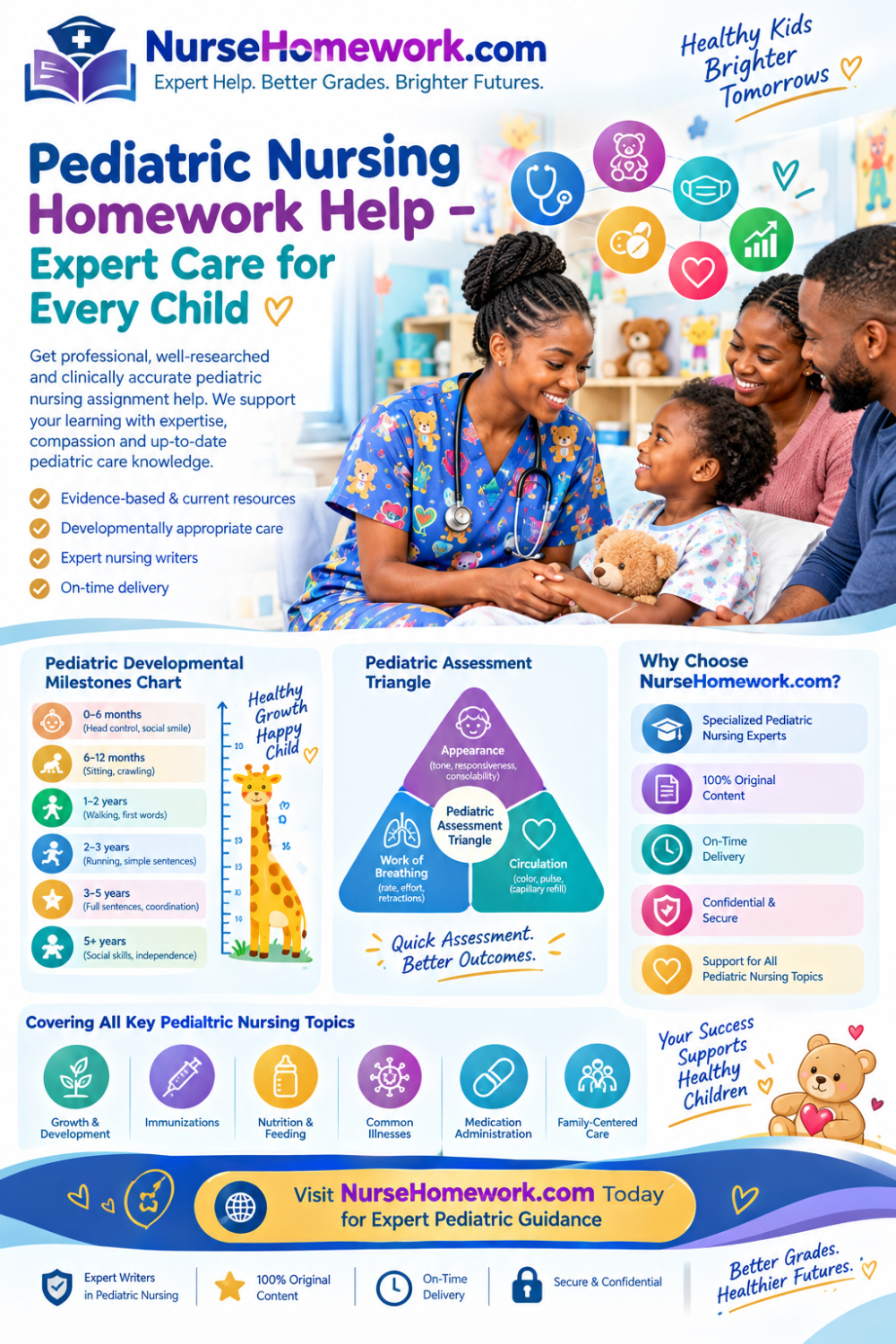
Understanding growth and development is foundational to pediatric nursing homework help. Nurses and health care providers monitor the motor development of infants and assess if milestones are met. Key developmental stages include:
Infant (0–12 months): Body control begins with head control at 2 months, followed by chest control at 4 months, sitting at 6 months, crawling at 8 months, and standing (cruising) at 10 months
Toddler (1–3 years): Toddlers begin to eat regular foods and have around 10 teeth. They develop increased mobility and independence
Preschool (3–6 years): Language development, imaginative play, and social skills emerge
School-age (6–12 years): Spans ages six to twelve years. Children develop logical thinking and peer relationships
Adolescent (12–18 years): Puberty, identity formation, and abstract thinking develop
When seeking pediatric nursing homework help, students must understand that developmental milestones are specific skills or behaviors expected to be achieved by infants and older children and adolescents at certain ages. Well-child visits provide opportunities to monitor growth and development, screen for medical problems, provide anticipatory guidance, and promote health.
Family-Centered Care
Family-centered care is central to pediatric nursing homework help. This approach recognizes that the family is the constant in the child’s life and should be involved in all aspects of care. Key principles include:
Partnership: Collaborating with families in decision-making
Respect: Honoring family values, beliefs, and cultural practices
Support: Providing emotional and practical support to families
Information: Sharing complete and unbiased information
Empowerment: Enabling families to build on their strengths
The Pediatric Assessment Triangle
The pediatric assessment triangle is a critical tool in pediatric nursing homework help. This rapid assessment tool examines three key areas:
Appearance (TICLS): Tone, Interactiveness, Consolability, Look/Gaze, and Speech/Cry
Work of Breathing: Nasal flaring, retractions, posturing, and breath sounds
Circulation: Skin color and perfusion
When conducting pediatric assessments, nurses must consider the age and developmental stage of the child and modify language and communication style to be consistent with the child’s needs. Play techniques are essential for infants and children, and nurses should implement behaviors that show respect for the child’s age, gender, cultural values, and personal preferences.
Communication with Children and Families
Therapeutic communication is essential for pediatric nursing homework help. Strategies include:
Age-Appropriate Language: Modifying communication based on developmental stage
Play Techniques: Using play to explain procedures and reduce anxiety
Active Listening: Attending to both verbal and nonverbal cues
Family Involvement: Including parents and caregivers in conversations
Cultural Competence: Respecting diverse family structures and values
Common Pediatric Nursing Assignments
Pediatric Care Plans
Pediatric care plans are a cornerstone of pediatric nursing homework help. Students must create comprehensive care plans that address the unique needs of children and their families. Care plans typically include:
Assessment: Growth measurements, developmental screening, and family assessment
Nursing Diagnoses: Using NANDA-I taxonomy with PES format
SMART Goals: Specific, Measurable, Achievable, Realistic, Time-bound objectives
Evidence-Based Interventions: Age-appropriate interventions
Evaluation: Monitoring progress toward goals
Common care plan topics in pediatric nursing include care of children with cardiovascular dysfunction, endocrine dysfunction, fluid and electrolyte imbalance, gastrointestinal dysfunction, hemopoietic dysfunction and neoplasms, hepatic dysfunction, infections, musculoskeletal dysfunction, and neurologic/neuromuscular dysfunction.
Case Study Analysis
Case study analysis is a critical component of pediatric nursing homework help. Students analyze complex pediatric scenarios that require:
Clinical Judgment: Recognizing relevant cues and prioritizing hypotheses
Application of Growth and Development: Understanding how development affects care
Family Assessment: Evaluating family dynamics and support systems
Ethical Decision-Making: Navigating complex ethical situations
Growth and Development Assignments
Growth and development assignments are common in pediatric nursing homework help. These assignments typically include:
Developmental Milestones: Identifying expected milestones for different age groups
Anticipatory Guidance: Planning health promotion and injury prevention
Developmental Screening: Using tools such as the Denver Developmental Screening
Nutritional Assessment: Evaluating growth patterns and nutritional status
Medication Administration and Pediatric Dosage Calculations
Medication administration in pediatrics requires specialized pediatric nursing homework help. Topics include:
Weight-Based Dosing: Calculating medications based on kilogram weight
Pediatric Pharmacology: Understanding age-specific pharmacokinetics
Safe Administration: Using the “Rights” of medication administration
Parent Education: Teaching families about medication administration
NCLEX-Style Pediatric Questions
NCLEX preparation is a significant focus of pediatric nursing homework help. Key topics include NCLEX prioritization rules, pediatric vital sign trends, developmental milestones and regression, croup vs. epiglottitis, signs of abuse and neglect, mandated reporting, and high-yield pediatric pharmacology. The Next-Generation NCLEX® (NGN) Examination emphasizes clinical judgment through case studies and complex decision-making.
Major Pediatric Conditions and Disorders
Respiratory Disorders
Respiratory disorders are a significant focus of pediatric nursing homework help. Common conditions include:
Croup (Laryngotracheobronchitis): Viral infection causing upper airway obstruction
Epiglottitis: Bacterial infection causing life-threatening airway obstruction
Asthma: Chronic inflammatory airway disease
Bronchiolitis: Viral lower respiratory infection in infants
Pneumonia: Lung infection requiring careful assessment and intervention
Cardiovascular Disorders
Cardiovascular disorders require comprehensive pediatric nursing homework help. Topics include:
Congenital Heart Defects: Structural abnormalities present at birth
Kawasaki Disease: Vasculitis affecting young children
Rheumatic Heart Disease: Complication of untreated strep infection
Heart Failure: Impaired cardiac function requiring careful management
Neurological Disorders
Neurological disorders require specialized pediatric nursing homework help. Topics include:
Seizure Disorders: Epilepsy and febrile seizures
Meningitis: Infection of the meninges
Traumatic Brain Injury: Concussion and head trauma
Cerebral Palsy: Non-progressive motor impairment
Gastrointestinal Disorders
Gastrointestinal disorders are common in pediatric nursing homework help. Topics include:
Gastroenteritis: Vomiting and diarrhea requiring fluid management
Appendicitis: Acute surgical emergency
Intussusception: Telescoping of the bowel
Pyloric Stenosis: Gastric outlet obstruction in infants
Hematologic and Oncologic Disorders
Hematologic and oncologic disorders require specialized pediatric nursing homework help. Topics include:
Sickle Cell Disease: Genetic hemoglobin disorder
Hemophilia: Bleeding disorder requiring careful management
Leukemia: Most common childhood cancer
Anemia: Iron deficiency and other causes
Endocrine Disorders
Endocrine disorders are essential pediatric nursing homework help topics. Topics include:
Type 1 Diabetes: Autoimmune destruction of pancreatic beta cells
Growth Hormone Deficiency: Short stature requiring intervention
Thyroid Disorders: Hypothyroidism and hyperthyroidism
Adrenal Insufficiency: Impaired cortisol production
Infectious Diseases
Infectious diseases are common in pediatric nursing homework help. Topics include:
Immunization Schedule: Age-appropriate vaccinations
Common Childhood Infections: Measles, mumps, rubella, chickenpox
Respiratory Syncytial Virus (RSV): Common respiratory infection in infants
Sepsis: Life-threatening systemic infection
Challenges in Pediatric Nursing Education
Understanding Developmental Differences
One of the greatest challenges in pediatric nursing homework help is understanding how children differ from adults. Children have distinct physiological differences that affect assessment, medication dosing, and intervention strategies. Students must learn to apply developmental principles to all aspects of care.
Communicating with Children and Families
Effective communication is essential for pediatric nursing homework help. Students must develop skills in communicating with children at different developmental stages and with families from diverse backgrounds. This requires patience, creativity, and cultural sensitivity.
Medication Calculations and Safety
Pediatric medication administration requires precise weight-based calculations. Students often struggle with dosage calculations and medication safety in pediatrics. Professional pediatric nursing homework help provides structured practice and guidance.
Recognizing Child Abuse and Neglect
Recognizing signs of abuse and neglect is critical in pediatric nursing homework help. Students must learn to identify red flags, understand mandated reporting requirements, and provide appropriate interventions.
Effective Strategies for Pediatric Nursing Success
Visual Learning and Concept Mapping
Visual learning is essential for pediatric nursing homework help. Creating concept maps that connect growth and development, pathophysiology, and nursing interventions can help organize complex information. Study guides that feature clinical judgment case studies and questions, key terms, and critical thinking exercises help students learn difficult concepts.
Case-Based Learning
Case-based learning is one of the most effective strategies for pediatric nursing homework help. Realistic case studies help students understand how pediatric concepts apply to patient care. Resources that feature clinical judgment case studies and questions encourage students to apply their knowledge to real-world scenarios.
Simulation and Clinical Practice
Simulation and clinical practice are essential for pediatric nursing homework help. Hands-on experience with pediatric assessment, medication administration, and family communication builds confidence and competence.
Study Groups and Collaborative Learning
Collaborative learning is invaluable for pediatric nursing homework help. Study groups allow students to teach concepts to peers, reinforce understanding, and expose themselves to different learning perspectives.
How NurseHomework.com Can Help with Pediatric Nursing Homework
At NurseHomework.com, we provide comprehensive pediatric nursing homework help for nursing students at all levels. Our services include:
Step-by-step guidance on pediatric nursing homework help for care plans, case studies, and growth and development assignments
Expert review of pediatric assignments with personalized feedback
Assistance with NANDA-I nursing diagnoses and PES formatting
Help with SMART goal development and measurable outcomes
Evidence-based intervention suggestions for pediatric care
Growth and development milestone guidance
Pediatric medication calculation and safety support
NCLEX-style pediatric question practice
Family-centered care and communication strategies
Support informed by pediatric nursing standards and best practices
Whether you are struggling with care plans for respiratory disorders, case studies of congenital heart defects, or NCLEX preparation, NurseHomework.com is here to support your pediatric nursing success.
Frequently Asked Questions About Pediatric Nursing Homework Help
What is pediatric nursing?
Pediatric nursing focuses on the care of infants, children, and adolescents from birth through young adulthood. It requires specialized knowledge of growth and development, family-centered care, and pediatric pathophysiology.
What are the most common pediatric nursing assignments?
Common assignments include pediatric care plans, case study analysis, growth and development assignments, medication administration and dosage calculations, and NCLEX-style pediatric questions.
What are the key developmental milestones in pediatrics?
Key milestones include head control at 2 months, sitting at 6 months, crawling at 8 months, standing at 10 months, and walking independently around 12 months. Toddlers begin to eat regular foods and have around 10 teeth.
What is the pediatric assessment triangle?
The pediatric assessment triangle is a rapid assessment tool examining appearance (TICLS), work of breathing, and circulation. It is used for initial assessment of children in emergency situations.
What are the most common pediatric disorders?
Common disorders include respiratory conditions (croup, asthma, bronchiolitis), cardiovascular disorders (congenital heart defects, Kawasaki disease), neurological disorders (seizures, meningitis), gastrointestinal disorders (gastroenteritis, appendicitis), and infectious diseases.
Can NurseHomework.com help me with my pediatric nursing assignments?
Absolutely! NurseHomework.com offers expert guidance, personalized support, and comprehensive resources for nursing students needing pediatric nursing homework help.
What study strategies work best for pediatric nursing?
Effective strategies include visual learning, concept mapping, case-based learning, simulation, clinical practice, and collaborative study groups. Study guides with clinical judgment case studies and critical thinking exercises are particularly helpful.
How can I prepare for pediatric questions on the NCLEX?
Practice with NCLEX-style questions focusing on prioritization, pediatric vital sign trends, developmental milestones, and high-yield pediatric pharmacology. Resources that feature clinical judgment case studies are essential for NGN preparation.
What is family-centered care in pediatric nursing?
Family-centered care recognizes that the family is the constant in the child’s life and should be involved in all aspects of care. It emphasizes partnership, respect, support, information sharing, and empowerment.
Mastering pediatric nursing homework help is essential for nursing students pursuing careers in child health nursing. By understanding core concepts—growth and development, family-centered care, the pediatric assessment triangle, and common childhood disorders—and applying effective study strategies, you can transform pediatric nursing from a challenging subject into a rewarding specialty. At NurseHomework.com, we are committed to helping you succeed. Our expert guidance, comprehensive resources, and personalized support make pediatric nursing homework help easier and more effective. Don’t let the challenges of pediatric nursing hold you back. Visit NurseHomework.com today and discover how we can help you master pediatric nursing homework help and excel in your nursing studies.
Needs help with Nursing Assignment?
We are available 24x7 to deliver the best services and assignment ready within 3-4 hours? Order a custom-written, plagiarism-free paper
 Get Answer Over WhatsApp
 Order Paper Now