Nursing Clinical Reasoning Help: 10 Best Powerful Ways to Get Better Results
Nursing Clinical Reasoning Help: 10 Best Powerful Ways to Get Better Results

Nursing Clinical Reasoning Help is one of the most practical topics for nursing students working on care plans, case studies, simulations, and clinical assignments today because many people are trying to reduce confusion, improve results, and make better decisions with reliable support, stronger systems, and clearer processes.
The main problem this topic solves is students having patient information but struggling to decide priorities, interventions, and rationales. When this problem is ignored, work becomes slower, records become harder to trust, customers or users get frustrated, and the organization spends more time fixing avoidable mistakes.
This guide explains what Nursing Clinical Reasoning Help means, why it matters, the features or steps to consider, common mistakes to avoid, and how NurseHomework can help. The goal is to give readers a useful, search-friendly article that answers real questions while supporting strong SEO performance.
Table of Contents
- What is
- Why Nursing Clinical Reasoning Help matters today
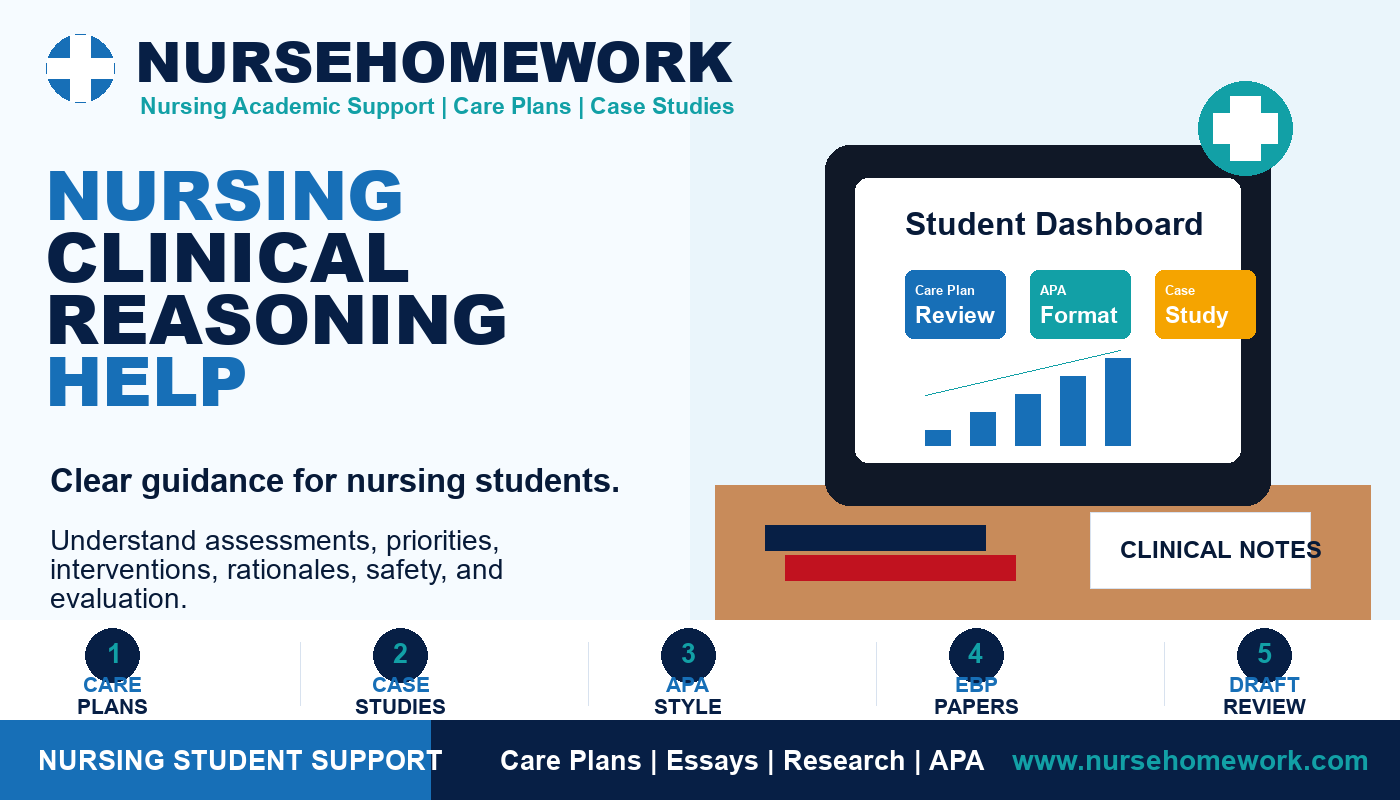
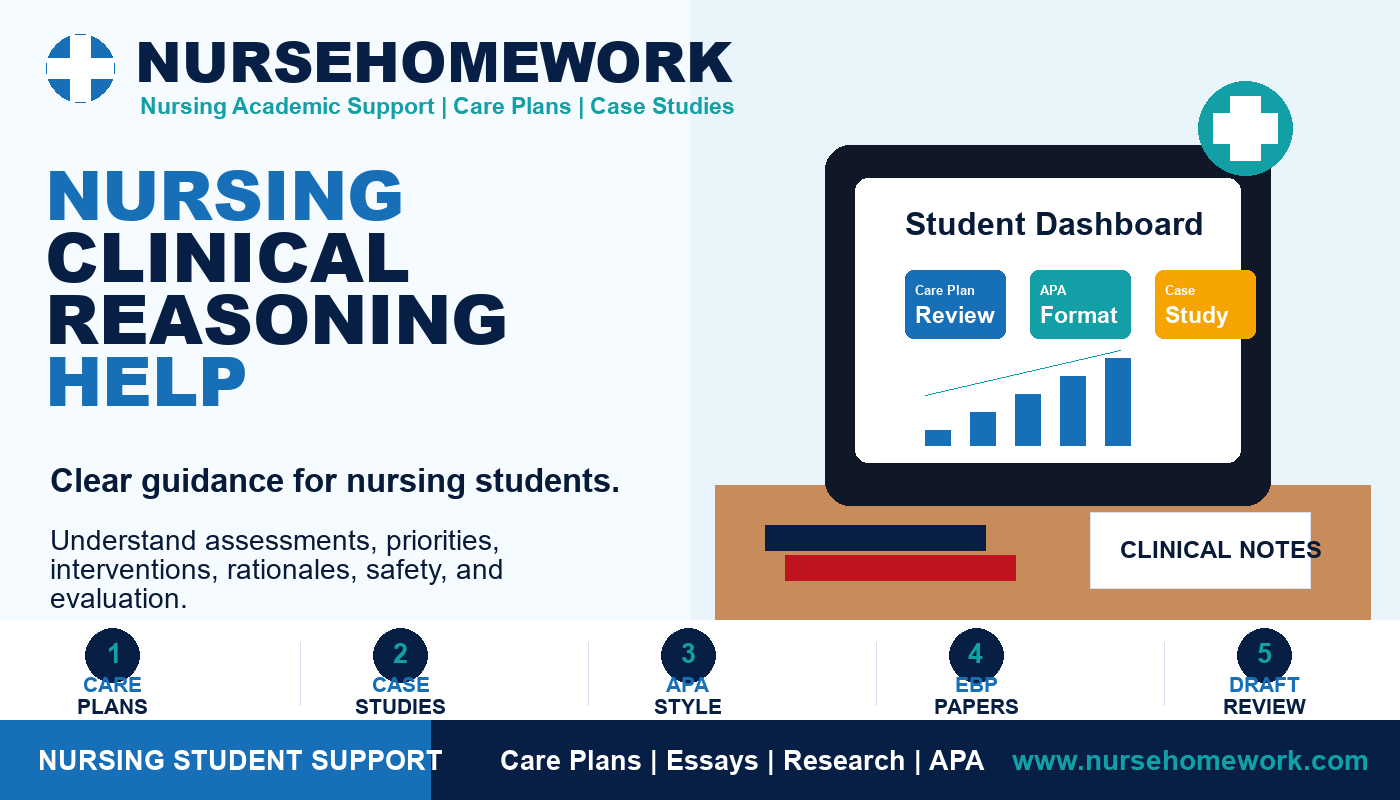
- Important features and steps
- Benefits for users and businesses
- Common mistakes to avoid
- How to get started
- Useful links
- Frequently asked questions
What is
Nursing Clinical Reasoning Help refers to a focused solution, service, or planning area that helps people handle a specific challenge more effectively. It is not just a phrase for search engines. It describes a real need that users are actively looking for online.
For nursing students working on care plans, case studies, simulations, and clinical assignments, the value of Nursing Clinical Reasoning Help comes from clarity. When people understand the process, they make better choices. They know what to look for, what questions to ask, what mistakes to avoid, and what kind of support is worth trusting.
Good support around Nursing Clinical Reasoning Help should be practical. It should explain the problem in simple language, offer useful steps, and help the reader move from uncertainty to action. That is why this article is structured as a complete guide instead of a short promotional note.
Why Nursing Clinical Reasoning Help Matters Today
People are searching online because they want answers quickly. They may be comparing service providers, trying to understand costs, looking for a better system, or trying to solve a deadline, workflow, or performance problem. If a website answers those questions clearly, it has a better chance of attracting qualified visitors.
Nursing Clinical Reasoning Help matters because it connects directly with buyer intent. Someone searching this term is usually not just browsing casually. They have a problem, a goal, or a decision to make. A strong blog post should meet that visitor with depth, relevance, and trust.
For NurseHomework, publishing around Nursing Clinical Reasoning Help helps build topical authority. Search engines need to understand what the website is about. When a site consistently publishes useful content around related keywords, it becomes easier for the site to rank for both broad and long-tail searches.
Important Features and Steps
The best approach to Nursing Clinical Reasoning Help depends on the user's situation, but these points are important in most cases:
- assessment review to make the workflow clearer, faster, and easier to manage.
- priority setting to make the workflow clearer, faster, and easier to manage.
- diagnosis planning to make the workflow clearer, faster, and easier to manage.
- interventions to make the workflow clearer, faster, and easier to manage.
- rationales to make the workflow clearer, faster, and easier to manage.
- patient safety to make the workflow clearer, faster, and easier to manage.
- evaluation to make the workflow clearer, faster, and easier to manage.
- editing to make the workflow clearer, faster, and easier to manage.
- Clear communication so users understand what is happening at every stage.
- Reliable support so problems are handled professionally when they appear.
- Simple onboarding so new users or customers can get started without unnecessary delay.
- Measurable outcomes so the user can tell whether the solution is working.
- Room to improve so the process can grow with future needs.
Benefits of Nursing Clinical Reasoning Help
1. Better Organization
One of the biggest benefits of Nursing Clinical Reasoning Help is better organization. Instead of handling work through scattered notes, unclear instructions, or repeated guesswork, the user gets a clearer path. This reduces stress and improves consistency.
2. Faster Decisions
When information is clear, decisions become easier. People can compare options, understand risks, and choose a direction with more confidence. This is especially important where time, money, operations, or academic progress is involved.
3. Stronger Results
Nursing Clinical Reasoning Help supports better results because it addresses the root problem rather than only treating symptoms. A user who understands the right process can avoid repeated mistakes and focus on what matters most.
4. Better User Experience
Users appreciate clear explanations, professional support, and predictable steps. Whether the topic is business software, property systems, internet setup, driving support, or academic guidance, user experience matters.
5. Long-Term Value
The best solution is not useful for one day only. It should create long-term value by improving habits, workflows, records, planning, service delivery, or learning outcomes.
Common Mistakes to Avoid
Choosing Without Understanding the Need
Many people choose a solution before defining the problem clearly. This can lead to poor results. Before taking action, it is important to understand what is not working and what success should look like.
Ignoring Support Quality
Support quality matters. A low-cost option may become expensive if it causes delays, confusion, or poor results. Good communication and reliable follow-up are essential.
Looking Only at Price
Price is important, but it should not be the only factor. The best option should balance affordability, reliability, professionalism, and long-term usefulness.
Failing to Plan for Growth
Needs change over time. A good solution should be flexible enough to support future growth, new requirements, or changing user expectations.
How to Get Started with Nursing Clinical Reasoning Help
Start by listing the exact problem you want to solve. Write down what is currently difficult, what outcome you want, and what kind of support would make the biggest difference.
Next, compare possible solutions. Look for experience, clarity, examples, support quality, and a process that feels organized. If a provider cannot explain their process clearly, that is often a warning sign.
Then begin with the most important step. You do not need to solve everything at once. A focused first step often creates faster progress than a large unfocused plan.
Finally, review results. Good progress should be visible. You should be able to tell whether the solution is reducing confusion, saving time, improving quality, or helping you reach your goal.
Why Choose
NurseHomework focuses on practical, user-centered support. The aim is to help visitors solve real problems, not overwhelm them with vague promises. A strong service or solution should be clear, reliable, and useful from the first interaction.
NurseHomework supports nursing students with ethical learning guidance, structure, editing, and academic clarity.
Useful Links
For more context and related services, explore these useful links:
- Nursing Clinical Reasoning Help
- whatsapp business automation in kenya
- nursing writing support
- nursing assignment guidance
Frequently Asked Questions
What does Nursing Clinical Reasoning Help help with?
Nursing Clinical Reasoning Help helps users handle students having patient information but struggling to decide priorities, interventions, and rationales in a more organized and reliable way.
Who needs
Nursing Clinical Reasoning Help is useful for nursing students working on care plans, case studies, simulations, and clinical assignments, especially when the current process is slow, unclear, or difficult to manage.
How do I choose the best provider?
Look for clear communication, practical experience, useful examples, reliable support, and a process that matches your exact needs.
Is Nursing Clinical Reasoning Help worth investing in?
Yes, when the problem is affecting results, time, service quality, learning progress, or operational control. The right support can create long-term value.
How fast can I get started?
Most users can start by sharing their needs, goals, and current challenges. From there, the right plan can be recommended.
Conclusion
Nursing Clinical Reasoning Help is a strong keyword because it reflects a real problem people are searching for today. A clear article around this topic helps visitors understand the solution, compare options, and take the next step confidently.
NurseHomework can help users approach this topic with clarity, professionalism, and practical support. The best time to start is when the problem is still manageable, before delays and confusion become more expensive.
More Practical Guidance for Nursing Clinical Reasoning Help
One useful way to approach Nursing Clinical Reasoning Help is to break the need into smaller parts. Instead of asking for a broad solution, identify the exact result you want first. This makes it easier to choose the right provider, ask better questions, and measure whether the support is working.
It also helps to prepare your information before requesting support. If the topic involves a business system, prepare your current workflow, users, reports, and pain points. If it involves academic support, prepare the assignment instructions, rubric, topic, sources, and deadline. If it involves a service, prepare the location, timing, expectations, and special requirements.
Another important point is consistency. Strong outcomes rarely come from one random action. They come from following a clear process, reviewing progress, and improving where necessary. Nursing Clinical Reasoning Help should therefore be treated as part of a larger plan, not a quick shortcut.
Trust is also important. A good provider should explain what they can do, what they cannot do, what the user should provide, and what result is realistic. Clear expectations reduce disappointment and protect both sides.
Finally, review the final outcome carefully. Whether you are reviewing a system setup, a support service, a written guide, a research plan, or a service booking, take time to confirm that it solves the original problem. This final check helps you learn and helps the provider improve future support.
More Practical Guidance for Nursing Clinical Reasoning Help
One useful way to approach Nursing Clinical Reasoning Help is to break the need into smaller parts. Instead of asking for a broad solution, identify the exact result you want first. This makes it easier to choose the right provider, ask better questions, and measure whether the support is working.
It also helps to prepare your information before requesting support. If the topic involves a business system, prepare your current workflow, users, reports, and pain points. If it involves academic support, prepare the assignment instructions, rubric, topic, sources, and deadline. If it involves a service, prepare the location, timing, expectations, and special requirements.
Another important point is consistency. Strong outcomes rarely come from one random action. They come from following a clear process, reviewing progress, and improving where necessary. Nursing Clinical Reasoning Help should therefore be treated as part of a larger plan, not a quick shortcut.
Trust is also important. A good provider should explain what they can do, what they cannot do, what the user should provide, and what result is realistic. Clear expectations reduce disappointment and protect both sides.
Finally, review the final outcome carefully. Whether you are reviewing a system setup, a support service, a written guide, a research plan, or a service booking, take time to confirm that it solves the original problem. This final check helps you learn and helps the provider improve future support.
More Practical Guidance for Nursing Clinical Reasoning Help
One useful way to approach Nursing Clinical Reasoning Help is to break the need into smaller parts. Instead of asking for a broad solution, identify the exact result you want first. This makes it easier to choose the right provider, ask better questions, and measure whether the support is working.
It also helps to prepare your information before requesting support. If the topic involves a business system, prepare your current workflow, users, reports, and pain points. If it involves academic support, prepare the assignment instructions, rubric, topic, sources, and deadline. If it involves a service, prepare the location, timing, expectations, and special requirements.
Another important point is consistency. Strong outcomes rarely come from one random action. They come from following a clear process, reviewing progress, and improving where necessary. Nursing Clinical Reasoning Help should therefore be treated as part of a larger plan, not a quick shortcut.
Trust is also important. A good provider should explain what they can do, what they cannot do, what the user should provide, and what result is realistic. Clear expectations reduce disappointment and protect both sides.
Finally, review the final outcome carefully. Whether you are reviewing a system setup, a support service, a written guide, a research plan, or a service booking, take time to confirm that it solves the original problem. This final check helps you learn and helps the provider improve future support.
More Practical Guidance for Nursing Clinical Reasoning Help
One useful way to approach Nursing Clinical Reasoning Help is to break the need into smaller parts. Instead of asking for a broad solution, identify the exact result you want first. This makes it easier to choose the right provider, ask better questions, and measure whether the support is working.
It also helps to prepare your information before requesting support. If the topic involves a business system, prepare your current workflow, users, reports, and pain points. If it involves academic support, prepare the assignment instructions, rubric, topic, sources, and deadline. If it involves a service, prepare the location, timing, expectations, and special requirements.
Another important point is consistency. Strong outcomes rarely come from one random action. They come from following a clear process, reviewing progress, and improving where necessary. Nursing Clinical Reasoning Help should therefore be treated as part of a larger plan, not a quick shortcut.
Trust is also important. A good provider should explain what they can do, what they cannot do, what the user should provide, and what result is realistic. Clear expectations reduce disappointment and protect both sides.
Finally, review the final outcome carefully. Whether you are reviewing a system setup, a support service, a written guide, a research plan, or a service booking, take time to confirm that it solves the original problem. This final check helps you learn and helps the provider improve future support.
More Practical Guidance for Nursing Clinical Reasoning Help
One useful way to approach Nursing Clinical Reasoning Help is to break the need into smaller parts. Instead of asking for a broad solution, identify the exact result you want first. This makes it easier to choose the right provider, ask better questions, and measure whether the support is working.
It also helps to prepare your information before requesting support. If the topic involves a business system, prepare your current workflow, users, reports, and pain points. If it involves academic support, prepare the assignment instructions, rubric, topic, sources, and deadline. If it involves a service, prepare the location, timing, expectations, and special requirements.
Another important point is consistency. Strong outcomes rarely come from one random action. They come from following a clear process, reviewing progress, and improving where necessary. Nursing Clinical Reasoning Help should therefore be treated as part of a larger plan, not a quick shortcut.
Trust is also important. A good provider should explain what they can do, what they cannot do, what the user should provide, and what result is realistic. Clear expectations reduce disappointment and protect both sides.
Finally, review the final outcome carefully. Whether you are reviewing a system setup, a support service, a written guide, a research plan, or a service booking, take time to confirm that it solves the original problem. This final check helps you learn and helps the provider improve future support.
More Practical Guidance for Nursing Clinical Reasoning Help
One useful way to approach Nursing Clinical Reasoning Help is to break the need into smaller parts. Instead of asking for a broad solution, identify the exact result you want first. This makes it easier to choose the right provider, ask better questions, and measure whether the support is working.
It also helps to prepare your information before requesting support. If the topic involves a business system, prepare your current workflow, users, reports, and pain points. If it involves academic support, prepare the assignment instructions, rubric, topic, sources, and deadline. If it involves a service, prepare the location, timing, expectations, and special requirements.
Another important point is consistency. Strong outcomes rarely come from one random action. They come from following a clear process, reviewing progress, and improving where necessary. Nursing Clinical Reasoning Help should therefore be treated as part of a larger plan, not a quick shortcut.
Trust is also important. A good provider should explain what they can do, what they cannot do, what the user should provide, and what result is realistic. Clear expectations reduce disappointment and protect both sides.
Finally, review the final outcome carefully. Whether you are reviewing a system setup, a support service, a written guide, a research plan, or a service booking, take time to confirm that it solves the original problem. This final check helps you learn and helps the provider improve future support.
More Practical Guidance for Nursing Clinical Reasoning Help
One useful way to approach Nursing Clinical Reasoning Help is to break the need into smaller parts. Instead of asking for a broad solution, identify the exact result you want first. This makes it easier to choose the right provider, ask better questions, and measure whether the support is working.
It also helps to prepare your information before requesting support. If the topic involves a business system, prepare your current workflow, users, reports, and pain points. If it involves academic support, prepare the assignment instructions, rubric, topic, sources, and deadline. If it involves a service, prepare the location, timing, expectations, and special requirements.
Another important point is consistency. Strong outcomes rarely come from one random action. They come from following a clear process, reviewing progress, and improving where necessary. Nursing Clinical Reasoning Help should therefore be treated as part of a larger plan, not a quick shortcut.
Trust is also important. A good provider should explain what they can do, what they cannot do, what the user should provide, and what result is realistic. Clear expectations reduce disappointment and protect both sides.
Finally, review the final outcome carefully. Whether you are reviewing a system setup, a support service, a written guide, a research plan, or a service booking, take time to confirm that it solves the original problem. This final check helps you learn and helps the provider improve future support.
More Practical Guidance for Nursing Clinical Reasoning Help
One useful way to approach Nursing Clinical Reasoning Help is to break the need into smaller parts. Instead of asking for a broad solution, identify the exact result you want first. This makes it easier to choose the right provider, ask better questions, and measure whether the support is working.
It also helps to prepare your information before requesting support. If the topic involves a business system, prepare your current workflow, users, reports, and pain points. If it involves academic support, prepare the assignment instructions, rubric, topic, sources, and deadline. If it involves a service, prepare the location, timing, expectations, and special requirements.
Another important point is consistency. Strong outcomes rarely come from one random action. They come from following a clear process, reviewing progress, and improving where necessary. Nursing Clinical Reasoning Help should therefore be treated as part of a larger plan, not a quick shortcut.
Trust is also important. A good provider should explain what they can do, what they cannot do, what the user should provide, and what result is realistic. Clear expectations reduce disappointment and protect both sides.
Finally, review the final outcome carefully. Whether you are reviewing a system setup, a support service, a written guide, a research plan, or a service booking, take time to confirm that it solves the original problem. This final check helps you learn and helps the provider improve future support.
More Practical Guidance for Nursing Clinical Reasoning Help
One useful way to approach Nursing Clinical Reasoning Help is to break the need into smaller parts. Instead of asking for a broad solution, identify the exact result you want first. This makes it easier to choose the right provider, ask better questions, and measure whether the support is working.
It also helps to prepare your information before requesting support. If the topic involves a business system, prepare your current workflow, users, reports, and pain points. If it involves academic support, prepare the assignment instructions, rubric, topic, sources, and deadline. If it involves a service, prepare the location, timing, expectations, and special requirements.
Another important point is consistency. Strong outcomes rarely come from one random action. They come from following a clear process, reviewing progress, and improving where necessary. Nursing Clinical Reasoning Help should therefore be treated as part of a larger plan, not a quick shortcut.
Trust is also important. A good provider should explain what they can do, what they cannot do, what the user should provide, and what result is realistic. Clear expectations reduce disappointment and protect both sides.
Finally, review the final outcome carefully. Whether you are reviewing a system setup, a support service, a written guide, a research plan, or a service booking, take time to confirm that it solves the original problem. This final check helps you learn and helps the provider improve future support.
More Practical Guidance for Nursing Clinical Reasoning Help
One useful way to approach Nursing Clinical Reasoning Help is to break the need into smaller parts. Instead of asking for a broad solution, identify the exact result you want first. This makes it easier to choose the right provider, ask better questions, and measure whether the support is working.
It also helps to prepare your information before requesting support. If the topic involves a business system, prepare your current workflow, users, reports, and pain points. If it involves academic support, prepare the assignment instructions, rubric, topic, sources, and deadline. If it involves a service, prepare the location, timing, expectations, and special requirements.
Another important point is consistency. Strong outcomes rarely come from one random action. They come from following a clear process, reviewing progress, and improving where necessary. Nursing Clinical Reasoning Help should therefore be treated as part of a larger plan, not a quick shortcut.
Trust is also important. A good provider should explain what they can do, what they cannot do, what the user should provide, and what result is realistic. Clear expectations reduce disappointment and protect both sides.
Finally, review the final outcome carefully. Whether you are reviewing a system setup, a support service, a written guide, a research plan, or a service booking, take time to confirm that it solves the original problem. This final check helps you learn and helps the provider improve future support.
More Practical Guidance for Nursing Clinical Reasoning Help
One useful way to approach Nursing Clinical Reasoning Help is to break the need into smaller parts. Instead of asking for a broad solution, identify the exact result you want first. This makes it easier to choose the right provider, ask better questions, and measure whether the support is working.
It also helps to prepare your information before requesting support. If the topic involves a business system, prepare your current workflow, users, reports, and pain points. If it involves academic support, prepare the assignment instructions, rubric, topic, sources, and deadline. If it involves a service, prepare the location, timing, expectations, and special requirements.
Another important point is consistency. Strong outcomes rarely come from one random action. They come from following a clear process, reviewing progress, and improving where necessary. Nursing Clinical Reasoning Help should therefore be treated as part of a larger plan, not a quick shortcut.
Trust is also important. A good provider should explain what they can do, what they cannot do, what the user should provide, and what result is realistic. Clear expectations reduce disappointment and protect both sides.
Finally, review the final outcome carefully. Whether you are reviewing a system setup, a support service, a written guide, a research plan, or a service booking, take time to confirm that it solves the original problem. This final check helps you learn and helps the provider improve future support.
Needs help with Nursing Assignment?
We are available 24x7 to deliver the best services and assignment ready within 3-4 hours? Order a custom-written, plagiarism-free paper
 Get Answer Over WhatsApp
 Order Paper Now