Nursing Patient Care Study Help: Your Complete Guide to Clinical Excellence
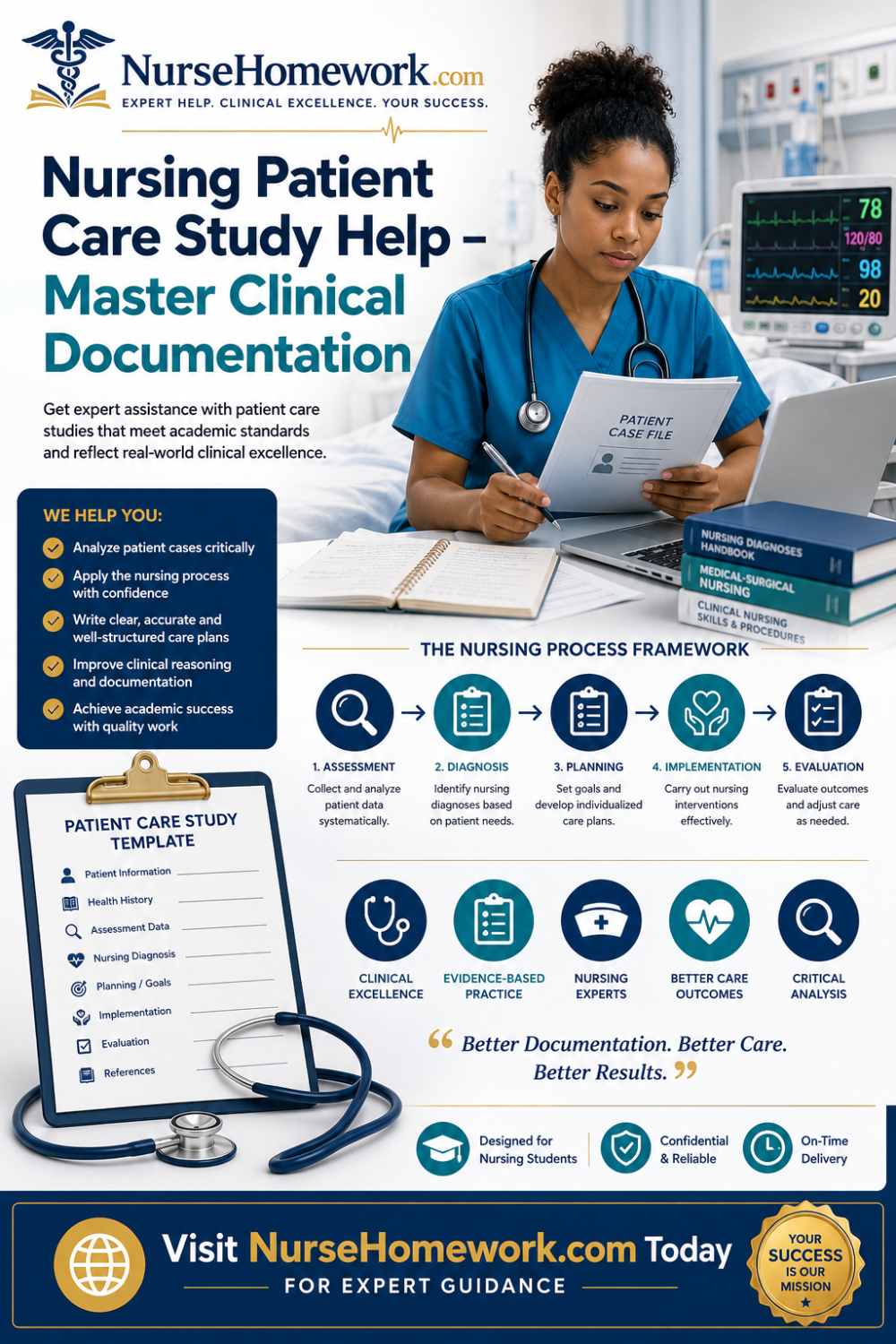
Nursing patient care study help is an essential resource for every nursing student and professional seeking to demonstrate clinical competence and evidence-based practice. At NurseHomework.com, we understand that mastering nursing patient care study help is fundamental to nursing education and professional development. This comprehensive guide will provide you with nursing patient care study help using established frameworks, standardized taxonomies, and best practices.
Understanding Nursing Patient Care Studies
Before diving into nursing patient care study help, it is essential to understand what a nursing patient care study is and why it matters. A nursing patient care study is a detailed analytical report of a patient’s clinical situation that demonstrates the application of the nursing process and critical thinking skills. The number of case studies published in scientific nursing publications has increased considerably, as they allow nurses to share clinical experiences and evidence-based interventions. The purpose of nursing patient care study help is to document comprehensive care, analyze patient outcomes, and contribute to nursing knowledge.
Nursing patient care studies differ from simple care plans. A care plan is one component of a case study, while the case study includes patient history, assessment data, diagnostic findings, and evaluation of outcomes. The nursing patient care study help you receive should guide you through creating a complete, well-structured document that demonstrates clinical reasoning.
The Nursing Process Framework for Patient Care Studies
The nursing process provides the foundation for nursing patient care study help. This systematic approach is based on critical thinking and the scientific method of problem solving. The nursing patient care study help follows the ADPIE framework:
Assessment
Diagnosis
Planning
Implementation
Evaluation
Let us explore each step in detail to master nursing patient care study help.
Step 1: Comprehensive Patient Assessment
The first step in nursing patient care study help is thorough patient assessment. This is the data collection phase where nurses gather both subjective and objective information.
Subjective Data Collection
Subjective data is patient-reported information, including symptoms, complaints, feelings, and personal history. Examples include:
“My chest feels tight, and I can’t catch my breath”
“I’m experiencing pain that is different from my incision pain”
“I feel shaky and cold”
When seeking nursing patient care study help, remember that subjective data comes directly from the client and are usually recorded as direct quotations reflecting the client’s opinions or feelings.
Objective Data Collection
Objective data is measurable and observable information, including vital signs, lab results, physical examination findings, and intake/output totals. Examples include:
Vital signs: Temperature, heart rate, respiratory rate, blood pressure, oxygen saturation
Laboratory results: WBC, lactate, blood glucose, electrolytes
Physical assessment findings: Wound characteristics, edema, neurological status
When learning nursing patient care study help, remember that assessment data comes from multiple sources: verbal statements from patients and family members, medical history, physical assessment findings, and vital signs.
Data Sources
Primary source data are obtained directly from the client, while secondary sources include family members, friends, and medical records. A comprehensive nursing patient care study help approach includes gathering data from all available sources.
Step 2: Nursing Diagnosis Formulation
The second step in nursing patient care study help is identifying nursing diagnoses. This is the nurse’s clinical judgment about the patient’s response to actual or potential health conditions or needs.
Nursing Diagnosis vs. Medical Diagnosis
It is crucial to understand that a nursing diagnosis differs from a medical diagnosis. While a medical diagnosis identifies the patient’s illness, a nursing diagnosis focuses on how the illness affects the patient’s daily life. When following nursing patient care study help, remember that a complete nursing diagnosis has three parts: the actual or potential problem based on the NANDA taxonomy, the etiology, and the signs and symptoms.
The PES Format
A common format for a nursing diagnosis is the three-part “PES” statement:
Problem: The nursing diagnosis
Etiology: The cause or contributing factors
Signs/Symptoms: Defining characteristics
Example: “Ineffective airway clearance related to increased tracheobronchial secretions as evidenced by diminished breath sounds and a persistent, non-productive cough.”
Using NANDA-I Taxonomies
When following nursing patient care study help, use NANDA-I standardized terminology for nursing diagnoses. The NANDA-I 13th edition, published in 2025, includes numerous nursing diagnoses for comprehensive patient care. The NANDA-I taxonomy provides standardized language that enhances communication among healthcare providers.
Prioritizing Diagnoses
When conducting nursing patient care study help, using Maslow’s Hierarchy of Needs helps prioritize which diagnoses to address first. Physiological needs such as airway, breathing, and circulation take priority over safety and psychosocial needs.
Step 3: Planning and Goal Setting
The third step in nursing patient care study help is creating measurable goals and expected outcomes.
SMART Goals Framework
Effective goals in your nursing patient care study help should follow the SMART framework:
Specific: Well-defined and unambiguous
Measurable: Set specific metrics to measure progress
Achievable: Within the patient’s capability
Realistic: Relevant to the care plan
Time-bound: With a start time and end date
Short-term and Long-term Goals
When creating goals for your nursing patient care study help, differentiate between short-term and long-term outcomes:
Short-term SMART goal example: “The patient will report a pain level of 3 or less on a 0-10 scale within 1 hour of receiving prescribed pain medication.”
Long-term SMART goal example: “The patient will report a sustained pain level of 2/10 or less during physical therapy sessions by the day of discharge (approx. 5 days).”
Patient-Centered Goals
The goals must also be desired by the patient. If the goal is for the patient to select nutritious dietary choices but the patient wants to focus on their mental health, dietary choices may not be a realistic goal. This patient-centered approach is essential in nursing patient care study help.
Step 4: Implementation and Nursing Interventions
The fourth step in nursing patient care study help is implementing nursing interventions.
Types of Nursing Interventions
Nursing interventions in your nursing patient care study help fall into three main categories:
1. Independent Nursing Interventions: Actions the nurse can provide without a prescription or consulting other team members. Example: “The nurse will reposition the client with dependent edema frequently, as appropriate.”
2. Dependent Nursing Interventions: Actions requiring a prescription or order. Example: “The nurse will administer scheduled diuretics as prescribed.”
3. Collaborative Nursing Interventions: Actions carried out in collaboration with other health team members. Example: “The nurse will manage oxygen therapy in collaboration with the respiratory therapist.”
Evidence-Based Interventions
When following nursing patient care study help, interventions should be evidence-based and directly address the etiology of the nursing diagnosis. The Nursing Interventions Classification (NIC) system provides standardized, evidence-based interventions for reference.
Documentation Guidelines
Documentation requirements for nursing patient care study help include:
Comprehensive health history
Physical assessment findings
Summary of diagnostic and laboratory data
Patient values, goals, and expectations regarding healthcare
Appropriate use of medical terminology
Step 5: Evaluation and Reassessment
The final step in nursing patient care study help is evaluation.
Evaluation Process
The evaluation process covers four key steps:
Setting up evaluation criteria
Comparing the patient’s response to the evaluation criteria
Checking differences in objective completion that affect expected results
Revising the care plan as needed
Evaluation Outcomes
There are three possible outcomes for goals in your nursing patient care study help: met, ongoing, or not met. If goals are not met, revisions are made to the care plan.
Example evaluation: “Goal met: Patient reported pain as 2/10 at 10:00, 1 hour after medication administration. Plan continues with PRN pain management.”
Example evaluation (revision): “Goal partially met: Patient’s pain remains 5/10 after 2 doses of oral pain medication. Notified provider for an order to switch to IV analgesia.”
Structure for a Nursing Patient Care Study
A well-structured nursing patient care study help guide should include the following sections:
Part 1: Preliminary Section
Cover Page:
School Logo and Name
Course Title
Title: Nursing Case Study: [Patient’s Initials or Code]
Student Name
Year and Section
Clinical Instructor
Hospital/Unit Assigned
Date of Submission
Abstract:
A self-explanatory, autonomous summary
Use past tense for writing
Should include most outstanding aspects of each section
Between 150 to 300 words
Part 2: Body of the Case Study
Introduction:
The introduction should accomplish three objectives:
Present the general problem or main theme
Justify the importance for clinical practice
State the purpose of the article
Patient Profile:
Name (Initials or Code)
Age, Sex, Civil Status
Birthdate, Religion
Address
Date of Admission, Date of Discharge
Attending Physician
Admitting Diagnosis and Final Diagnosis
History Taking:
Chief Complaint: Patient’s main reason for hospital admission in own words
History of Present Illness: Sequence of events, onset, duration, precipitating factors, aggravating factors, alleviating factors
Past Medical History: Previous illnesses, surgeries, allergies, immunizations, medications
Family History: Hereditary diseases, health status of family members
Personal/Social History: Lifestyle, occupation, psychosocial background
Review of Systems (Subjective Data):
General, psycho-social, central nervous system/sensory, respiratory, cardiovascular, gastrointestinal, genitourinary, musculoskeletal, integumentary
Physical Assessment (Objective Data):
Height, weight, vital signs
Head-to-toe assessment organized by body system
Include normal findings, patient findings, and significance
Anatomy and Physiology:
Normal anatomy and physiology of the affected organ or system
Basis for understanding pathophysiology
Pathophysiology/Etiology:
Narrative explanation of disease process
Diagrammatic representation
Etiology and risk factors
Disease progression and complications
Laboratory and Diagnostic Tests:
| Laboratory Tests/Diagnostic Tests | Normal Range | Patient Findings/Result | Significance |
|---|
Part 3: Nursing Care Plan
This is the core section of your nursing patient care study help:
| Nursing Diagnosis | Goal/Planning | Intervention | Rationale | Expected Outcome/Evaluation |
|---|
Using Standardized Taxonomies:
NANDA-I for nursing diagnoses
NIC for nursing interventions
NOC for nursing outcomes
Part 4: Case Management
| Procedure | Patient-Based Indication | Patient Preparation | Frequency/Schedule | Nursing Responsibility | Evaluation |
|---|
Part 5: Discussion
This section should:
Relate the case findings to existing literature
Discuss the theoretical basis for interventions
Address clinical implications
Consider the patient’s perspective
Part 6: Discharge Plan
Cover these aspects:
Medications: What to take, when, and how
Exercise: Activity restrictions and progression
Treatment: Follow-up care and wound care
Hygiene: Personal care instructions
Occupation: Return to work guidance
Diet: Dietary modifications
Spiritual/Social: Support resources
Part 7: Bibliography/References
Use Vancouver or APA format
Include all sources cited in the case study
Cite evidence-based sources from nursing journals, government reports, and current textbooks
Subject-Specific Patient Care Study Examples
Post-Operative Complication Case Study
When developing a patient care study for post-operative patients, consider:
Monitoring for signs of infection (fever, WBC elevation, purulent drainage)
Recognizing sepsis clusters (falling blood pressure, elevated lactate)
Regular reassessment of pain and distinguishing incision pain from new symptoms
Heart Failure Patient Care Study
A nurse-led collaborative care study involving 1,507 adults with heart failure demonstrates the impact of comprehensive patient care studies on outcomes. The intervention group received nurse-coordinated collaborative care, showing significant improvements.
Fundamentals of Care Framework
The Fundamentals of Care Framework can guide patient care studies by focusing on:
Observation of nurse-patient interactions
Identifying patient’s fundamental care needs
Applying evidence-based interventions
Person-Centered Care Case Study
Senior nursing students completed a two-part assignment to:
Explore evidence-based interventions for patient and family-centered decision making
Synthesize approaches to care coordination and transitions across settings
Demonstrate fully including the patient in goal development
Quality Standards for Patient Care Studies
Evidence-Based Practice
When seeking nursing patient care study help, quality indicators include:
Completeness: Include all relevant background information, comprehensive health history, physical assessment, diagnostic data, and patient values and goals.
Evidence-Based: Interventions should reflect best practices and be supported by literature from robust sources such as nursing journals, government reports, and current textbooks.
Clear Documentation: Use appropriate medical terminology and nursing diagnosis terminology.
Evaluation: Demonstrate thorough evaluation with recommendations for further interventions or follow-up.
The CARE Guidelines
When learning nursing patient care study help, the CARE guidelines provide essential standards for reporting clinical cases. Key CARE elements include:
Keywords and patient information
Introduction with clinical context
Complete timeline of the clinical course
Diagnostic assessment details
Therapeutic interventions
Follow-up and outcomes documentation
Patient perspective inclusion
Using Nursing Taxonomies
A key aspect of nursing patient care study help is incorporating standardized nursing taxonomies:
NANDA-I for nursing diagnoses
NIC for nursing interventions
NOC for nursing outcomes
This approach contributes to the scientific foundation of nursing practice and improves the quality of published case studies.
Common Mistakes to Avoid in Patient Care Studies
When following nursing patient care study help, avoid these common errors:
1. Confusing Nursing and Medical Diagnoses
Remember that nursing diagnoses focus on patient responses to conditions, not the medical conditions themselves.
2. Setting Unrealistic Goals
Goals must be achievable and realistic. Using the SMART framework helps prevent this mistake.
3. Forgetting to Individualize the Care Plan
Care plans should be individualized, making reference to the literature where appropriate. What works for one patient may not work for another.
4. Missing the Analytical Component
A case study is not just a description of the nursing care plan. It is an analytical discussion of the evidence-based nursing management in light of literature reviews and credible sources.
5. Neglecting Regular Updates
Nursing care plans are dynamic documents that must be updated with the latest information.
6. Poor Communication
Unless the care plan is communicated effectively to all relevant stakeholders, it will only be a plan.
How NurseHomework.com Can Help with Your Patient Care Studies
At NurseHomework.com, we provide comprehensive nursing patient care study help for nursing students and professionals. Our services include:
Step-by-step guidance on nursing patient care study help for any clinical scenario
Expert review of your patient care studies with personalized feedback
Templates following CARE guidelines and nursing taxonomies
Assistance with NANDA-I diagnosis selection and PES formatting
Evidence-based intervention suggestions using NIC
Help with APA or Vancouver formatting
Support informed by nursing terminology and coursework formats
Help organizing clinical reasoning and evidence
Complete care plan templates and examples
Whether you are a nursing student struggling with nursing patient care study help assignments or a practicing nurse preparing for publication, NurseHomework.com is here to support your professional development.
Frequently Asked Questions About Nursing Patient Care Study Help
What is the difference between a nursing care plan and a patient care study?
A nursing care plan is one component of a patient care study. The case study includes patient history, assessment data, diagnostic findings, and evaluation of outcomes, while the care plan focuses specifically on diagnoses, goals, and interventions.
What structure should I follow for a nursing patient care study?
Follow the structure: Preliminary Section (Title, Abstract), Body (Introduction, Patient Profile, Assessment, Care Plan using NANDA/NIC/NOC, Case Management), Discussion, Discharge Plan, and Bibliography.
What nursing taxonomies should I use in a patient care study?
Use NANDA-I for nursing diagnoses, NIC for interventions, and NOC for outcomes. The NANDA-I 13th edition, published in 2025, includes numerous nursing diagnoses for comprehensive patient care.
Can NurseHomework.com help me with nursing patient care study help?
Absolutely! NurseHomework.com offers expert guidance, templates, and personalized support for nursing students learning nursing patient care study help.
What are the CARE guidelines for case studies?
The CARE guidelines provide standards for reporting clinical cases, including patient information, clinical context, timeline, diagnostic assessment, interventions, follow-up, and patient perspective.
How do I ensure patient confidentiality in a patient care study?
Use a pseudonym or patient initials. Explicitly state this in the text. Avoid references to specific locations or details that could identify the patient.
What should be included in the assessment section of a patient care study?
Include comprehensive health history, physical assessment findings, diagnostic and laboratory data, and patient values, goals, and expectations regarding healthcare.
How often should a patient care study be updated?
For patients in acute care settings, the care plan should be reviewed and updated every shift. For patients in long-term care, evaluation typically occurs every three months.
What resources can I use to find evidence-based interventions?
The Nursing Interventions Classification (NIC) system, agency care planning tools in electronic health records, nursing journals, government reports, and current textbooks are excellent sources of evidence-based nursing interventions.
Mastering nursing patient care study help is essential for nursing students and professionals alike. By following the structured approach outlined in this guide—using ADPIE, standardized nursing taxonomies, and evidence-based practice—you can create comprehensive patient care studies that demonstrate clinical competence and contribute to nursing knowledge. At NurseHomework.com, we are committed to helping you succeed in your nursing education and career. Our expert guidance, templates, and personalized support make nursing patient care study help easier and more effective. Don’t let the challenges of nursing education hold you back. Visit NurseHomework.com today and discover how we can help you master nursing patient care study help and excel in your nursing studies.
Needs help with Nursing Assignment?
We are available 24x7 to deliver the best services and assignment ready within 3-4 hours? Order a custom-written, plagiarism-free paper
 Get Answer Over WhatsApp
 Order Paper Now
